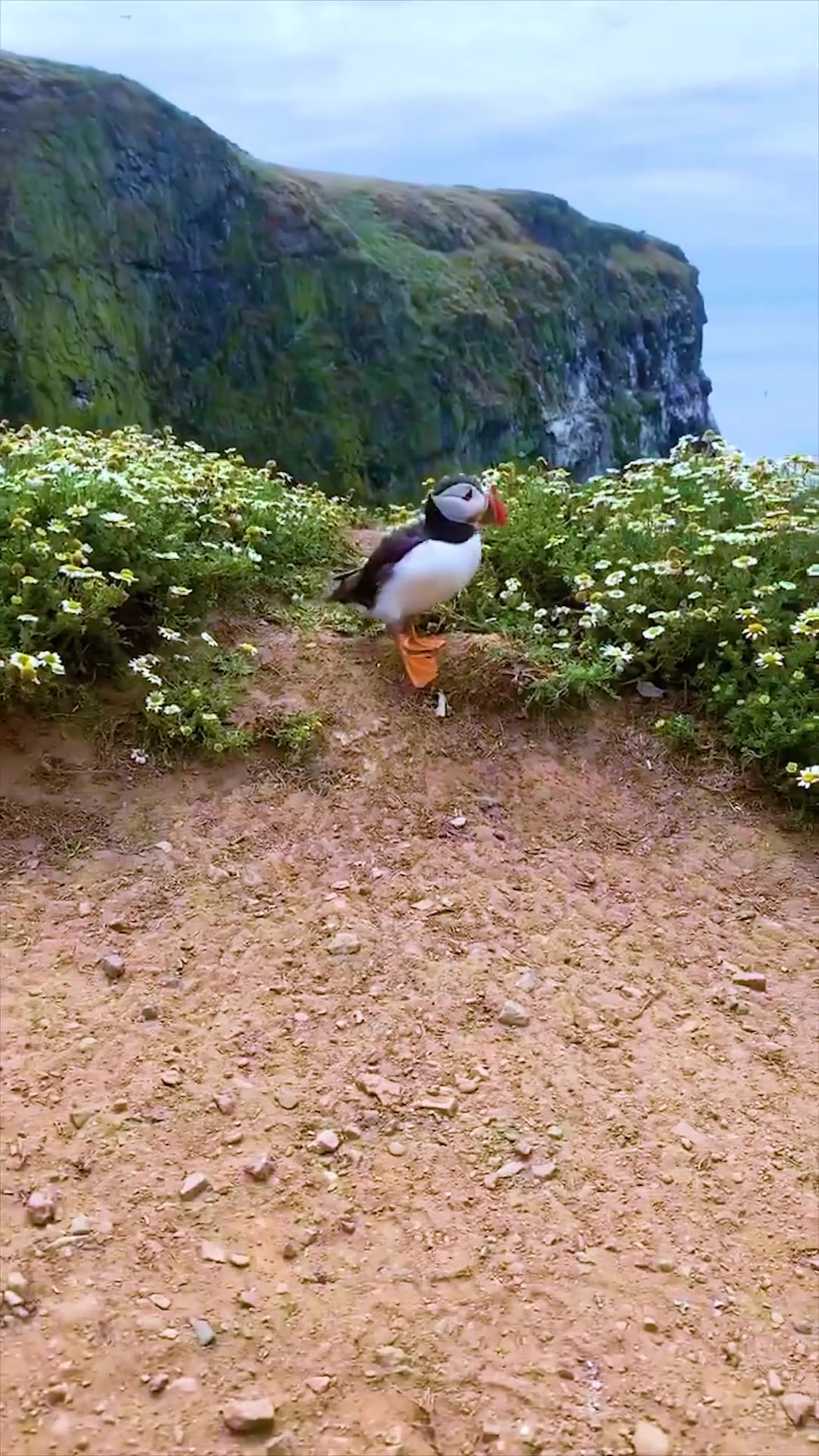
Skomer Island off the coast of Wales offers more than just a postcard-worthy landscape; it's home to a charming population that's both endearing and notable: the Atlantic puffin. The island has been a puffin sanctuary for decades. This field of white flowers is a natural habitat of these birds. Few sights are more delightful than a bright-eyed puffin navigating the island’s floral carpet.
Atlantic Puffins: The Island's Endearing Locals
Atlantic puffins, also known as the sea parrot, are seabirds known for their colorful beaks, rounded bodies, and signature waddling walk. These birds nest in burrows and their ability to traverse land and water makes them well-suited to the varied terrain of Skomer Island. Puffins spend most of their lives at sea, only returning to land for breeding. On Skomer, they have been nesting and raising their young since the 1930s. Every spring and summer, Atlantic puffins gather on the island to mate and raise their young. The island is so perfectly suited to their needs that puffins have made it their seasonal haven, It’s not just the rocky cliffs and grassy fields that make the puffin’s habitat in the Pembrokeshire Coast unique. The island’s vast expanses of white flowers provide a beautiful backdrop. This unpolluted landscape is a natural treasure and a birdwatcher's paradise — showcase of one of nature’s most loveable birds.
Protected habitats for wild birds
If you want to watch them up close, the best times are between April and July. Puffins make their homes nestled amongst the dense white flowers and grassy fields. Visitors have reported seeing them foraging and exploring the flowers, and in the distance the vistas unveil the island’s cliffside destinations.
Coastal Interactions
Puffins forage for food, and Skomer Island gives them plenty of opportunities to do so. The island’s rugged coastline, dense vegetation, and coastal cliffs are ideal for foraging. While foraging, puffins dive for fish and crustaceans from the rocky cliffs, their colorful beaks filled to the brim with food. The puffin's distinctive appearance and the unique terrain of the island create a memorable sight.
Puffins' Foraging Techniques
Puffins forage for small fish, squid, and crustaceans. The puffin’s distinctive appearance is amplified by the coastline environment. When puffins dive into the water, they use their small wings to fly underwater. Here, the picturesque coastal cliffs add to the charm. The white flowers highlight the puffin’s vibrant beaks and create a unique contrast.
A Petal-Strewn Path to Nature's Heart
The field of white flowers provides a picturesque backdrop for puffin activity. This dense vegetation is a draw for the birds and a delight for visitors. The puffin’s foraging behavior is fascinating and often reveals intriguing insights into their diet and habitat preferences. The appearance of puffins – their agile yet ponderous walk, their boldly colored beaks, and their habit of strutting amongst the flowers – are captivating.
Coastal Havens of the Atlantic
The rugged cliffs and coastal environments tell a story of the puffin’s adaptive and resilient nature. The puffin's presence on the Pembrokeshire Coast underscores the beauty of the island's natural landscape, which offers ideal conditions for the species. Puffins thrive along these cliffs, foraging and nesting.
Tips for Watching Prawns
If a puffin is on your bucket list, try to visit Skomer Island between April and July. Puffins love to forage in the dense vegetation and coastline. Guided tours are available for a more immersive experience. They will not disappoint you. Take a walk along the coast and explore the cliffs — the rare sea parrot may catch you off guard. April through July is prime puffin-watching season but if you want to find the puffin in all its splendor, look for the ones that play in the white flowers. Use a pair of binoculars and consider a guided tour for a deeper understanding of these birds.
Watch the Reel
Questions readers ask
What makes Skomer Island such a special place for Atlantic puffins?
Skomer Island offers a unique combination of rocky cliffs, grassy fields, and vast expanses of white flowers, providing an ideal habitat for Atlantic puffins to nest and forage. The island's unpolluted landscape and varied terrain make it a perfect seasonal haven for these seabirds, who have been nesting there since the 1930s.
How do puffins forage for food on Skomer Island?
Puffins on Skomer Island forage for small fish, squid, and crustaceans by diving from the rocky cliffs into the water. They use their small wings to fly underwater, filling their colorful beaks with food before returning to their burrows.
Can visitors see puffins up close on Skomer Island?
Yes, visitors can see puffins up close between April and July, which are the best times to visit. Puffins make their homes nestled amongst the dense white flowers and grassy fields, making them visible to those exploring the island.
What is the significance of the white flowers on Skomer Island for puffins?
The white flowers on Skomer Island serve as a beautiful backdrop for puffin activity and provide dense vegetation that is a draw for the birds. The contrast of the vibrant beaks against the white flowers creates a unique and captivating sight for visitors.
What is the significance of the white flowers on Skomer Island for puffins?
The white flowers on Skomer Island serve as a beautiful backdrop for puffin activity and provide dense vegetation that is a draw for the birds. The contrast of the vibrant beaks against the white flowers creates a unique and captivating sight for visitors.
How do puffins use their beaks for foraging?
Puffins use their colorful beaks to carry food back to their burrows. When foraging, they fill their beaks with small fish, squid, and crustaceans, which they catch by diving into the water from the rocky cliffs.
Related deep dives
Similar reads based on topic and creator.



Recent articles
Fresh deep dives from the latest Reels we unpacked.



Comments
Be the first to comment.