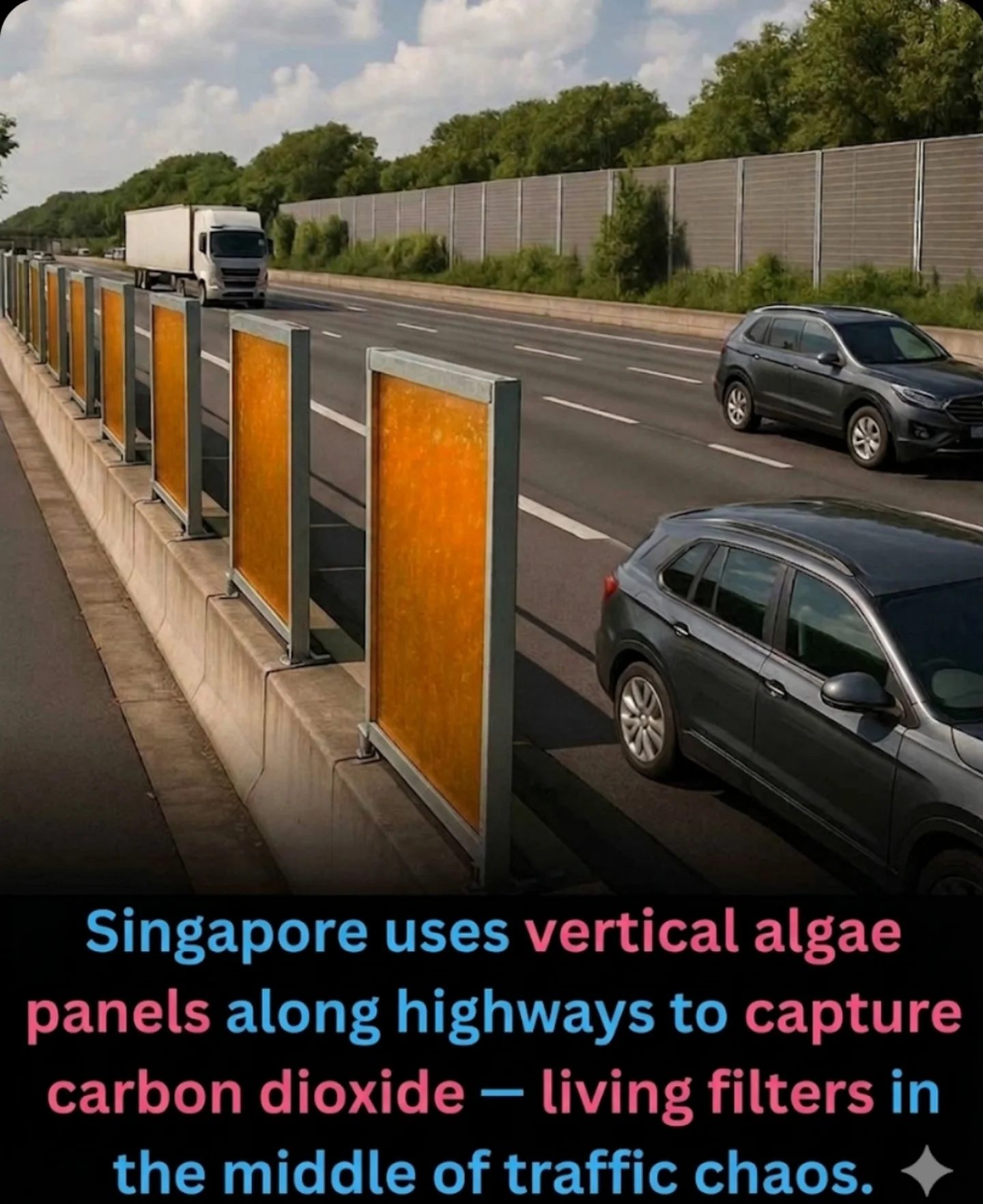
Carbon Capture Technology: Urban Photobioreactors (PBRs) along Highways
Urban Photobioreactors (PBRs) are an innovative green technology designed to combat air pollution in dense urban areas, particularly along highways. These specialized systems, also known as vertical algae panels, are engineered to capture carbon dioxide and other harmful pollutants from the air, acting as living filters in the middle of traffic chaos.
Context / Why This Matters
Highways, especially in densely populated urban areas, are major contributors to air pollution. The constant flow of vehicles emits significant amounts of carbon dioxide (CO₂), nitrogen oxides (NOₓ), and particulate matter (PM2.5 and PM10). Traditional methods of combating this pollution, such as planting trees, are often impractical due to space constraints and the slow rate at which trees can grow and absorb pollutants. This is where Urban Photobioreactors come into play, offering a more efficient and space-saving solution.
Main Discussion
How Urban Photobioreactors Work
Urban Photobioreactors function as flat-plate bioreactors filled with water and specific strains of microalgae, such as Chlorella or Spirulina. The core idea is to treat the highway as a giant air filter. Here’s a breakdown of the process:
- Absorption: Fans or natural wind flow push polluted air from the road into the panels. The design of these vertical panels maximizes the surface area exposed to the air, ensuring efficient capture of pollutants.
- Photosynthesis: The microalgae within the panels use sunlight and the high concentrations of CO₂ from car exhausts to grow rapidly. During photosynthesis, the algae convert CO₂ into pure oxygen, which is then released back into the atmosphere.
- Filtration: The liquid medium within the panels also traps particulate matter (PM2.5 and PM10). These tiny soot and dust particles, which are harmful to human lungs, are effectively filtered out of the air.
Why Algae?
Engineers are increasingly turning to algae for several key reasons:
Efficiency
Algae are highly efficient at capturing carbon dioxide because they do not need to build trunks or roots. Nearly 100% of their energy goes into carbon capture. A single panel can often sequester as much carbon as several mature trees, making them a highly effective solution for urban environments.
Space
Highways are narrow, and space is a premium commodity. Vertical algae panels provide a massive surface area for gas exchange without needing the deep soil or wide footprints required by a forest. This makes them ideal for installation along highways and in other urban areas with limited space.
Harvesting
The "waste" product of these filters is algae biomass, which can be harvested and processed into biofuels, bioplastics, or organic fertilizers. This creates a circular economy, where the byproduct of carbon capture is used to produce valuable resources, further enhancing the sustainability of the technology.
Practical Tips
If you are considering implementing vertical algae panels in your urban environment, here are some practical tips to keep in mind:
Site Selection
Choose locations with high traffic volume and ample sunlight. Highways, busy intersections, and industrial zones are ideal spots for these panels. Ensure that the panels are installed in a way that maximizes exposure to both polluted air and sunlight.
Maintenance
Regular maintenance is key to keeping the panels effective. This includes:
- Cleaning: Regularly clean the panels to remove any debris that might obstruct the airflow and sunlight.
- Algae Care: Monitor the health of the algae and replace it as needed. Ensure that the panels are filled with the appropriate strains of algae.
- System Checks: Periodically check the fans and other mechanical components to ensure they are functioning correctly.
Harvesting
Harvest the algae biomass regularly to maintain the efficiency of the panels and to produce valuable byproducts. The harvested algae can be processed into biofuels, bioplastics, or organic fertilizers, providing additional economic benefits.
Important Takeaways
- Effectiveness: Vertical algae panels are highly effective at capturing carbon dioxide and particulate matter, making them a valuable tool for combating air pollution in urban areas.
- Space Efficiency: These panels are ideal for urban environments where space is limited, as they provide a large surface area for gas exchange without requiring extensive land.
- Sustainability: The byproduct of these panels—algae biomass—can be used to produce valuable resources, creating a circular economy.
Conclusion
Urban Photobioreactors, or vertical algae panels, represent a cutting-edge solution to air pollution in dense urban areas. By leveraging the natural processes of photosynthesis and filtration, these panels can significantly reduce the levels of harmful pollutants in the air. Whether you are an engineer, urban planner, or simply someone interested in sustainable living, understanding and implementing this technology can have a profound impact on the health and well-being of urban populations.
Watch the Reel
Questions readers ask
How do vertical algae panels help improve air quality in urban areas?
Vertical algae panels, or Urban Photobioreactors (PBRs), capture carbon dioxide and harmful pollutants like nitrogen oxides and particulate matter from the air, converting CO₂ into oxygen through the process of photosynthesis. This makes them an effective solution for improving air quality, especially in dense urban areas with heavy traffic.
What makes vertical algae panels a space-efficient solution for combating urban pollution?
Unlike traditional methods such as planting trees, vertical algae panels do not require large areas of land. They can be installed on walls or other vertical structures, making them ideal for urban environments where space is limited. Their compact design allows for rapid deployment and immediate impact on air quality
How do Urban Photobioreactors (PBRs) capture carbon dioxide and pollutants?
Urban Photobioreactors use microalgae to capture carbon dioxide and other pollutants. The microalgae absorb CO₂ and convert it into oxygen, effectively acting as a living air filter. This process helps to purify the air and reduce the levels of harmful pollutants in urban environments, especially along highways.
Can vertical algae panels be used in high-traffic areas, like highways, and how do they benefit these areas?
Vertical algae panels are well-suited for high-traffic areas, such as highways, where pollution levels are typically high. They can be installed along roadsides or on highway barriers, directly capturing pollutants from vehicle emissions. This targeted approach helps to improve air quality in areas with the highest concentration of pollutants.
Are there other benefits to using vertical algae panels besides air purification?
Beyond air purification, vertical algae panels can also support sustainable initiatives. The microalgae grown in these panels can be harvested and used for various purposes, such as producing biofuels, animal feed, or even pharmaceuticals. This adds an additional layer of benefit to their use in urban environments.
How do vertical algae panels compare to traditional methods of combating highway pollution?
Unlike planting trees, which can take years to mature and have a significant impact, vertical algae panels offer a faster solution to combating highway pollution. They are also more space-efficient, making them a practical choice for densely populated urban areas. Additionally, they provide a continuous, real-time approach to air purification, which can be more effective in high-traffic areas.
What is the maintenance required for vertical algae panels in urban environments?
Vertical algae panels require regular maintenance to ensure optimal performance. This includes checking and maintaining the flow of nutrients and water to the microalgae, as well as cleaning the panels to prevent the buildup of debris. The microalgae also need to be harvested periodically, which can be done on a rotating basis to ensure a continuous supply of fresh algae.
Related deep dives
Similar reads based on topic and creator.




Recent articles
Fresh deep dives from the latest Reels we unpacked.




Comments
Be the first to comment.