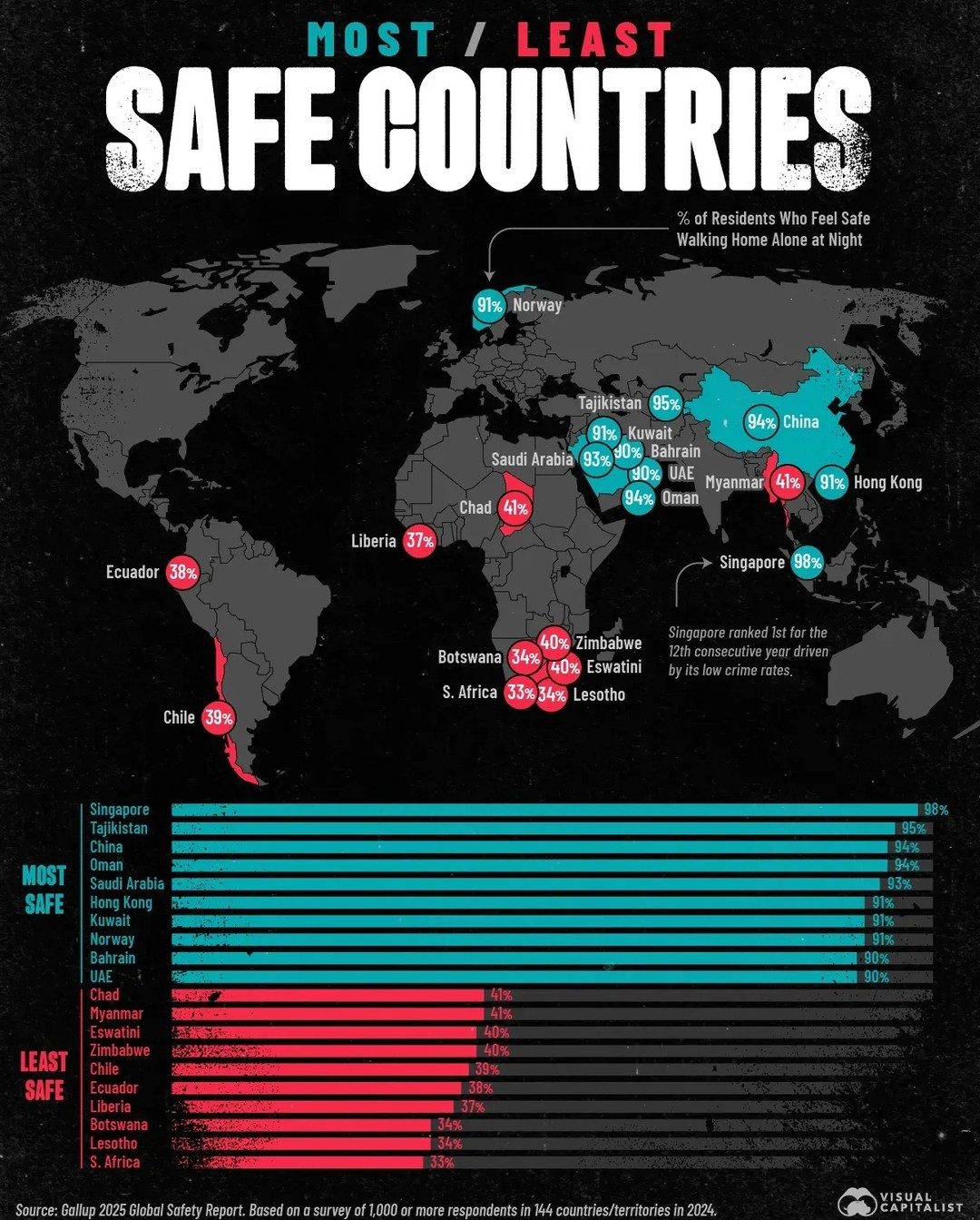
Global Safety Rankings
Safety Perceptions by Country
Singapore consistently tops the list as the safest country in the world, while South Africa ranks lowest. These findings are derived from the perceptions of over 144,000 respondents across 144 countries, as reported in Gallup’s Global Safety Report 2025. These rankings provide a snapshot of how safe people feel walking alone at night, a key indicator of personal safety and societal well-being.
Why This Matters
Understanding global safety rankings is crucial for several reasons. It helps travelers plan their trips more safely, informs policymakers on areas needing improvement, and provides a benchmark for countries striving to enhance public safety. These rankings are not just about statistics; they reflect the lived experiences and perceptions of residents around the world.
The Importance of Public Safety
Public safety is a fundamental aspect of quality of life. It influences everything from daily routines to long-term planning. Countries with high safety rankings often enjoy better economic stability, higher tourism numbers, and a more confident populace. Conversely, low safety rankings can deter investment, tourism, and overall community well-being. The perception of safety is closely linked to a country's social and economic fabric, making it a critical area of focus for governments and societies alike.
The Significance of Personal Safety
Personal safety, particularly the feeling of security when walking alone at night, is a vital component of overall well-being. It reflects not just the absence of crime but also the presence of a supportive and secure environment. This sense of safety is influenced by various factors, including effective law enforcement, community policing, and social cohesion. Countries that prioritize these aspects tend to have higher safety rankings, as reflected in the Gallup report.
The Safest and Least Safe Countries
Singapore: A Model of Safety
Singapore has maintained its position as the safest country for the 12th consecutive year. This achievement is driven by its low crime rates and robust public safety measures. The city-state's strict laws and effective enforcement have created an environment where residents feel secure. Singapore's approach to safety includes comprehensive community policing, advanced surveillance systems, and a strong emphasis on public awareness and community involvement. These factors contribute to the high percentage of residents who feel safe walking alone at night.
Other Safe Countries
Several other countries also rank high in the safety index. Norway, Saudi Arabia, Kuwait, Bahrain, and Hong Kong are among the top contenders. These countries share a common trait: a strong emphasis on law and order, coupled with effective governance and social policies that prioritize public safety. Tajikistan, China, and Oman also feature prominently, highlighting the diverse geographical and cultural contexts where safety is a top priority.
The Least Safe Countries
South Africa, Lesotho, and Eswatini rank at the bottom of the safety index. These countries face significant challenges, including high crime rates, socio-economic disparities, and limited resources for law enforcement. The perception of low safety in these regions is a reflection of the broader issues affecting their societies. Myanmar, Ecuador, and Liberia also fall into this category, indicating the need for targeted interventions to improve public safety.
Practical Tips for Travelers
When planning a trip, safety should be a top consideration. Here are some practical tips for travelers:
Research Your Destination
Before traveling to any country, research its safety rankings and current safety conditions. Websites and reports like Gallup’s Global Safety Report can provide valuable insights.
Stay Informed
Keep up-to-date with local news and safety advisories. Register with your country’s embassy or consulate for travel alerts and emergency assistance.
Adopt Safe Practices
Follow common-sense safety practices, such as avoiding isolated areas, being cautious at night, and keeping valuables secure. Local guides and travel agencies can offer valuable advice on safe routes and areas to avoid.
Important Takeaways
The global safety rankings provide a comprehensive view of how safe residents feel in their countries. Singapore’s consistent top ranking and South Africa's persistent low ranking highlight the varying levels of safety and security around the world. These rankings are based on real perceptions and experiences, making them a reliable indicator of a country's safety environment. By understanding these rankings, travelers, policymakers, and communities can take informed steps to enhance safety and well-being.
Conclusion
Global safety rankings offer a valuable perspective on the state of personal and public safety worldwide. Singapore's unparalleled success and South Africa's challenges underscore the importance of tailored, effective safety measures. Whether you are a traveler planning your next adventure or a policymaker striving to improve public safety, understanding these rankings can guide your decisions and actions. By prioritizing safety, we can create a more secure and prosperous world for all.
Watch the Reel
Questions readers ask
Why is Singapore considered the safest country in the world?
Singapore is consistently ranked at the top due to its low crime rates, effective law enforcement, and strong public security measures. This ranking is based on the perceptions of over 144,000 respondents across 144 countries, which reflect a high level of trust and confidence in the country's safety measures, especially the feeling of safety when walking alone at night.
What does the Gallup Global Safety Report 2025 entail?
The Gallup Global Safety Report 2025 is a comprehensive study that compiles the safety perceptions of residents in 144 countries. It assesses how safe people feel in their environments, particularly when walking alone at night, providing a global snapshot of personal safety and societal well-being.
Why is South Africa ranked as the most dangerous country?
South Africa ranks at the bottom of the safety index due to high levels of crime and violence, which significantly impact residents' perceptions of safety. This ranking is derived from the experiences and opinions of respondents, highlighting the challenges the country faces in ensuring public safety.
How can global safety rankings help travelers plan their trips?
Travelers can use these rankings to identify safer destinations and plan their routes accordingly. Knowing which countries have a high perception of safety can aid in making informed decisions about where to visit, stay, and explore.
What does the perception of safety walking alone at night indicate?
The perception of safety when walking alone at night is a key indicator of overall personal safety and societal well-being. It reflects how secure residents and visitors feel in their daily lives, influencing their choices and behaviors related to travel and personal security.
How often is the Gallup Global Safety Report updated?
The Gallup Global Safety Report is typically published annually, with the most recent report being from 2025. Each update provides new insights into global safety perceptions, allowing for comparisons and tracking of changes over time.
Can global safety rankings influence policy decisions?
Yes, these rankings can inform policymakers about areas that need improvement. By understanding where a country stands globally in terms of safety, governments can prioritize initiatives to enhance public safety, making informed decisions that reflect the experiences and needs of their residents.
Related deep dives
Similar reads based on topic and creator.




Recent articles
Fresh deep dives from the latest Reels we unpacked.




Comments
Be the first to comment.