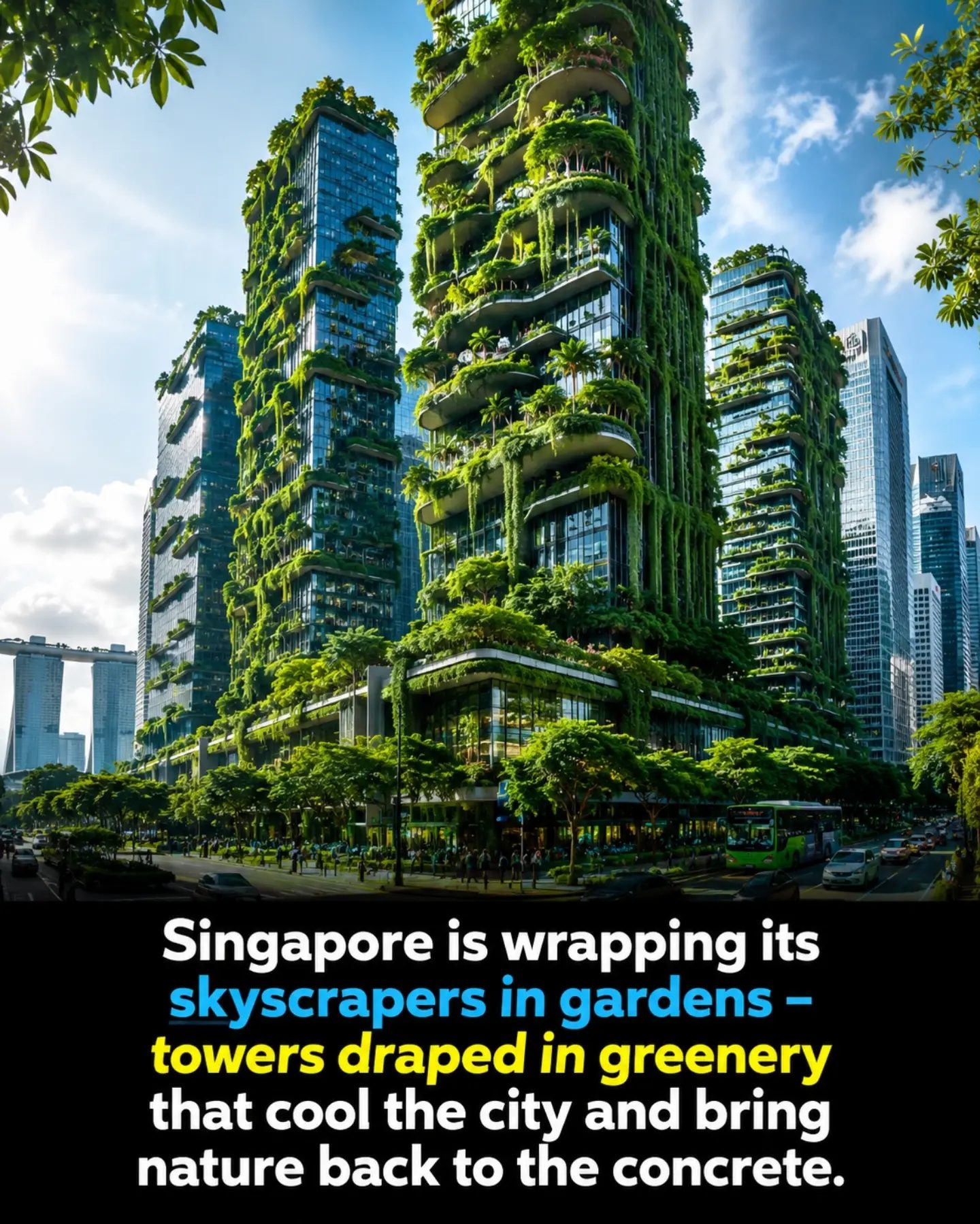
Vertical Gardens in Skyscrapers
Singapore is at the forefront of urban innovation, integrating vertical gardens into its skyscrapers. This approach not only adds a striking aesthetic to the cityscape but also serves practical purposes such as cooling the city and bringing nature back to urban environments. The concept of vertical gardens in skyscrapers is more than just a futuristic vision; it's a tangible step toward sustainable urban living.
Why This Matters
Vertical gardens in skyscrapers are not just about aesthetics; they play a crucial role in urban sustainability. By incorporating greenery into high-rise buildings, cities can mitigate the urban heat island effect, reduce energy consumption for cooling, and improve air quality. Moreover, these green spaces provide mental health benefits for residents and create a more livable urban environment.
Main Discussion
The Concept of Vertical Gardens
Vertical gardens, also known as green walls or living walls, involve growing plants on the vertical surfaces of buildings. This concept is particularly beneficial in dense urban areas where horizontal space is limited. In Singapore, vertical gardens are designed to cover entire skyscrapers, transforming them into living, breathing structures.
Benefits of Vertical Gardens in Skyscrapers
Cooling the City
One of the primary benefits of vertical gardens is their ability to cool the surrounding environment. Plants absorb heat through evaporation, a process known as evapotranspiration. This natural cooling effect can significantly reduce the urban heat island effect, making cities more comfortable during hot weather.
Improving Air Quality
Plants act as natural air purifiers, absorbing pollutants such as carbon dioxide and releasing oxygen. By integrating vertical gardens into skyscrapers, cities can improve air quality, which is particularly important in densely populated urban areas. This not only benefits the environment but also enhances the health and well-being of residents.
Bringing Nature Back to Urban Environments
Vertical gardens help bridge the gap between urban living and nature. They provide a habitat for various species, including birds and insects, and create a more biodiverse urban ecosystem. This integration of nature into the built environment can have a positive impact on mental health, reducing stress and enhancing overall well-being.
Design and Implementation
Designing and implementing vertical gardens in skyscrapers requires careful planning and consideration. The choice of plants, irrigation systems, and structural support are crucial factors. In Singapore, architects and urban planners are collaborating to create sustainable and visually appealing designs that integrate seamlessly with the urban landscape.
Challenges and Solutions
While vertical gardens offer numerous benefits, they also present challenges. Maintenance, water usage, and structural considerations are some of the key challenges. However, innovative solutions such as hydroponic and aeroponic systems can address these issues. These systems use less water and nutrients, making vertical gardens more sustainable and easier to maintain.
Practical Tips
If you're considering integrating vertical gardens into your urban environment, here are some practical tips to get you started:
Choose the Right Plants
Select plants that are well-suited to your climate and can thrive in vertical environments. Consider factors such as light requirements, water needs, and structural support.
Use Efficient Irrigation Systems
Invest in efficient irrigation systems such as hydroponics or aeroponics. These systems use less water and nutrients, making them more sustainable and easier to maintain.
Consider Structural Support
Ensure that your building can support the weight of the vertical garden. Consult with structural engineers to assess the feasibility and make necessary modifications.
Regular Maintenance
Regular maintenance is crucial for the longevity and health of your vertical garden. This includes pruning, watering, and monitoring for pests and diseases.
Community Engagement
Engage your community in the planning and maintenance of the vertical garden. This can foster a sense of ownership and responsibility, ensuring the garden's long-term success.
Important Takeaways
Vertical gardens in skyscrapers offer a multitude of benefits, from cooling the city to improving air quality and enhancing mental health. However, they require careful planning, efficient systems, and regular maintenance. By addressing these challenges and engaging the community, you can create a sustainable and visually appealing urban environment.
Conclusion
The integration of vertical gardens into skyscrapers is a vision of a sustainable and green city. Singapore's initiative to wrap its towers in greenery showcases a commitment to urban sustainability and environmental consciousness. By embracing this concept, cities can create more livable, healthy, and aesthetically pleasing environments for their residents.
Watch the Reel
Questions readers ask
What are the primary benefits of vertical gardens on Singapore’s skyscrapers?
Vertical gardens on skyscrapers in Singapore offer multiple benefits, including reducing the urban heat island effect, which helps cool the city. They also improve air quality by absorbing pollutants and releasing oxygen. Additionally, these green walls enhance the mental well-being of residents by providing a visual connection to nature in a bustling urban environment.
How do vertical gardens contribute to energy conservation in buildings?
Vertical gardens help conserve energy by providing natural insulation, which reduces the need for air conditioning. The plants on the walls absorb heat, while their shading effect minimizes direct sunlight, keeping buildings cooler and lowering energy consumption for cooling.
What makes Singapore a leader in urban sustainability?
Singapore leads in urban sustainability through innovative practices like integrating vertical gardens into skyscrapers. This approach not only enhances the city's aesthetic appeal but also actively combats climate issues by reducing energy use, cooling the urban environment, and improving air quality. This shows a commitment to sustainable urban living.
Can vertical gardens on buildings be implemented in other cities?
Yes, the concept of vertical gardens on skyscrapers can be adopted by other cities. While implementation may vary based on local climate and building regulations, the benefits—such as improved air quality and reduced energy consumption—make it a viable option for urban sustainability efforts globally.
What types of plants are typically used in vertical gardens on skyscrapers?
The choice of plants for vertical gardens on skyscrapers depends on the local climate and the specific requirements of the building. Generally, hardy, low-maintenance plants that can thrive in vertical environments are selected. These may include succulents, ferns, and other drought-resistant species that require minimal water and care.
How do vertical gardens impact the mental health of urban residents?
Vertical gardens provide a visual connection to nature, which has been shown to reduce stress and improve mood. In urban environments where green spaces are limited, these living walls offer a tangible link to the natural world, fostering a sense of well-being and tranquility among residents.
What role do vertical gardens play in enhancing Singapore’s cityscape?
Vertical gardens significantly enhance Singapore’s cityscape by adding lush greenery to an otherwise concrete landscape. They create a visually appealing, more dynamic urban environment, making the city more inviting and distinctive. These green walls also contribute to a sense of harmony between urban development and natural elements.
Related deep dives
Similar reads based on topic and creator.




Recent articles
Fresh deep dives from the latest Reels we unpacked.




Comments
Be the first to comment.