Passport Power Index: Global Mobility and Visa-Free Access
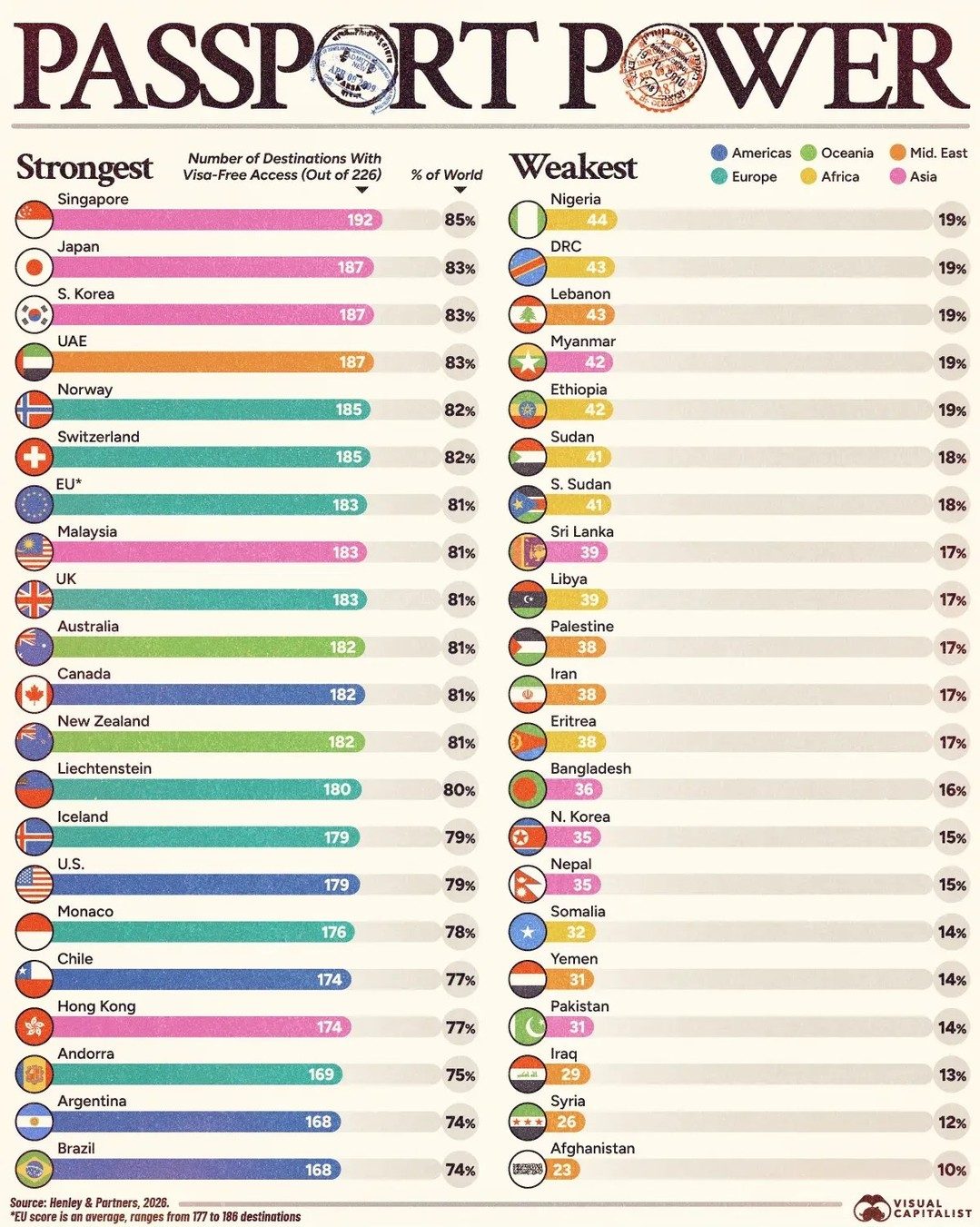
The world's most powerful passport in 2026, Singapore's document offers visa-free access to 192 destinations. This passport power gap in global mobility is significant: the strongest passports provide access to nearly five times more countries than the weakest. European and Asian nations dominate the top of the rankings. Let's dive into the details of global mobility and the significance of visa-free travel.
Why This Matters
In an increasingly interconnected world, the ability to travel freely is a valuable asset. Global mobility is influenced by various factors, including political stability, diplomatic relations, and economic growth. Passport power, as measured by visa-free access, reflects a country's global influence and the ease with which its citizens can travel internationally.
The 2026 Global Mobility Rankings
Top Performers
Singapore leads the rankings with visa-free access to 192 destinations. This is followed closely by several other countries, including:
- Japan
- South Korea
- United Arab Emirates
- Norway
- Switzerland
- Malaysia
These countries offer their citizens significant global mobility, allowing for seamless travel to a large number of destinations.
Regional Breakdown
Asia: Singapore, Japan, and South Korea top the list, offering their citizens substantial visa-free access. This is followed by Malaysia, Hong Kong, and the UAE, which also provide extensive travel opportunities.
Europe: Norway, Switzerland, Liechtenstein, Iceland, the UK, Italy, and Andorra are among the top performers. These countries offer their citizens extensive visa-free access, reflecting their strong diplomatic and economic ties.
Americas: The United States and Canada lead the way, providing significant visa-free access. Andorra and Argentina also offer considerable global mobility.
Global Mobility: Bottom Performers
Afghanistan ranks at the bottom in terms of global mobility, with visa-free access to only 23 destinations. Other countries with limited global mobility include:
- Lebanon
- Myanmar
- Ethiopia
- Sudan
- South Sudan
- Libya
- Palestine
- Iran
- Eritrea
- Bangladesh
- North Korea
- Nepal
- Somalia
- Yemen
- Pakistan
- Iraq
- Syria
The Middle East, Africa, and Oceania
Several countries in the Middle East, such as the UAE, offer high levels of visa-free access. In Africa, only a few countries, like Nigeria, offer significant global mobility.
Oceania is dominated by Australia and New Zealand, which provide extensive visa-free access to their citizens.
The Gap in Global Mobility
The disparity in global mobility is striking. The strongest passports provide access to nearly five times more countries than the weakest. This gap reflects broader issues of political stability, economic development, and diplomatic relations. For instance, countries with strong passports often have stable governments, robust economies, and extensive international ties.
European and Asian Dominance
European and Asian countries dominate the top of the rankings due to their strong economies, stable governments, and extensive diplomatic relations. These countries have invested in building strong international ties, which has translated into significant global mobility for their citizens.
Highest Global Mobility:
- Singapore
- Japan
- South Korea
- UAE
Middle of the Road:
- Norway
- Switzerland
- UK
Lowest Global Mobility:
- Nigeria
- Democratic Republic of the Congo (DRC)
Practical Tips for Travelers
1. Check Visa Requirements
Before planning a trip, it's essential to check the visa requirements for your destination. This information can usually be found on the embassy or consulate website of the country you plan to visit. Websites like VisaHQ and iVisa can also provide valuable information.
2. Consider a Dual Citizenship
If you have the opportunity, consider obtaining dual citizenship. This can significantly increase your global mobility. Dual citizenship allows you to hold passports from two countries, providing access to more destinations visa-free. This can be particularly beneficial if one of the passports is from a country with strong global mobility.
3. Apply for Visas in Advance
If you need a visa, it's essential to apply well in advance of your trip. Visa processing times can vary significantly, so it's best to plan. Some visas require an in-person interview, which can add to the processing time.
4. Use Visa-Free Access to Explore the World
If your passport offers significant visa-free access, take advantage of it. Plan trips to explore new destinations and experience different cultures.
5. Consider Visa-on-Arrival or eVisa Options
Some countries offer visa-on-arrival or eVisa options, which can make travel more convenient. Check if your destination offers these options and, if so, apply in advance if necessary.
Important Takeaways
The passport power gap is a reflection of broader global inequalities. The strongest passports provide access to nearly five times more countries than the weakest. European and Asian nations dominate the top of the rankings, while countries in Africa and the Middle East tend to rank lower.
Passport power is a valuable asset that can significantly impact global mobility. It reflects a country's global influence, political stability, and economic development. For travelers, understanding passport power can help plan trips more efficiently and take advantage of visa-free access.
As global mobility continues to evolve, it's essential to stay informed about visa requirements and the latest rankings. This knowledge can help maximize travel opportunities and navigate the complexities of international travel.
Conclusion
The passport power gap highlights the significant disparities in global mobility. While European and Asian nations dominate the top of the rankings, other regions lag. For travelers, understanding passport power can provide valuable insights into planning trips, maximizing visa-free access, and navigating the complexities of international travel.
Watch the Reel
Questions readers ask
Which countries have the most powerful passports in 2026 alongside Singapore?
While Singapore tops the list with visa-free access to 192 destinations, other powerful passports in 2026 include those from European and Asian nations. These countries have strong diplomatic and economic ties, which contribute to their high global mobility rankings. Specifically, nations like Germany, France, and South Korea are expected to be among the top contenders.
How does Singapore's 2026 passport compare to others in terms of global mobility?
Singapore's 2026 passport stands out by offering visa-free access to an impressive 192 destinations. This is nearly five times more than the weakest passports, which highlights Singapore's significant global influence and mobility. The passport power gap underscores the advantages of holding a Singaporean passport for international travel.
What factors influence a country's passport power and global mobility rankings?
Several factors influence a country's passport power and global mobility rankings. Political stability, diplomatic relations, and economic growth are key determinants. Countries with strong international ties and a robust economy tend to have more powerful passports, allowing their citizens greater freedom of travel. Singapore's high ranking is a testament to these factors.
Which regions dominate the top rankings for the most powerful passports in 2026?
European and Asian nations dominate the top rankings for the most powerful passports in 2026. These regions have established strong diplomatic and economic ties, which enhance global mobility for their citizens. Singapore, in particular, leads the way with its passport offering unprecedented access to 192 destinations.
How does visa-free access benefit travelers with the most powerful passports?
Visa-free access is a significant benefit for travelers with the most powerful passports. It simplifies travel planning, reduces costs associated with visa applications, and saves time. For instance, Singapore passport holders can travel to 192 destinations without needing a visa, making international travel more convenient and hassle-free.
What are some of the best passports for travel in 2026, besides Singapore's?
Besides Singapore, some of the best passports for travel in 2026 include those from Germany, France, and South Korea. These passports offer extensive visa-free access, reflecting the strong global influence and international relations of these countries. Passport holders from these nations can enjoy greater mobility and convenience in their international travels.
Why does Singapore's 2026 passport offer more visa-free destinations than other countries?
Singapore's 2026 passport offers more visa-free destinations due to the country's strong global influence, robust diplomatic relations, and economic growth. These factors have enabled Singapore to establish extensive international agreements, allowing its citizens to travel to 192 destinations without needing a visa. This level of access is unmatched by other countries, making the Singaporean passport one of the most powerful in the world.
Related deep dives
Similar reads based on topic and creator.



Recent articles
Fresh deep dives from the latest Reels we unpacked.




Comments
Be the first to comment.