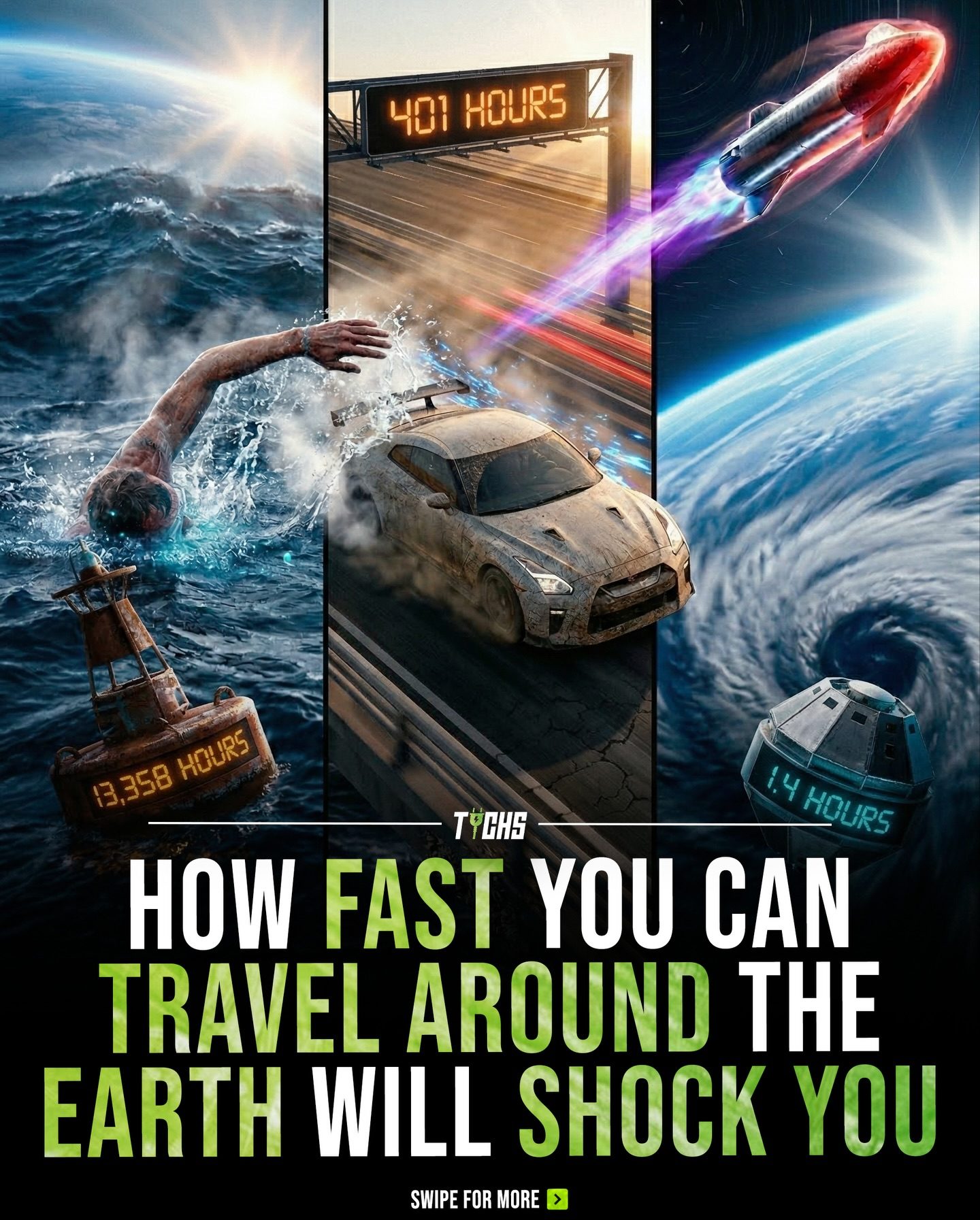
Travel Time Around the Earth: A Comparative Look at Various Transportation Methods
Traveling around the Earth can span an incredible range of time, from over 13,000 hours to a mere 90 minutes, depending on the mode of transportation. This vast disparity highlights the impact of technological advancements on global travel. Let's dive into the various methods of transportation and explore how each affects the time it takes to circumnavigate the globe.
Context / Why this matters
Understanding the time it takes to travel around the Earth by different means is more than just a fun fact; it provides a tangible way to measure technological progress. By comparing these times, we can appreciate the evolution of transportation and the significance of speed in our daily lives and global endeavors. From leisurely bike rides to supersonic travel, each mode of transportation offers a unique perspective on distance and time.
Main discussion
Traditional Transportation Methods
Swimming
Swimming around the Earth is not just a daunting physical challenge but also a significant time commitment. It takes approximately 13,358 hours to complete this journey. This method relies purely on human endurance and is, understandably, the slowest way to travel around the globe. Swimmers would need to navigate through different water bodies, including oceans and seas, which makes the journey even more complex.
Bicycle
Bicycling around the Earth is a more practical option for those seeking a slower, more immersive travel experience. It takes nearly 1,603 hours to complete this journey. This method combines physical endurance with the ability to traverse various terrains, making it a popular choice for adventure seekers. Cyclists would need to navigate through different countries, climates, and cultures, experiencing the world in a way that is both slow and immersive.
Running
For those who prefer to travel by foot, running around the Earth takes approximately 4,008 hours. While this method offers a deep connection with the environment, it is significantly slower than cycling. Runners would need to contend with varying terrain, weather conditions, and the physical demands of such a long journey.
Car
Driving a car around the Earth is a more efficient option, taking about 401 hours. This method allows for greater comfort and speed, making it a popular choice for those seeking to travel the globe in a reasonable amount of time. Cars can navigate through a wide range of terrains, from smooth highways to rugged off-road trails.
High-Speed Transportation
Bullet Trains
Bullet trains offer a high-speed alternative, taking approximately 270 hours to travel around the Earth. Known for their speed and efficiency, bullet trains are a popular choice for long-distance travel in countries with advanced rail networks. These trains can reach speeds up to 320 km/h, making them one of the fastest ground transportation methods.
Commercial Airplanes
Commercial airplanes provide a swift and efficient way to travel around the Earth, taking only about 44.5 hours. This method is suitable for those seeking to cover vast distances in a short amount of time. Airplanes can navigate through various weather conditions and altitudes, making them a reliable choice for global travel.
Private Jets
Private jets offer an even faster option, taking close to 40 hours to travel around the Earth. These jets are equipped with advanced technology and offer a luxurious travel experience. Private jets can reach higher speeds and altitudes, making them a preferred choice for high-end travel.
Advanced Transportation
Space Rockets
At the extreme end of the spectrum, a space rocket can circle the Earth in just about 1.4 hours. This method represents the pinnacle of human innovation, showcasing the massive gap between everyday travel and advanced technology. Space rockets can reach speeds up to 17,500 mph, making them the fastest mode of transportation available.
Practical Tips
Travel around the globe in a structured and efficient manner. Here are some practical tips to consider:
- Plan Ahead: Research the best routes and weather conditions for your chosen mode of transportation.
- Stay Hydrated and Fed: Ensure you have adequate supplies for long journeys, especially by bicycle, running, and swimming.
- Monitor Health: Take regular breaks and pay attention to your physical and mental health.
- Consider Altitudes and Weather: For high-altitude and fast travel, such as with airplanes and rockets, pay close attention to altitude and weather conditions.
- Stay Organized: Keep your travel documents, essentials, and any necessary technology in order.
Important takeaways
- Speed Matters: The speed of your chosen mode of transportation can drastically alter the time it takes to travel around the Earth.
- Technology Advancements: Advanced technology has significantly reduced travel times, with space rockets being the fastest known mode.
- Physical Endurance: Traditional methods like swimming, running, and cycling require significant physical endurance and preparation.
- Comfort and Efficiency: For a balance of speed and comfort, cars, bullet trains, and commercial airplanes are practical choices.
Conclusion
The journey around the Earth reveals a fascinating spectrum of travel times, from leisurely cycling and swimming to breakneck speeds in rockets. Each mode of transportation offers a unique experience and highlights the incredible advancements in technology and human innovation. Whether you're seeking a slow, immersive journey or a quick global tour, understanding the travel times can help you plan and appreciate the wonders of global travel.
Watch the Reel
Questions readers ask
What is the fastest way to circle the Earth?
The fastest way to circle the Earth is by using advanced methods, such as high-speed aircraft or rockets. This can be achieved in as little as 90 minutes, showcasing the incredible speed of modern technology.
How long does it take to travel around the world by airplane?
Commercial airplanes can complete a journey around the world in approximately 50-60 hours. This is significantly faster than other traditional methods, like driving or sailing, and uses the Earth's circumference of roughly 24,000 miles.
Which mode of transportation takes the longest to circle the Earth?
Swimming takes the longest to circle the Earth, with an estimated time of 13,358 hours. This method is not only time-consuming but also physically demanding, requiring immense endurance and preparation.
How long does it take to travel around the Earth by car?
Traveling around the Earth by car takes approximately 250-300 hours, depending on the specific route and vehicle. This method offers a more immersive travel experience compared to faster modes, allowing you to explore various countries and landscapes.
Can you travel around the world by bicycle, and how long does it typically take?
Yes, traveling around the world by bicycle is possible, and it typically takes around 400-500 hours. This method requires significant physical stamina and planning, but it offers a unique way to explore the globe at a slower pace.
What factors contribute to the varying travel times around the Earth?
The varying travel times around the Earth can be attributed to several factors, including the mode of transportation, speed, route, and any necessary stops or delays. More advanced transportation methods significantly reduce travel time, while slower methods require more time and preparation.
How does the time to travel around the Earth highlight technological progress?
Comparing the time it takes to circle the Earth by different methods highlights the significant technological advancements in global travel. For example, while swimming takes 13,358 hours, advanced methods can do the same in just 90 minutes. This demonstrates the profound impact of speed and efficiency on modern travel.
Related deep dives
Similar reads based on topic and creator.




Recent articles
Fresh deep dives from the latest Reels we unpacked.



Comments
Be the first to comment.