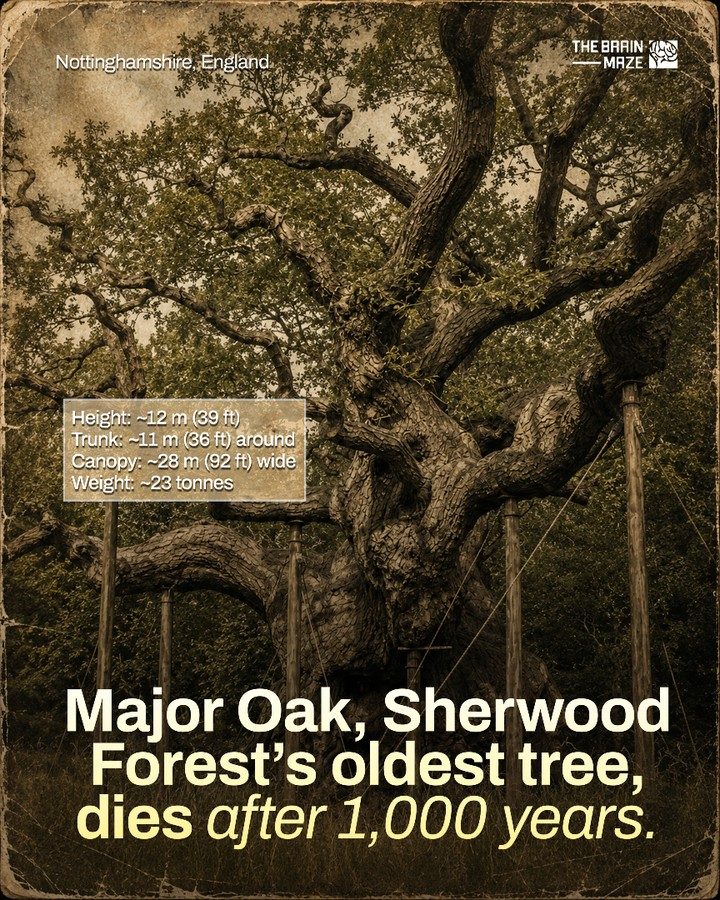
The Major Oak of Sherwood Forest: A Millennium of History and Legend
The Major Oak, nestled in the heart of Sherwood Forest in Nottinghamshire, England, was an ancient oak tree renowned for its size, age, and historical significance. With a reported lifespan of around 1,000 years, this tree was much more than just a landmark; it was a symbol of history, resilience, and cultural heritage. The tree's recent demise has left a void, but its legacy lives on in the memories of those who visited and the stories that have been passed down through generations.
Context: The Importance of Ancient Trees
Ancient trees like the Major Oak hold immense value for both ecological and cultural reasons. Ecologically, they serve as vital habitats for numerous plant and animal species, contributing to biodiversity. Culturally, these trees often carry deep historical and mythical significance. They become landmarks that define a region's identity and attract visitors from around the world.
The Major Oak and Sherwood Forest
Historical Significance
The Major Oak was one of the most iconic trees in the world, closely linked to the legend of Robin Hood. The tree's massive size made it a natural focal point in the forest. It was estimated that the trunk had a circumference of approximately 11 meters (36 feet), and its canopy spanned around 28 meters (92 feet). Standing at about 12 meters (39 feet) tall and weighing approximately 23 tonnes, this tree was a testament to time and nature's enduring power.
Cultural Impact
The tree's association with the legend of Robin Hood added to its allure. The stories of Robin Hood and his Merry Men are deeply ingrained in English folklore, and the tree's connection to these tales made it a magnet for visitors. The Major Oak served as a living embodiment of the stories of good versus evil, courage, and bravery.
Ecological Role
Beyond its cultural significance, the Major Oak played a crucial role in the local ecosystem. Its massive canopy provided shelter and food for a variety of species, and its roots helped stabilize the soil, preventing erosion. The tree's longevity was a testament to the health of the forest and the broader ecosystem, a symbol of the intricate balance of nature.
Practical Tips for Preserving Ancient Trees
While the loss of the Major Oak is a significant one, it serves as a reminder of the importance of preserving ancient trees. Here are some practical tips for ensuring the longevity of these natural treasures:
Community Engagement
Encourage local communities to take ownership of ancient trees. Community-led initiatives can help in monitoring the health of these trees and taking timely action to preserve them. This can include regular check-ups, pruning, and pest control.
Regulated Tourism
Manage tourism in a way that minimizes the impact on ancient trees. Visitors can be educated about the importance of these trees and the need to interact with them in a mindful way. This could include designated viewing areas, limiting large groups, and discouraging climbing or damaging activities.
Research and Conservation
Support research and conservation efforts aimed at understanding and preserving ancient trees. Organizations dedicated to tree preservation can provide valuable insights and solutions. These efforts can include genetic studies, disease prevention, and ecological monitoring.
Governmental Policies
Advocate for governmental policies that prioritize the preservation of ancient trees. This can include laws that protect these trees from being cut down or damaged, as well as funding for maintenance and conservation projects.
Important Takeaways
The demise of the Major Oak is a poignant reminder of the fragility of ancient trees. As these natural wonders continue to age, they can succumb to natural processes, disease, or environmental stressors. While the Major Oak is gone, the legacy it leaves behind is a reminder of the importance of preserving other ancient trees and the ecosystems they support.
Conclusion
The Major Oak was more than just a tree; it was a symbol of history, resilience, and cultural heritage. Its recent demise highlights the need for concerted efforts to preserve ancient trees. By understanding their significance and implementing practical conservation measures, we can ensure that future generations continue to enjoy and learn from these natural wonders.
Watch the Reel
Questions readers ask
What made the Major Oak tree in Sherwood Forest so historically significant?
The Major Oak was significant due to its estimated 1,000-year lifespan and its deep connection to English folklore, particularly the legend of Robin Hood. Its longstanding presence in Sherwood Forest made it a key landmark and a symbol of the region's rich history.
Where was the Major Oak located and why was its location important?
The Major Oak was located in Sherwood Forest, Nottinghamshire, England. Its location was important because Sherwood Forest is a place of significant historical and cultural importance. It is the backdrop of the famous Robin Hood stories, making the Major Oak a central part of the region’s folklore.
What is the legacy of the Major Oak tree in English culture?
The Major Oak's legacy in English culture is profound. It was an enduring symbol of resilience and history, deeply intertwined with the legend of Robin Hood. The tree’s passing marks the end of its physical presence, but its influence on local stories, traditions, and cultural heritage will continue.
Are there any notable landmarks or trees similar to the Major Oak in England?
While the Major Oak was unique in its historical and cultural significance, there are other ancient and notable trees in England, such as the Bowthorpe Oak in Lincolnshire and the Ankerwycke Yew in Berkshire. Each of these trees holds its own historical and cultural importance, much like the Major Oak did.
What ecological impact did the Major Oak have on Sherwood Forest?
The Major Oak provided a crucial habitat for a variety of plant and animal species in Sherwood Forest. Its vast size and age contributed to the biodiversity of the area, supporting a complex ecosystem that will be challenging to replace.
Related deep dives
Similar reads based on topic and creator.




Recent articles
Fresh deep dives from the latest Reels we unpacked.




Comments
Be the first to comment.