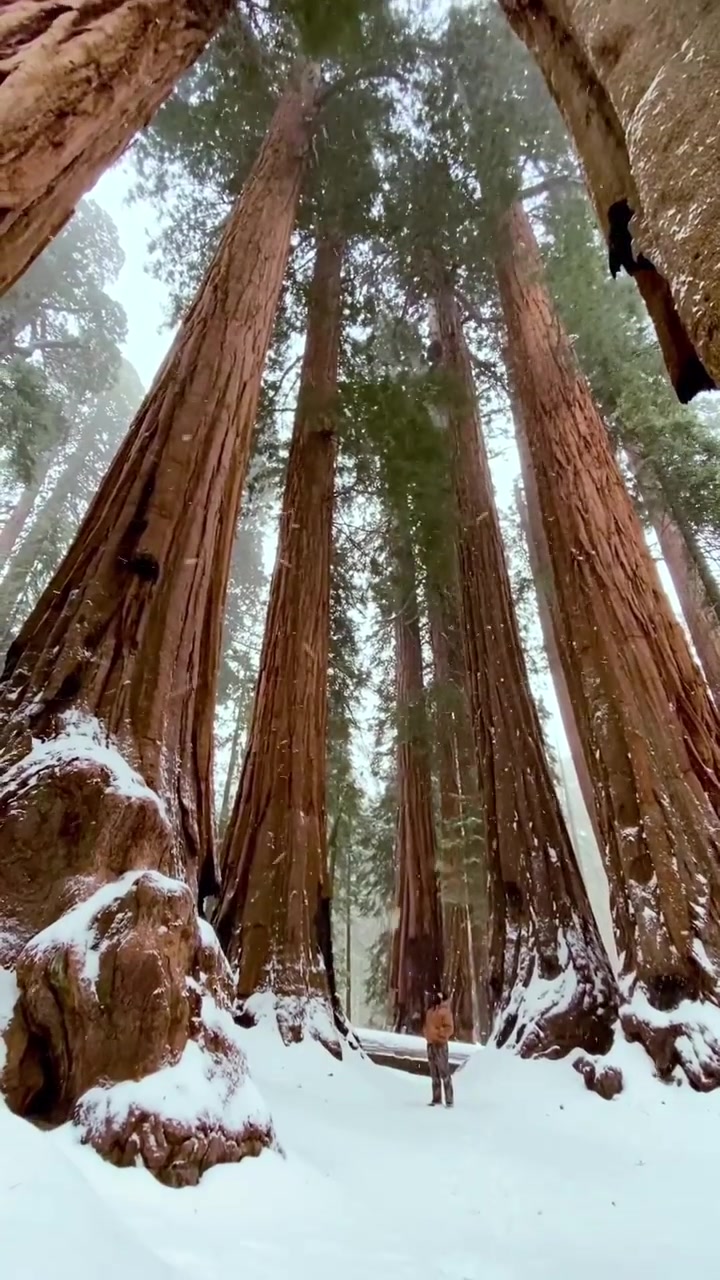
In the heart of California's Sierra Nevada mountains, nestled within Sequoia National Park, a breathtaking spectacle unfolds each winter. Giant sequoias—already the world's largest trees by volume—are transformed by snowfall, creating an otherworldly scene of natural grandeur. Here, a rare glimpse of these majestic trees in winter reveals why they have captivated visitors for generations.
Bottomless Volume, Ancient Wisdom
The giant sequoia is a species of redwood known scientifically as Sequoiadendron giganteum. These trees are the largest in the world by volume, dwarfing even the tallest species. Giant sequoias can exceed 275 feet in height and 40 feet in diameter, with some specimens estimated to be over 3,200 years old. One of the most iconic examples is the General Sherman Tree, located in Sequoia National Park and considered to be the largest tree in the world by volume. The gigantic volume of a mature giant sequoia comes from its wide trunk, which can be 15-20 times thicker than that of a tall person. The trees' sheer size is a key feature of their majesty — and visitors must walk circuits around their trunks just to realize how enormous they are. Their massive volume is a testament to their adaptability over time. Their deep roots and resilient bark shield them from the elements. When the snow falls in Sequoia National Park, these trees stand stoically as though the snow is just another means of adding grandeur. The snowfall adds a delicate touch to the immensity of the trees. The contrast between the vast, towering trunks and the soft, gentle snow creates a scene that looks like an artist’s rendering or a painting. The snow emphasizes the height and grandeur of the trees, and the trees appear even more serene and majestic than normal.
The Unpredictability of Winter in the Sierra Nevada
These winter scenes are a remarkable contrast to the park’s typically sunny summers. In winter, the Sierra Nevada mountains become a playground for firmer snowfall, which is fortuitously rare — making this landscape truly unique. The park covers over 404,000 acres of land, hosting a variety of ecosystems from meadows, subalpine forests, and river canyons. The park’s elevation ranges from about 1,370 feet to over 14,000 feet. Many of the trails in Sequoia National Park are open year-round, and many visitors come across these magnificent Sequoias, but most visitors come to the park during the summer. But the winter months offer a whole different experience. The snow makes everything quieter and the contrasts between textures and colours are more pronounced. Picturesque views of snow-covered giant sequoias can be hard to come by because the trees are extremely sensitive to human traffic and can be easily damaged. As a result, there are not many places for tourists to see them, and many are not open to the public. The snow that blankets Sequoia National Park offers an exclusive chance to revel in their beauty. The snow serves as an especially effective way to accentuate their overwhelming height. Although these scenes are rare and only possible in a more extreme environment, it is also particularly risky. Winter weather can bring harsh and hazardous conditions and park regulations state that visitors should stay on marked trails. This is particularly true when these trails are covered in snow and may have ice patches. Lakes and rivers may freeze over and become dangerous; visitors in Sequoia National Park should always accept that winter weather can pose significant risks.
The Sights and Sounds of Winter
The video focuses on the awe and loneliness of the winter wonderland, capturing the soft, powdery snow falling from the sky and the clear ridges of snow atop the roofs and trees. Besides the snow, the crisp, white snow framed by the green foliage of the trees creates a surreal, ethereal atmosphere that appears as if it were painted by an artist The snow is such a stark contrast to the vibrant green foliage that it seems as though it were sprinkled directly from the sky. The soft, delicate fall of snow adds a tranquil and dreamlike quality to the environment. Stepping into the park as winter approaches is an immersive experience, where the cold, crisp air and soft falling snow envelop visitors in a serene, almost hypnotic state.
Seeing Size With Perspective
The person walking through the snow can be seen from the foreground to the left, and this figure gives visitors an idea of just how large the trees really are. The giant sequoias appear to touch the distant clouds, feeling omnipresent in this ethereal environment, where the world seems to blend together. The reddish-brown bark of the giant sequoia stands out against the stark, clean white of the snow that covers the ground. This contrast makes the trees pop out from the background; the rocky backdrop and snow create a perfect, vivid backdrop, allowing the trees and visitor to dominate the frame. A gentle snowfall creates a unique backdrop that showcases one of the world's most famous trees. The trees have a complex, layered texture that makes them appear as if they were designed by a skilled artist. The gentle snowfall frames the trees and provides a smooth, calm ambience. The extreme height and width of the trees are all on display and leaves visitors with a lasting memory of their own smallness.
Giant Sequoias Through the Ages
Sequoia national park has long been a homeland to indigenous groups, including the Mono, Tubutulabal, and Yokuts people, who have lived and worked with the giants. Their significance is not just confined to the boundaries of the park. As the world around them evolved—rotating through periods of warmth and cold, drought and rain—these trees have been a constant presence, standing as a silent testimony to the ever-changing nature of the world. These trees are also important in historical lore. They have inspired artists, writers, and poets with their majesty, and they have also inspired scientific research. Some scientists have studied the trees to learn more about climate change, finding that their growth rings often show variations in growth can be linked to events such as droughts and fires. They can even hold clues to events such as volcanic eruptions.
A Show of Resilience
These trees are testament to the resilience of nature. They have been standing in California for over 2,000 years, and they have seen the world change dramatically over the years. They have been shaped by natural forces over time, and they have adapted to the challenges they faced to continue to grow. Sequoias can be found in both spring and winter, but the trees in winter are a very rare sight. Wintertime is the only season when the snow can be seen on the trees, offering a unique spectacle. Because visiting requires specific weather conditions, access to the sequoias is rare and often requires negotiation through mixed terrain. Even the surrounding trees are covered in snow. A walk through the park in winter is a unique and memorable experience.
Its glory is best experienced personally, but the snow's beauty and the contrast between texture and colour are best captured in winter's beauty.
Beyond the trees and the snow, the park is home to thousands of other animals and plants. Visitors can enjoy a variety of activities, including hiking, camping, and horseback riding. There are also a number of historic and cultural sites to explore, and the park is home to several museums and visitor centres. The park offers a unique blend of natural beauty and human history, making it a popular destination for visitors from around the world.
Watch the Reel
Questions readers ask
What makes the General Sherman Tree so special in Sequoia National Park?
The General Sherman Tree is special because it is the largest tree in the world by volume, standing at an impressive 275 feet in height and 40 feet in diameter. Its sheer size and age, estimated to be over 3,200 years old, make it a unique natural wonder that draws visitors from around the globe. The contrast between its massive trunk and the delicate snowfall in winter adds to its majesty.
How does snowfall affect the giant sequoias in Sequoia National Park?
Snowfall in Sequoia National Park transforms the landscape, creating a breathtaking contrast between the vast, towering trunks of the giant sequoias and the soft, gentle snow. This unique combination emphasizes the height and grandeur of the trees, making them appear even more serene and majestic than usual. The snow also adds a delicate touch to the immensity of the trees, enhancing their natural beauty.
What is the best way to see giant sequoias covered in snow?
Seeing giant sequoias covered in snow is a rare and exclusive experience. Many of the trails in Sequoia National Park are open year-round, but the best way to see these magnificent trees in winter is to plan a visit during the snowy months. However, it's important to note that access to some areas may be limited due to the sensitivity of the trees to human traffic, so visitors should check for open trails and follow park guidelines.
How does the winter snowfall in Sequoia National Park compare to its summer weather?
Winter snowfall in Sequoia National Park offers a stark contrast to the typically sunny summers. The snow creates a quieter, more serene atmosphere, with pronounced contrasts in textures and colors. The park's elevation ranges from about 1,370 feet to over 14,000 feet, hosting a variety of ecosystems, including meadows, subalpine forests, and river canyons, which are made even more picturesque by the snow.
Why are there limited opportunities to see snow-covered giant sequoias in Sequoia National Park?
The limited opportunities to see snow-covered giant sequoias are due to the sensitivity of the trees to human traffic, which can easily damage them. As a result, many areas where these trees are located are not open to the public, and the snowfall itself is unpredictable, making the experience even more exclusive and rare. Visitors should plan accordingly and check for open trails and guidelines before visiting.
Related deep dives
Similar reads based on topic and creator.


Recent articles
Fresh deep dives from the latest Reels we unpacked.

Comments
Be the first to comment.