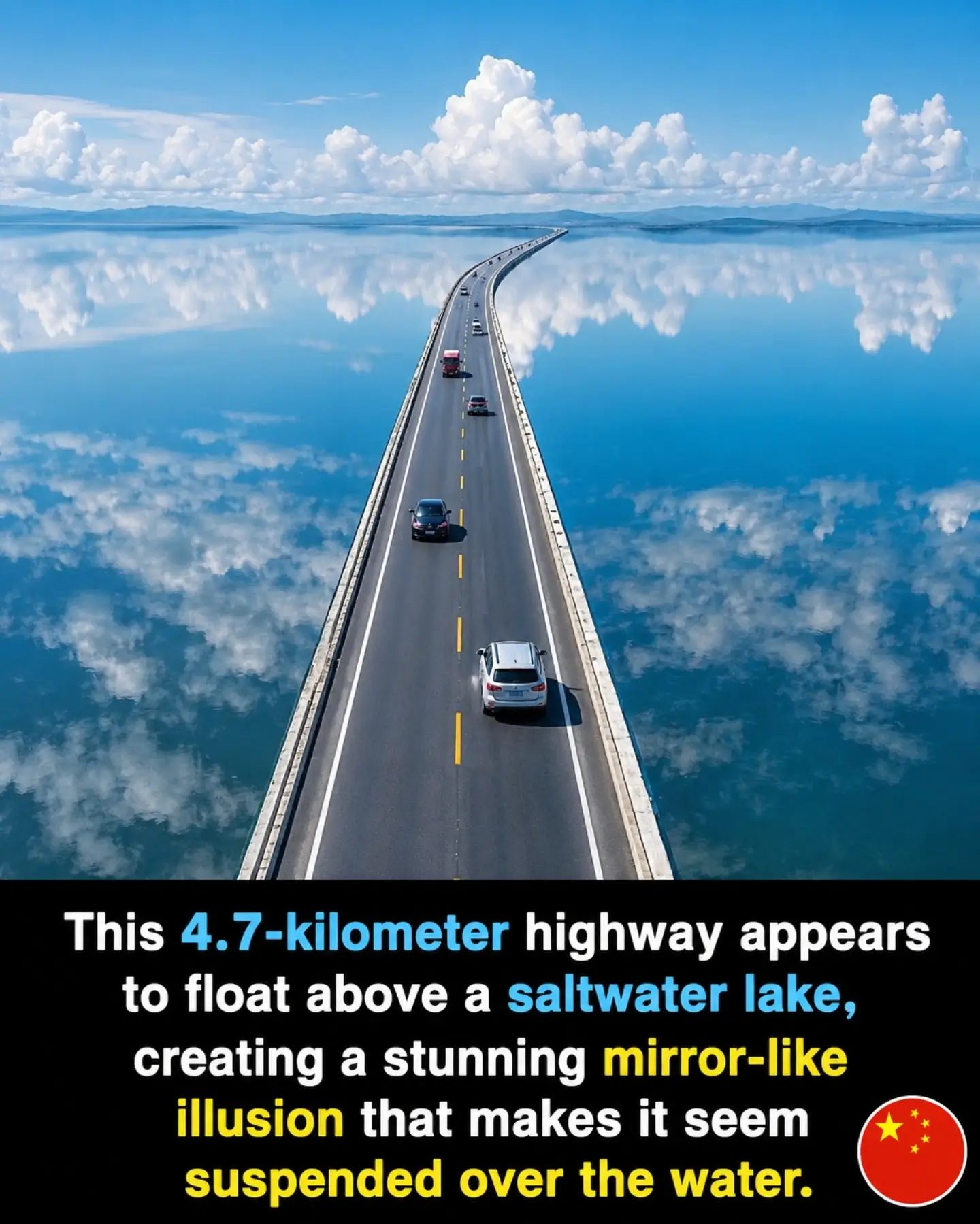
Optical Illusion Landscape
Optical illusions have long captivated our imagination, but few are as breathtaking as the stunning landscape where a highway appears to float above a saltwater lake. This mirror-like illusion creates a mesmerizing visual effect, making the highway seem suspended over the water.
Context / Why This Matters
Landscape photography often relies on the interplay of natural and man-made elements to create striking visuals. This particular scene is a prime example of how nature and infrastructure can blend seamlessly to produce a truly unique and captivating image. The intersection of a 4.7-kilometer highway with a saltwater lake creates an optical illusion that has fascinated viewers.
Main Discussion
The Science Behind the Illusion
The illusion is created by the reflection of the highway on the calm surface of the saltwater lake. When the water is still, it acts as a perfect mirror, reflecting the highway above it with incredible clarity. This optical phenomenon is known as specular reflection, where the light rays from the highway bounce off the water's surface at the same angle, creating a precise mirror image.
The Role of Light and Water
Light plays a crucial role in this illusion. The angle of the sunlight, the clarity of the water, and the smoothness of the lake's surface all contribute to the perfect reflection. Even the slightest ripple can disrupt the illusion, highlighting the delicate balance needed for this effect.
The Highway's Design
The highway itself is designed with a smooth, unbroken surface, which enhances the reflective properties. The lack of obstructions and the even texture of the road help create a seamless reflection, making the illusion more convincing.
Practical Tips
Capturing the Illusion
If you're an aspiring landscape photographer hoping to capture a similar optical illusion, consider the following tips:
-
Find the Right Location: Look for bodies of water that are calm and still. Saltwater lakes are ideal due to their reflective surfaces.
-
Timing is Key: The best time to capture this illusion is during early morning or late afternoon when the sunlight is low and the shadows are minimized.
-
Use a Tripod: A steady camera is essential for capturing the reflection clearly. A tripod will help you maintain stability and get the perfect shot.
-
Pay Attention to the Surface: Ensure the water's surface is smooth and free of ripples. Any disturbance can disrupt the reflection.
-
Experiment with Angles: Try different angles and compositions to get the best view of the reflection. Sometimes, shooting from a lower angle can make the illusion even more dramatic.
Important Takeaways
- Reflection and Light: The combination of light and smooth water surface is crucial for creating this illusion.
- Location: Choose bodies of water that are calm and still. Saltwater lakes are ideal.
- Timing: Early morning or late afternoon light is best for minimizing shadows and enhancing the reflection.
- Steady Camera: Using a tripod ensures a stable shot and captures the reflection clearly.
Conclusion
The optical illusion of a highway appearing to float above a saltwater lake is a testament to the beauty of nature and the unexpected wonders that can arise from the intersection of man-made structures and natural landscapes. Whether you're a photographer or simply an admirer of natural beauty, this stunning visual phenomenon offers a unique perspective on the world around us.
Watch the Reel
Questions readers ask
What causes the highway to appear as if it's floating above the water?
The floating appearance is due to the calm surface of the saltwater lake reflecting the highway perfectly, creating an optical illusion that makes the road seem suspended above the water. This effect is enhanced when the water is still, eliminating any ripples or disturbances that could break the reflection.
Where can I find this unique optical illusion?
The specific location of this optical illusion is not detailed in the article. However, similar effects can be found in various places where highways or roads run alongside calm bodies of water, particularly saltwater lakes. These locations offer the potential for such striking reflections.
Why does the illusion only happen on a saltwater lake?
While the illusion can occur on any body of water, the high reflectivity of saltwater surfaces enhances the effect. Saltwater often has a smoother surface due to the lack of wave-forming wind and the higher surface tension, making it ideal for perfectly mirroring the highway above.
Can this illusion be created artificially in photography or art?
Yes, photographers and artists can create similar floating road illusions by carefully setting up a scene with a reflective surface. This can be done using clever angles, mirrors, or digital editing techniques to mimic the natural optical illusion described in the article, adding to the captivating nature of the image.
Is the floating highway safe for travel?
The highway itself is safe for travel, as it is a real infrastructure. The floating illusion is purely visual and does not affect the structural integrity of the road. Drivers should be cautious, however, as the reflective nature of the surface could potentially cause visual disturbances or disorientation.
What are the best conditions to see this optical illusion?
The best conditions to see this optical illusion are on a calm, still day when the water is perfectly smooth. Wind, rain, or any other disturbance can break the reflection, making the highway appear as it normally would. Early morning or late evening can offer particularly good conditions, as the water is often calmer during these times.
Related deep dives
Similar reads based on topic and creator.




Recent articles
Fresh deep dives from the latest Reels we unpacked.
Comments
Be the first to comment.