The Fascinating Reality of Observing Earth From 2,000 Light Years Away
The concept of observing Earth from 2,000 light years away is both a mind-bending and enlightening experience. It offers a unique perspective on time and space, challenging our everyday perceptions. The implications of such a journey through time and space highlight that what someone sees in the present moment depends on the vantage point, distance, and the way light travels.
Context: Why this matters
Understanding that the light we see from distant stars and galaxies has taken thousands, millions, or even billions of years to reach us is crucial. This isn't just a fascinating space fact; it's a reminder that our perception of "now" is relative. The Roman Empire at its peak, before the crucifixion, before the fall of Rome, and before most of recorded history — all that is part of what one might see from 2,000 light years away. This realization has profound implications for how we think about time, history, and our place in the universe.
Main Discussion
The Cosmic Perspective
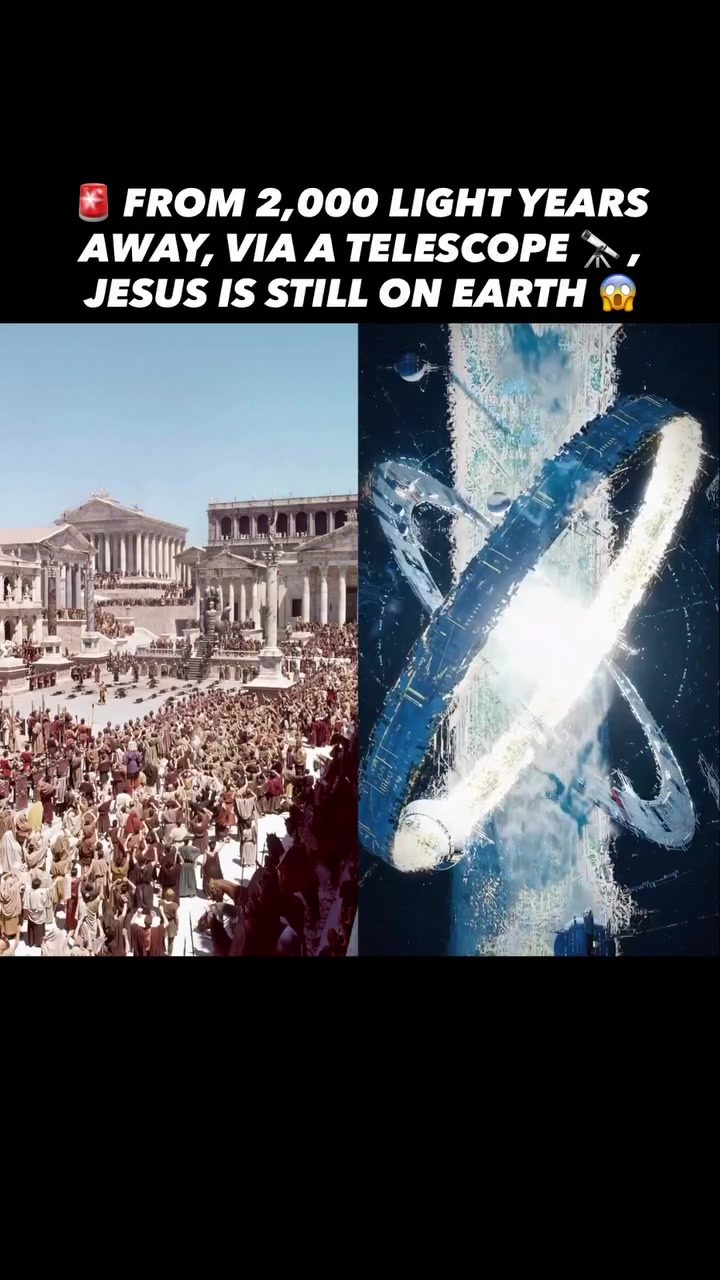
When you look up at the night sky, you're not seeing the present. You're seeing the past. The light from distant stars and galaxies has traveled vast distances to reach us, and by the time it arrives, it is already an ancient message. For someone observing Earth from 2,000 light years away, the light they see would depict the Roman Empire during its zenith, long before the crucifixion and the fall of Rome. This cosmic perspective underscores that what we consider "now" is an illusion.
Light Travel and Time
Light takes time to travel. It might seem instantaneous to our human eyes, but when we gaze at the stars, we are essentially looking back in time. This means that the light from stars and galaxies can take thousands or even millions of years to reach Earth. By the time we see it, those stars might no longer exist, or they could be in a completely different state. This phenomenon is why some stars you see tonight might not even exist anymore.
The Illusion of "Now"
The idea that "now" is an illusion stems from the fact that everything happening in real time is already old news somewhere else in the universe. This revelation challenges our linear understanding of time. It suggests that what we perceive as the present is merely a snapshot of the past, constantly shifting as new light reaches us. This concept is deeply existential and philosophical, prompting us to ponder the nature of reality and our place in the vast cosmos.
The Roman Empire and the Telescope
The juxtaposition of an ancient historical scene with a futuristic telescope provides a striking contrast. On one side, we have the ancient Roman Empire, with its grand architecture and historical significance. On the other, we have a futuristic, cutting-edge telescope observing the Earth from a distance of 2,000 light years. This contrast highlights the incredible advancements in technology and science that allow us to peer into the past and understand the universe in ways that our ancestors could never have imagined.
Practical Tips
Observing the Night Sky
When you observe the night sky, take a moment to consider the journey that light has taken to reach your eyes. Each star and galaxy you see has a story to tell, a history that spans millennia. This awareness can transform a simple stargazing experience into a profound exploration of time and space.
Understanding Light Years
Light years are a unit of distance, not time, but they help us measure the vastness of the universe in terms of time. When you hear someone mention that a star is 2,000 light years away, it means that the light from that star has traveled for 2,000 years to reach us. This understanding can help you grasp the scale and complexity of the universe.
Engaging with Cosmic Concepts
Engaging with cosmic concepts like light travel and the relativity of time can be both fascinating and thought-provoking. It encourages us to question our perceptions and understand that our experience of reality is just one of many possibilities. Embracing these ideas can enrich your worldview and deepen your appreciation for the wonders of the universe.
Important Takeaways
- Light Takes Time to Travel: The light from distant stars and galaxies can take thousands or even millions of years to reach us, meaning we are seeing the past when we look at the night sky.
- The Illusion of "Now": What we perceive as the present is already old news somewhere else in the universe, challenging our linear understanding of time.
- The Connection Between Past and Present: Observing Earth from 2,000 light years away offers a unique perspective on history, reminding us that the past is always present in some form.
Conclusion
Observing Earth from 2,000 light years away through a powerful telescope is a humbling and enlightening experience. It reminds us that time and space are intricately connected, and our perception of the present is relative. This cosmic perspective enriches our understanding of the universe and prompts us to question our place within it.
Watch the Reel
Questions readers ask
Why does seeing Earth from 2,000 light years away change our perspective on time?
When you observe Earth from 2,000 light years away, you're seeing light that has taken 2,000 years to reach you. This means you're witnessing events that occurred 2,000 years ago, challenging the conventional understanding of 'now' and highlighting the relativity of time.
What can we learn about Earth's history from viewing it from 2,000 light years away?
From this distant perspective, you would see Earth as it was centuries ago, providing a unique view into the past. This could include events like the fall of the Roman Empire or the rise of the Renaissance, depending on the exact point in time the light left Earth.
How does light travel affect our perception of Earth from a distance?
Light travels at a finite speed, so when you look at distant objects, you're seeing them as they were in the past. From 2,000 light years away, you're perceiving Earth as it was 2,000 years ago, not as it is in the present moment. The vast distance light must travel changes our perception of Earth.
Can telescopes show us Earth from 2,000 light years away?
No, current telescopes cannot show us Earth from 2,000 light years away. Telescopes can observe distant stars and galaxies, but they are not designed to look back at Earth from such remote distances. Additionally, Earth is too close to the Sun for telescopes to capture clear images from that distance.
How does the cosmic perspective change our view of history?
Viewing Earth from extreme distances, such as 2,000 light years away, offers a profound shift in how we view history. It emphasizes that historical events are not just records in books but tangible moments frozen in time, visible from the right distance and perspective.
What does it mean to see Earth from a cosmic perspective?
Seeing Earth from a cosmic perspective involves recognizing that our planet is just a small part of an immense universe. It encourages a deeper understanding of time and space, acknowledging that what we perceive as the present is relative to our position and the travel of light.
Recent articles
Fresh deep dives from the latest Reels we unpacked.




Comments
Be the first to comment.