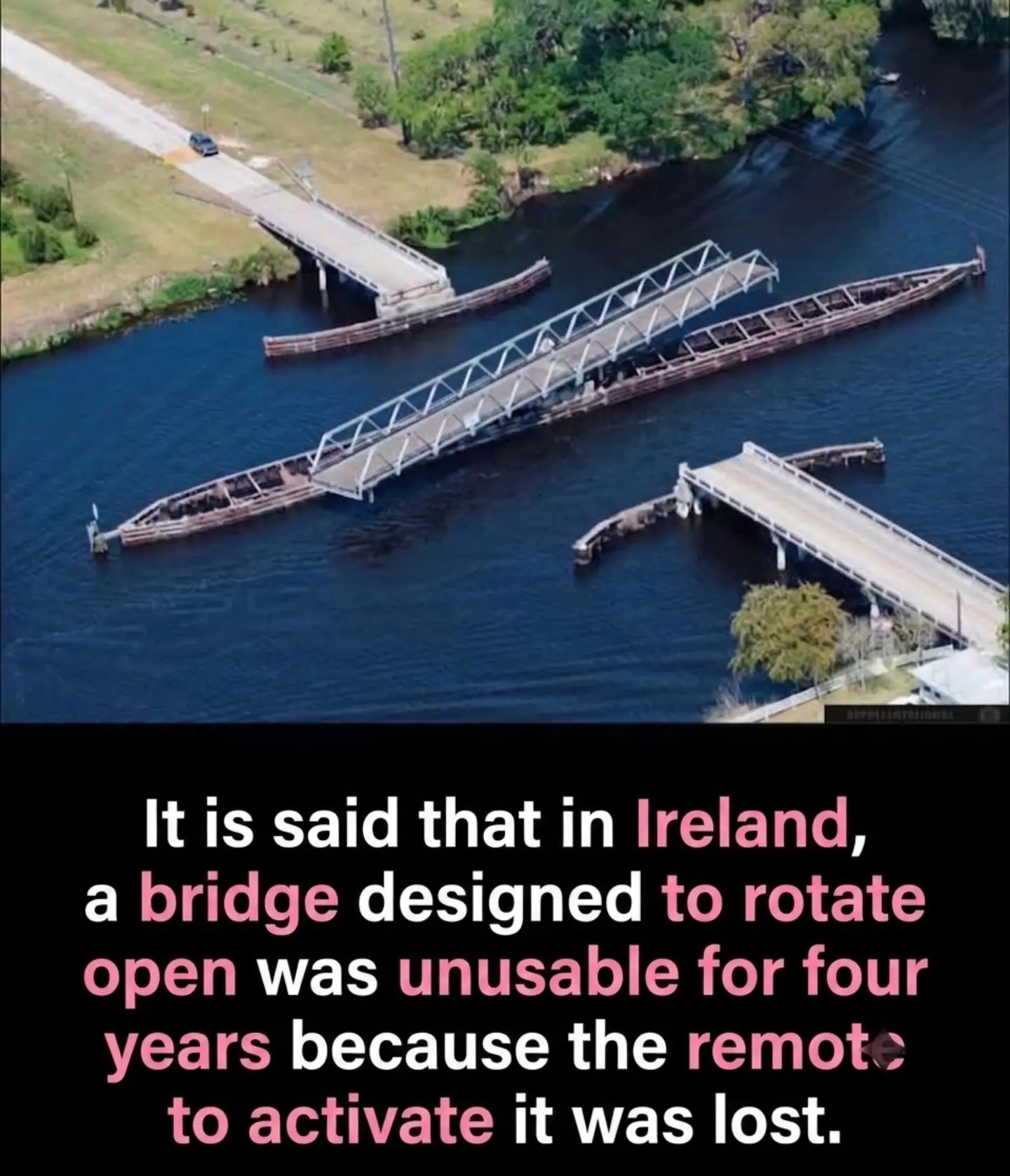
The Seán O'Casey Bridge: A Modern Marvel Grounded by a Simple Mishap
The Seán O'Casey Bridge in Dublin, Ireland, is a striking example of modern engineering. Completed in 2005, this pedestrian swing bridge spans the River Liffey and was designed to rotate 90 degrees. This unique feature allows taller vessels to pass through, making it a vital part of the city's infrastructure. However, despite its impressive design, the bridge faced an unusual and unexpected obstacle: a lost remote control.
Why This Matters
The story of the Seán O'Casey Bridge is a testament to how even the most intricate engineering projects can be derailed by the simplest of issues. For four long years, from 2005 to 2010, the bridge remained non-operational, leaving boats stranded and causing significant disruptions. This issue highlights the importance of maintaining and securing essential components, no matter how mundane they may seem.
The Seán O'Casey Bridge: Design and Function
The Seán O'Casey Bridge is a pedestrian swing bridge that was designed to be a modern addition to Dublin's landscape. Its ability to rotate 90 degrees is a key feature, allowing it to accommodate larger vessels without disrupting traffic. This design ensures that the bridge can serve multiple purposes, from providing a safe passage for pedestrians to facilitating the movement of boats along the River Liffey.
The Lost Remote Control
Shortly after the bridge's grand opening, disaster struck. The crucial remote control that operated the bridge's mechanism went missing. This small device was essential for the bridge's functionality, and its loss left the bridge unable to rotate. For four years, the bridge remained closed to river traffic, causing significant inconvenience and making the bridge a fixture of local humor.
Unintended Consequences
The loss of the remote control had several unintended consequences. Boats were left stranded, and river traffic was disrupted, causing delays and logistical challenges. The bridge, which was meant to be a modern marvel, became a source of frustration for locals and a symbol of inefficiency. The situation also highlighted the importance of having backup systems in place and the need for proper maintenance and security protocols for essential components.
The Road to Recovery
Eventually, the situation was resolved when new remotes were sourced. The bridge is now fully operational, swinging open for special events and occasional tall ships. This resolution underscores the importance of having contingency plans and the need for vigilance in securing and maintaining essential components.
Practical Tips
For Bridge Operators
For those responsible for operating and maintaining bridges, the story of the Seán O'Casey Bridge serves as a cautionary tale. Some practical tips to avoid similar issues include:
- Backup Systems: Always have a backup plan in place for essential components. In this case, having a spare remote control could have prevented the four-year disruption.
- Regular Maintenance: Regularly check and maintain all components, no matter how small or seemingly unimportant they may appear.
- Security Protocols: Ensure that all essential components are securely stored and monitored to prevent loss or theft.
For Engineers and Designers
For engineers and designers, it’s crucial to consider the potential for human error and unforeseen issues. Some steps to mitigate these risks include:
- Manual Overrides: Designing bridges or other infrastructure projects to include manual overrides can prevent situations where a single piece of technology becomes a critical failure point.
- Simplicity in Design: Where possible, keep designs simple and avoid relying on complex technologies that can easily fail or be misplaced.
- User-Friendly Components: Ensure that all components, including remotes, are user-friendly and easy to replace, reducing the risk of prolonged disruptions.
Important Takeaways
The Importance of Small Components
The Seán O'Casey Bridge story underscores the importance of small, often overlooked components. A seemingly insignificant item like a remote control can bring an entire infrastructure project to a halt, causing significant disruptions and delays.
Contingency Planning
Having a contingency plan in place can prevent prolonged disruptions. This includes having backups for essential components and ensuring that there are manual overrides or alternative methods of operation.
Vigilance and Security
Maintaining vigilance and implementing stringent security protocols for all essential components can prevent loss or theft, ensuring that the infrastructure remains operational and efficient.
Conclusion
The Seán O'Casey Bridge’s experience serves as a valuable lesson in infrastructure management. It highlights the need for backup systems, regular maintenance, and stringent security protocols. For engineers, designers, and operators, this story underscores the importance of considering all potential risks and having contingency plans in place. By learning from such incidents, we can ensure that our engineering projects are more resilient and less prone to disruptions, no matter how simple or mundane the cause.
Watch the Reel
Questions readers ask
How does the Seán O'Casey Bridge function?
The Seán O'Casey Bridge is a pedestrian swing bridge that spans the River Liffey in Dublin. It is designed to rotate 90 degrees to allow taller vessels to pass through, making it a key component of the city's infrastructure for facilitating river traffic.
What caused the Seán O'Casey Bridge to stop operating?
The bridge's operation was halted due to the loss of a small remote control, which was essential for activating the bridge's rotating mechanism. This simple issue resulted in the bridge being non-operational for a substantial period.
How long was the Seán O'Casey Bridge out of service?
The Seán O'Casey Bridge was out of service for approximately four years, from 2005 to 2010. During this time, river traffic was significantly disrupted, highlighting the importance of the bridge's functionality.
What was the impact of the bridge's malfunction on the city?
The malfunction of the Seán O'Casey Bridge led to boats being stranded and caused significant disruption to river traffic in Dublin, impacting both commercial and leisure activities on the River Liffey.
Why is the Seán O'Casey Bridge considered an engineering marvel?
The Seán O'Casey Bridge is considered an engineering marvel because of its unique design, which allows it to rotate 90 degrees to accommodate river traffic. This innovative feature makes it a notable landmark in Dublin's infrastructure.
What is the significance of the remote control in the operation of the bridge?
The remote control is a crucial component in the operation of the Seán O'Casey Bridge. It is used to activate the bridge's rotating mechanism, allowing it to open and close for river traffic. The loss of this small device resulted in the bridge being inoperable for an extended period.
What lessons can be learned from the Seán O'Casey Bridge incident?
The Seán O'Casey Bridge incident underscores the importance of maintaining and securing small yet critical components in complex engineering projects. Even the simplest of issues can have significant repercussions, affecting the overall functionality and reliability of the infrastructure.
Related deep dives
Similar reads based on topic and creator.




Recent articles
Fresh deep dives from the latest Reels we unpacked.




Comments
Be the first to comment.