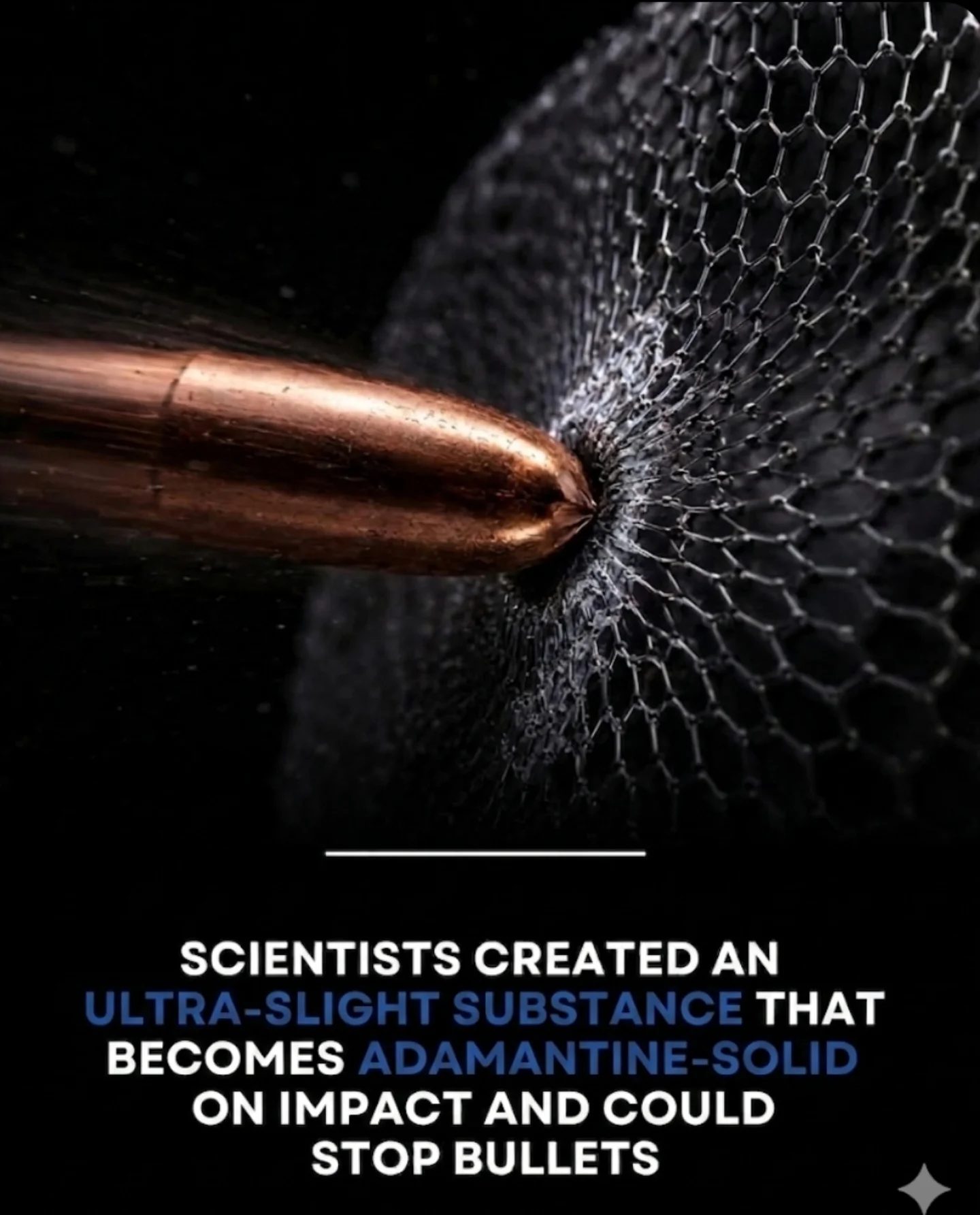
Diamene — The Next Revolution in Bulletproof Materials
Diamene is a revolutionary two-dimensional material developed by scientists at the Advanced Science Research Center (ASRC) at the Graduate Center, CUNY. This groundbreaking innovation consists of exactly two sheets of graphene layered on a silicon carbide substrate. The material's unique properties make it a strong contender for next-generation ballistic armor, wear-resistant coatings, and protective industrial membranes.
Why This Matters
In an era where safety and durability are paramount, the development of diamene represents a significant leap forward in material science. Its lightweight yet robust nature addresses critical needs in various industries, from military and law enforcement to industrial applications and beyond.
Main Discussion
The Science Behind Diamene
Structure and Composition
Diamene's structure is surprisingly simple yet ingeniously designed. It consists of two layers of graphene placed on a silicon carbide substrate. This configuration allows diamene to remain flexible and soft under normal conditions, making it easy to handle and integrate into various applications. However, its true power lies in its response to mechanical impact.
Phase Transition on Impact
One of the most remarkable properties of diamene is its ability to undergo a phase transition upon sudden localized pressure. When subjected to forces such as the impact of a bullet, the honeycomb carbon lattices in diamene temporarily cross-link, transforming into a diamond-like state. This process is dynamic and localized, meaning the material hardens only at the point of impact, providing localized protection without compromising overall flexibility.
Bulletproof Potential
The ability of diamene to become adamantine-solid on impact makes it a promising candidate for bulletproof materials. The material's transient hardening property allows it to absorb and dissipate the energy of a bullet, potentially stopping it in its tracks. This capability opens up new possibilities for developing lightweight, effective ballistic armor that can offer superior protection without the bulk and weight of traditional materials.
Applications of Diamene
Ballistic Armor
One of the most exciting applications of diamene is in the development of next-generation ballistic armor. Traditional armor materials often come with significant drawbacks, such as weight and rigidity. Diamene's ability to remain flexible under normal conditions while hardening on impact makes it an ideal candidate for creating lightweight, comfortable, and highly protective ballistic vests, helmets, and other protective gear.
Wear-Resistant Coatings
Industrial applications also stand to benefit greatly from diamene. Its wear-resistant properties make it suitable for coatings on machinery and equipment that are subject to high levels of mechanical stress. By applying a layer of diamene, manufacturers can extend the lifespan of their equipment, reduce maintenance costs, and enhance overall efficiency.
Protective Membranes
Another potential use of diamene is in protective industrial membranes. These membranes can be used in various industries, from aerospace to automotive, to protect critical components from damage due to impact or abrasion. Diamene's unique properties make it an ideal material for creating membranes that are both lightweight and highly durable.
Practical Tips for Implementing Diamene
While diamene's potential is vast, its implementation requires careful consideration of its unique properties. Here are some practical tips for incorporating diamene into various applications:
Understand the Application Requirements
Before integrating diamene into any application, it is essential to understand the specific requirements and conditions it will face. This includes factors such as the expected impact forces, environmental conditions, and the material's durability needs.
Customize the Layering Process
The layering process of graphene on the silicon carbide substrate can be customized to suit different applications. This involves adjusting the number of graphene layers and the substrate material to achieve the desired properties. For example, in ballistic armor, the goal is to maximize the material's hardness upon impact, while in wear-resistant coatings, the focus might be on durability and flexibility.
Conduct Thorough Testing
Given that diamene is a relatively new material, thorough testing is crucial to ensure its reliability and performance in real-world applications. This includes impact testing, durability assessments, and environmental simulations to understand how the material behaves under various conditions.
Important Takeaways
Diamene represents a groundbreaking advancement in material science, offering a unique combination of flexibility and hardness. Its ability to transition to a diamond-like state upon impact makes it a strong candidate for bulletproof materials, wear-resistant coatings, and protective industrial membranes. As research and development continue, the potential applications of diamene are likely to expand, offering new solutions to various industries.
Conclusion
Diamene's unique properties and potential applications make it a material worth watching. Its development highlights the ongoing progress in material science and the quest for lighter, stronger, and more durable solutions. As researchers continue to refine and explore the possibilities of diamene, it is poised to revolutionize various industries, from military and industrial applications to personal protective equipment.
Watch the Reel
Questions readers ask
What is Diamene and how is it created?
Diamene is a two-dimensional material created by scientists at the ASRC. It is made by layering two sheets of graphene on a silicon carbide substrate and then subjected to specific conditions to induce localized hardening.
How does Diamene provide protection under sudden pressure?
Diamene's unique structure allows it to transform locally into a hard, diamond-like substance when exposed to sudden pressure, thus providing excellent protection in such scenarios.
What makes Diamene an ideal choice for bulletproof materials?
Diamene's ultra-lightweight nature combined with its robust and protective properties under pressure makes it a strong candidate for next-generation bulletproof materials. It can withstand high-impact situations and provide reliable protection.
What are the potential applications of Diamene beyond bulletproofing?
Diamene's versatility makes it suitable for various industries. It can be used in wear-resistant coatings, protective industrial membranes, and other applications where durability and safety are crucial. Additionally, its lightweight nature makes it an attractive option for industries looking to enhance products without adding significant weight.
Who developed Diamene and where was the research conducted?
Diamene was developed by a team of scientists at the Advanced Science Research Center (ASRC) at the Graduate Center, CUNY. The research was conducted as part of their ongoing studies in material science and graphene research.
What is the significance of Diamene's localized hardening property?
Diamene's ability to harden locally under pressure is a key feature that sets it apart from other materials. This solid-state hardening ensures that the material can withstand sudden impacts without compromising its overall structure, making it highly effective in protective applications.
How does Diamene compare to traditional bulletproof materials?
Unlike traditional bulletproof materials, Diamene is significantly lighter, which makes it an excellent choice for applications where weight is a critical factor. Additionally, its ability to transform locally into a hard, diamond-like substance under pressure provides superior protection in high-impact situations.
Related deep dives
Similar reads based on topic and creator.




Recent articles
Fresh deep dives from the latest Reels we unpacked.




Comments
Be the first to comment.