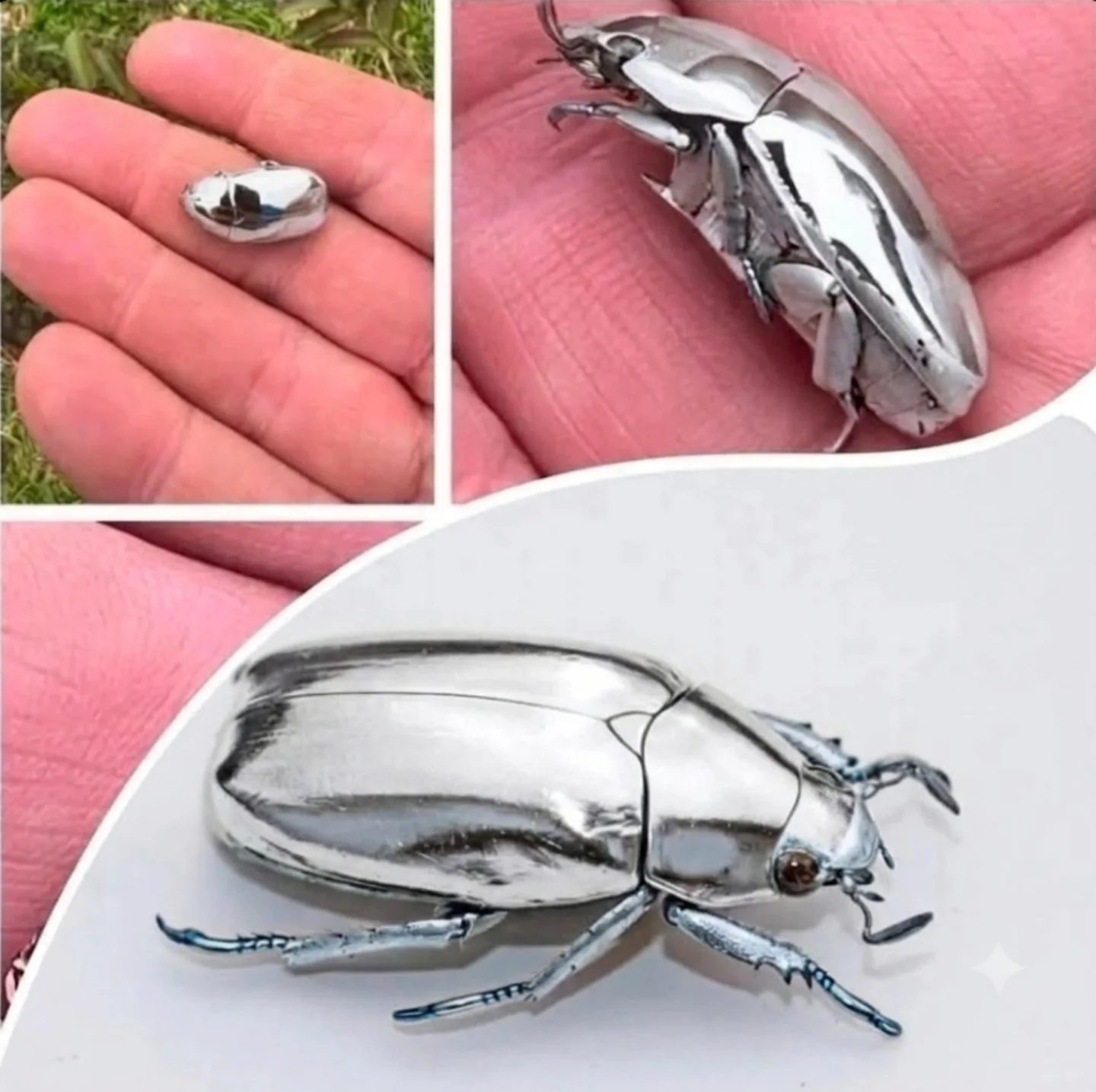
Metallic Beetles: A Natural Marvel
Metallic beetles, particularly those belonging to the genus Chrysina, are renowned for their striking, mirror-like metallic coatings. These beetles, commonly known as jewel beetles or plusiotis beetles, exhibit a stunning array of colors that often resemble liquid metal or custom-made jewelry. Their unique appearance is not just a visual spectacle; it is a result of intricate natural processes.
Why This Matters
The metallic sheen of these beetles is not merely an aesthetic feature but a fascinating example of structural coloration found in nature. Unlike many colorful animals that use pigments to create their vibrant hues, Chrysina beetles achieve their metallic looks through a combination of structural elements within their exoskeletons. Understanding this phenomenon can provide insights into the broader field of biomimicry, where natural designs inspire technological innovations.
The Science Behind the Shine
Structural Coloration
The key to the beetles' metallic appearance lies in a phenomenon known as structural coloration. Instead of relying on pigments, these beetles use the physical structure of their exoskeletons to manipulate light. The exoskeleton is made up of microscopic, alternating layers of chitin, a natural polymer. Each layer is slightly different in thickness, creating a complex optical system.
Light Manipulation
When light hits the beetle, it bounces off these different layers at varying depths. The layers are so precisely spaced that they reflect almost all visible wavelengths of light simultaneously. This reflection creates a mirror-like effect, giving the beetle its metallic sheen. The result is a surface that can appear silver, gold, or even other metallic hues, depending on the species and the angle of light.
The Mirror Effect
The unique structure of the beetle's exoskeleton acts like a natural mirror. The layers are so perfectly aligned that they reflect light in a way that mimics the properties of a metallic surface. This mirror effect is so vivid that you can often see clear reflections on the beetle's surface, such as the image of a person's fingers or the surrounding environment.
A Closer Look: Species Breakdown
The Silver Beetle (Chrysina limbata)
One of the most notable species in the Chrysina genus is Chrysina limbata, also known as the silver beetle. This species is legendary for its flawless, chrome-like silver finish. When observed closely, you can see the reflection of nearby objects on the beetle's back, a testament to its mirror-like surface.
The Gold Beetle (Chrysina resplendens / Chrysina chrysargyrea)
Another fascinating species is the gold variant, which includes Chrysina resplendens and Chrysina chrysargyrea. These beetles have a similarly flawless mirror finish but reflect light in a way that gives them a polished, 24-karat gold appearance. Their golden hue is as striking as it is unique, making them a standout among their metallic counterparts.
Distribution and Habitat
The genus Chrysina contains around 100 different species, mostly found in Central and South America, particularly in cloud forests. These environments provide the ideal conditions for these beetles to thrive, with the right mix of humidity and vegetation. The beetles' metallic appearance can also serve as camouflage in their natural habitats, helping them blend in with the reflective surfaces of leaves and water droplets.
Practical Tips for Observing Metallic Beetles
Identifying Species
When you come across a metallic beetle, the first step is to identify the species. Look for the unique color and patterns on the beetle's exoskeleton. The silver and gold varieties are the most common and easily recognizable. Clear, mirror-like reflections are a good indicator of Chrysina beetles.
Handling and Observation
Handle these beetles with care, as their exoskeleton is delicate. Use a soft-bristled brush or a gentle touch to observe them. Remember that these are living creatures, and their well-being should be a priority. Place them on a white or neutral-colored surface to better observe their striking metallic features.
Photography Tips
To capture the full beauty of these beetles, use a macro lens for close-up shots. Natural lighting is ideal for highlighting their metallic sheen. Take multiple shots from different angles to showcase the reflective properties of their exoskeleton. The contrast between the beetle and its background will emphasize its unique appearance.
Important Takeaways
Natural Beauty in Unexpected Places
Metallic beetles are a testament to the natural beauty found in the insect world. Their stunning metallic coatings serve as a reminder of the intricate designs present in nature.
Structural Coloration Insights
The beetles' use of structural coloration offers valuable insights into light manipulation and reflection. This natural phenomenon can inspire advancements in material science and optics.
Conservation and Appreciation
The diverse species of Chrysina beetles are a vital part of their ecosystems. Understanding and appreciating these creatures can contribute to their conservation and the preservation of their habitats.
Conclusion
Metallic beetles, particularly those in the genus Chrysina, are a marvel of nature. Their unique, mirror-like metallic coatings are a result of complex structural features in their exoskeletons. By understanding the science behind these beetles' appearance, we gain a deeper appreciation for the natural world and the intricate processes that create such stunning beauty. Whether you are a nature enthusiast, a photographer, or a scientist, these beetles offer a fascinating subject for exploration and admiration.
Watch the Reel
Questions readers ask
What causes the metallic sheen in Chrysina beetles?
The metallic sheen in Chrysina beetles is primarily due to structural coloration. This is achieved through alternating layers of chitin within their exoskeletons, which manipulate the way light reflects off the surface, creating a dazzling, mirror-like appearance.
Are the colors of Chrysina beetles produced by pigments?
No, the vibrant colors of Chrysina beetles are not produced by pigments. Instead, they are a result of the beetles' unique exoskeleton structure, which reflects and manipulates light to create a wide range of metallic hues.
How do Chrysina beetles achieve their iridescent appearance?
Chrysina beetles achieve their iridescent appearance through the complex interplay of light with the layered structure of their exoskeletons. The layers of chitin act like a natural diffraction grating, splitting and reflecting light in a way that creates a shimmering, multi-colored effect.
What are some examples of metallic beetle species?
Examples of metallic beetle species include various members of the genus Chrysina, such as the Chrysina aurigena and Chrysina quadrigemina. These species are known for their striking, jewel-like appearances and are often referred to as jewel beetles or plusiotis beetles.
How do Chrysina beetles manipulate light to create their unique appearance?
Chrysina beetles manipulate light through the intricate structure of their exoskeletons, which consists of alternating layers of chitin. These layers cause light to reflect and interfere in a specific way, producing the unique, mirror-like sheen that is characteristic of these species.
What are the benefits of the metallic sheen for Chrysina beetles?
The metallic sheen in Chrysina beetles serves various purposes, including camouflage and communication. The shimmering colors can help the beetles blend into their surroundings or act as a visual signal to potential mates or rivals. Additionally, the reflective properties may also help regulate body temperature by reflecting excess heat.
What is the underlying coloration of a Chrysina beetle’s exoskeleton?
The underlying coloration of a Chrysina beetle’s exoskeleton is not as pronounced as the metallic appearance. The primary colors are determined by the structural properties of the exoskeleton, but the actual pigmentation is often quite subtle. The true beauty of their appearance comes from the way light interacts with the exoskeleton's layered structure.
Related deep dives
Similar reads based on topic and creator.




Recent articles
Fresh deep dives from the latest Reels we unpacked.




Comments
Be the first to comment.