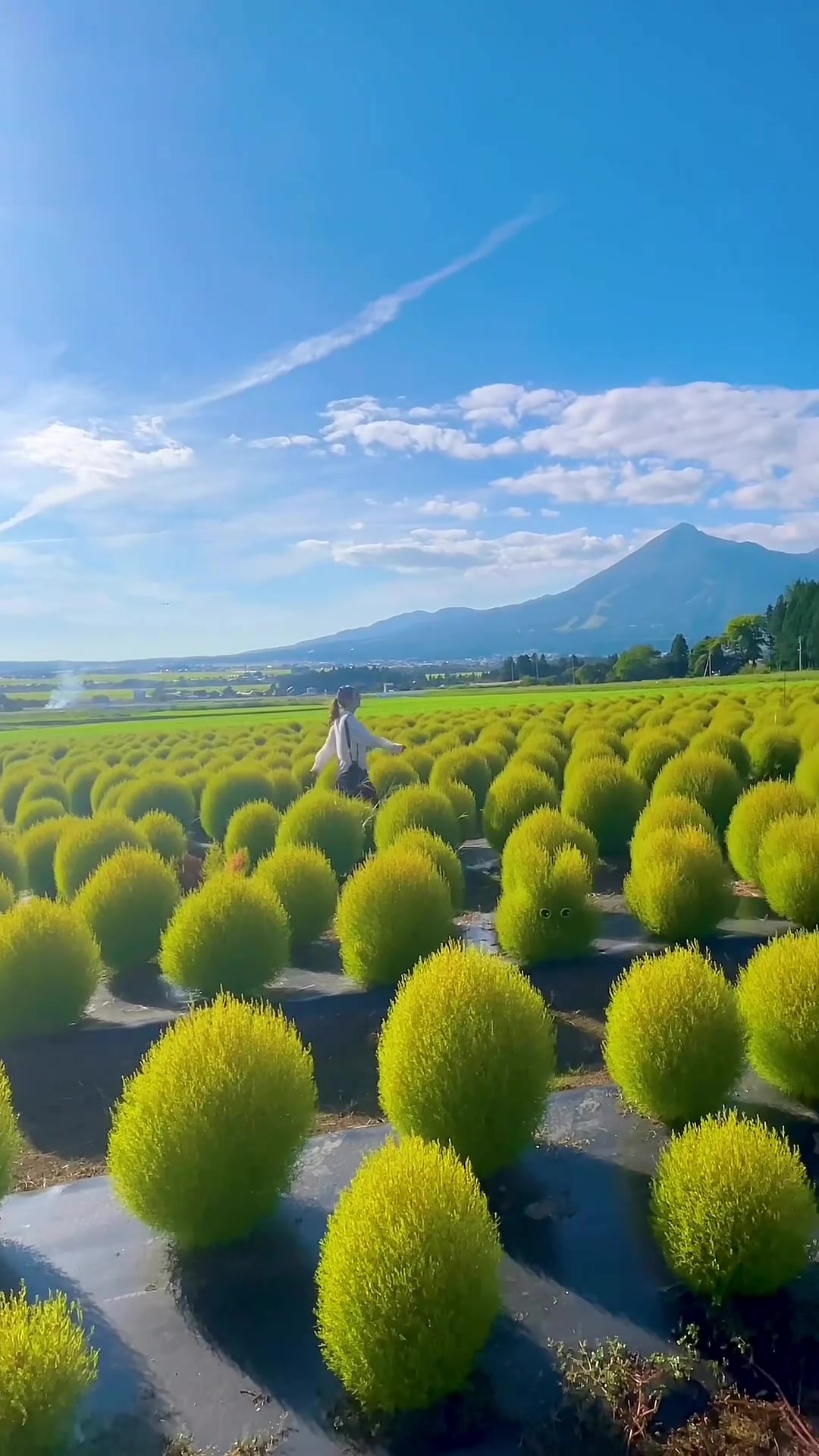
The field is a living labyrinth, a canvas of vibrant green dots stretching towards distant mountains — the birds-eye view reveals that the bushy field is composed of thousands of perfectly round bushes. This is no accidental beauty; this pattern is the byproduct of years of human hands and the climate shaping the landscape. The creation of natural patterns on the landscape is not only visually captivating, but also a testament to the harmony between human cultivation and nature's design. A path exists, and a single person stands inside the center of the field. The serene picture they present is the culmination of the human interaction with the landscape. This landscape is called the Round Bush Field.
The Round Bush Field at Tasman National Park on the East Coast of Tasmania, Australia
The Round Bush Field, located in Tasmania's Tasman National Park, is a visually striking landscape that attracts many visitors. It is a vast expanse of densely packed bushes, each trimmed meticulously into a circular shape. The uniformity of the bushes creates a mesmerizing pattern, drawing the eye into the distance. Though no significant text accompanies the clip, the presence of images gives us some idea of the setting. Tasmania, the island state of Australia, shares a reputation for vast, untouched wilderness — but the field is man-made. It is neither a result of natural selection nor any overt peculiarity of the earth’s geology. While many regions around the world boast unique landscapes, what distinguishes this field is the deliberate human effort that went into shaping it. The bushes are trimmed into perfect circles, a feat that was achieved through meticulous human effort over decades. The cultivation of this field showcases the long term collaboration and reciprocity between mankind and nature. Yet, these bushes thrive better in the weather specific to the region they are in. The microclimate created through the mixture of a predominantly cool weather and winds coming from all around the Tasman Sea contribute to the unique flora. The geology of the bush field is not unique, however — the dominant soil composition is clay and sand. The kind of bushes in the garden are a specific species of native Tasmanian shrubs and grasses. The bushes in the field are evergreen, adding to the lush, vibrant landscape. These bushes, however, do not produce flowers or seeds that will propagate them into other species. They grow in a specific mosaic pattern, and though they are all uniform, they do allow surrounding vegetation to thrive.
Round Bush Fields as a Tourist Destination
Nature and landscape tourism makes up a significant fraction of tourism everywhere, and especially in Australia. The sight is popular among hikers and nature enthusiasts. The field is located in a national park, which would indicate that the National Parks and Wildlife Service of Tasmania makes efforts to ensure its preservation, The field attracts visitors from around the world who want to witness this unique landscape and capture its beauty in photographs. The field is a unique tourist draw, encouraging hikers and photographers alike to explore the East Coast Track. The Round Bush Field is accessible at the halfway point of the East Coast Track, a multi-day hike along Tasmania’s rugged coastline. It’s a particular magnet for hikers and photographers. Those who reach the spot report that the location is particularly photogenic. Family trips are common, as the hike is moderately difficult and the destination encourages families to explore.
The Glacial Impact on Bush Growth
The Bunnerong glaciation carved out the landscape that the Tasmanian bush-field occupies. To understand how this affected the growth pattern of the bush, we need to understand that glacier movement affects flora in three ways:
- The first way is the direct impact of glacial activity, which causes moraines and other geological features.
- The second way is the effect of meltwater. Water from glaciers are often cold and laden with sediment, leading to a slow, gradual deposition of materials.
- The third way is the glaciation effect — the accumulative effect of glaciers the geological eras. The glaciation process had three different effects on the growth of the bush. The glacial sediment created by the glacier movement settled in the region, giving rise to conglomerates and other formations. The region's meltwater from the ice gradually deposited material over several years, leading to soil enrichment. The preservation of the flora of Tasmania is a testament to this process.
A Year in The Life of a Bush
Summer months in the region lead to a lush canopy. The source does not include specific dates but does make it clear that the field is in a predominantly cool climate, meaning that the most vibrant part of its natural growth occurs from spring to summer. The field does not include trees or other tall vegetation that is subject to cycles of shedding and regrowth. However, the dominant species of bushes shed parts of themselves in winter. The bushes have a high tolerance to grazing, and the bush itself undergoes little seasonal change in structure. The bushes are high in protein and fibre, making them beneficial for livestock. The field does offer shelter to the local species of animals, and it acts as a nursery for several species of mammal, insect, and bird.
Bush Management
The practice of stump removal, controlled burning and re-seeding has been seen in the region. Bush management practices are thus essential to maintain the unique ecosystem and prevent the spread of invasive species. While the visual summary does not provide information about the practices done in the field, it does provide an overview of what is done in the region. The difference in the bush-growing style helps to keep the ecosystem in balance. However, the bush is not a wildfire risk. The Tasmanian bush-fields is cultivated for us. They pose no threat to the environment, nor do they disrupt the silviculture of the plant communities, because they are managed in a particular way. These shrubs do not pose any competition to native plants — but they promote population growth of other species by providing them with adequate shelter and food. Grazing management practices have been seen in the field, which have helped to maintain the landscape. Therefore, cultivation has helped conserve the landscape and the species.
A Pitch for Bush-Field Adventures
The Round Bush Field at Tasman National Park requires hiking. However, it is not difficult, and the destination is worth the travel.
- Stay local: If you are the adventurous kind, you can choose to stay in a park lodge or camp in the park.
- Walkabout: There are several hikes around the area, from easy, short walks to multi-day hikes.
- Wet or Dry: Explore the park in Spring when the bush starts to bloom, or in Winter when the evergreens capture rain in their leaves.
- Binoculars: A pair of binoculars will help you to spot the many species of birds in the bush-field.
- Weather: The field is a good experience anytime of year — but if you want an experience devoid of rain, go in spring or summer.
The Incredible Spaces in Wait, No Man's Land
This is not merely a field; it is a time capsule. Each bush is a testament to the evolution of flora, and the preserved landscape is a testament to the geological changes that occurred. The sight is photographed from above and is not the perfect circle; however, it appears to be one from a distance. Most of the bush species found in the region are unique to the island and have no evolutionary links with the Australian mainland.
Watch the Reel
Questions readers ask
What are the Round Bush Fields and where can I find them?
The Round Bush Fields are a vast expanse of meticulously trimmed, round bushes stretching for miles, located in Tasman National Park on the East Coast of Tasmania, Australia. They are a popular tourist destination, known for their unique and visually striking landscape.
How did the Round Bush Fields get their unique shape and pattern?
The Round Bush Fields got their unique shape and pattern through decades of human effort. The bushes are trimmed into perfect circles, creating a mesmerizing pattern that stretches towards the distant mountains. This deliberate shaping is a testament to the harmony between human cultivation and nature's design.
What kind of bushes are in the Round Bush Field, and why do they grow in such a specific pattern?
The bushes in the Round Bush Field are a specific species of native Tasmanian shrubs and grasses. They grow in a specific mosaic pattern, and though they are all uniform, they allow surrounding vegetation to thrive. The unique flora thrives in the microclimate created by the cool weather and winds from the Tasman Sea.
Can I visit the Round Bush Fields, and what should I expect during my visit?
Yes, you can visit the Round Bush Fields as they are a popular tourist destination. Located in a national park, the field attracts visitors from around the world. You can expect a visually striking landscape, perfect for hiking and photography, especially along the East Coast Track. The National Parks and Wildlife Service of Tasmania ensures its preservation, so you can enjoy the natural beauty while it's protected.
Are the Round Bush Fields a natural phenomenon or man-made?
The Round Bush Fields are a result of human effort and not a natural phenomenon. The bushes are trimmed into perfect circles, and the field’s unique pattern is a byproduct of decades of human interaction with the landscape. This deliberate shaping is what makes the field so distinctive and visually captivating.
Related deep dives
Similar reads based on topic and creator.




Recent articles
Fresh deep dives from the latest Reels we unpacked.



Comments
Be the first to comment.