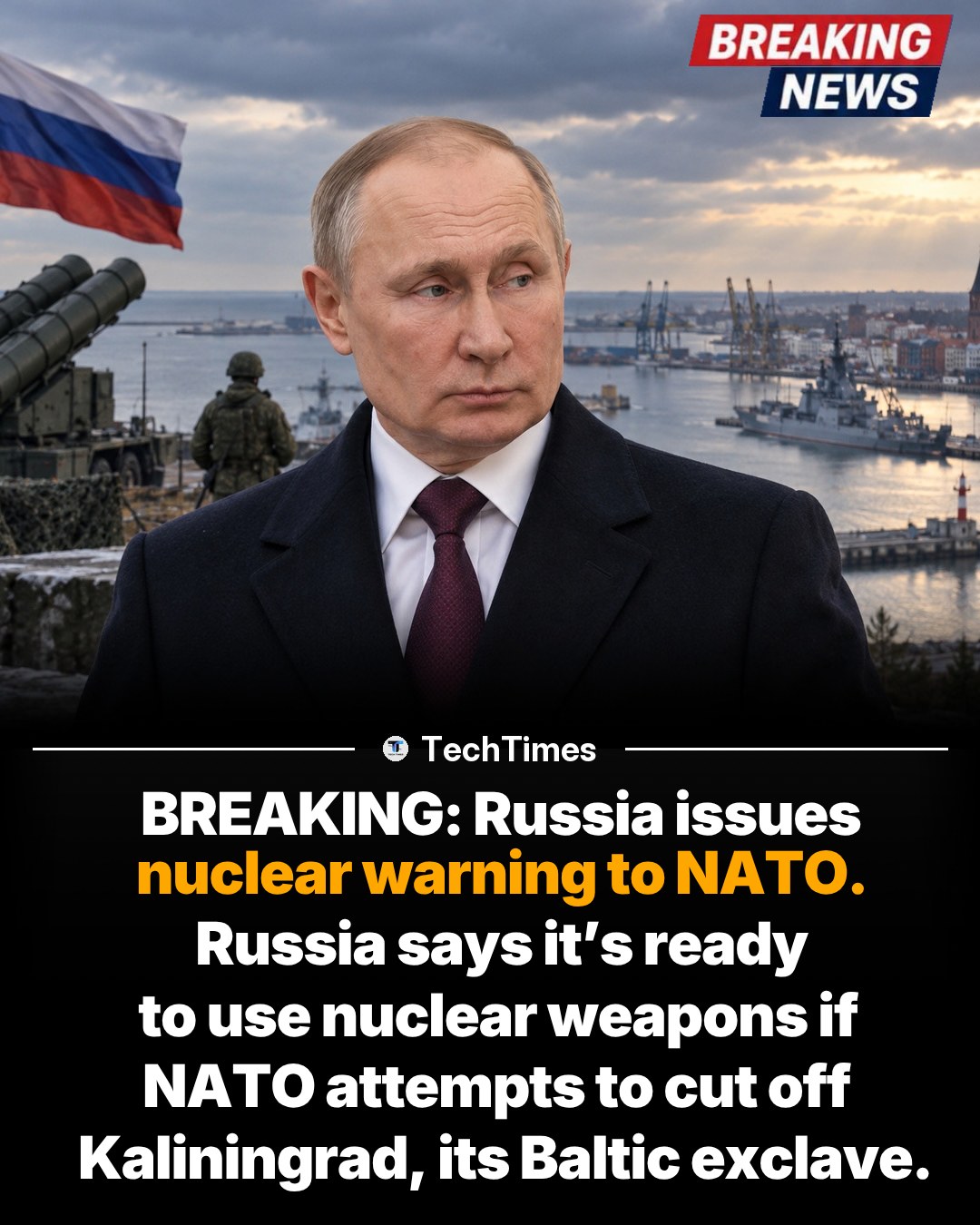
Russia has issued a stark nuclear warning to NATO, citing concerns about potential attempts to isolate Kaliningrad, a Baltic exclave. This threat, attributed to TechTimes, marks a significant escalation in the ongoing tensions between Russia and the North Atlantic Treaty Organization.
Kaliningrad as a strategic flashpoint for NATO and Russia
Kaliningrad, a Russian enclave nestled between Poland and Lithuania, is far more than a mere strip of land. It serves as a Russian pivot point. The narrow, strategically vital terrain holds a major Russian naval base, and is where the Kaliningrad missile factories power much of Russia's military technology. For NATO, Kaliningrad sits smack in the middle of their eastern frontiers. The territorial dispute involving Kaliningrad is not a new flashpoint. It is a result of geopolitical games played since the end of the second world war. From then on, throughout the Cold War, Kaliningrad was a part of the Soviet Union and it is now a Presidential enclave, stripped of the governing power of a federal district, reporting directly to Kremlin. By extension, this powerful status makes it more than just a strategic location - it means that whoever controls Kaliningrad controls the Baltic Region. NATO countries have been heavily strengthening their military presence in the region.
Tensions between Russia and NATO are gaining momentum
Russia's assertive nuclear warning signals an escalation in the already fraught relationship between Russia and NATO. Kaliningrad is a key player in this geopolitical game, a microcosm of broader tensions that have been brewing for years. As NATO positions itself as a defensive barrier to Russian aggression, Moscow’s nuclear posturing is a blunt message that suggests Russia perceives an imminent threat to its territory and readiness to respond severely. While the exact cause of this tension has not been made clear, it is clear that the conflict has a far-reaching impact on the geopolitical climate. Two significant factors are at play—NATO's eastward expansion and Russia’s growing assertiveness in the region. NATO’s additions of former Soviet satellite states Poland and the Baltic Countries—Estonia, Latvia, and Lithuania—added to a potent military bloc along Russia’s western border.
The Kaliningrad Enclave On NATO Forefront
The Russian enclave of Kaliningrad, the only Russian territory that borders NATO countries, is strategically crucial for Moscow. The region houses a significant portion of Russia's military personnel, including naval forces, missile factories, and Kaliningrad Airforce Base. There is also the strategically important 18th Guards Motor Rifle Brigade which is a versatile unit of soldiers experts in urban warfare, amphibious warfare and mountain warfare. The city sits behind a fortified maritime border, and its defense has been meticulously planned, with the Russian Navy’s ability to operate in restricted waters, which allows them to control naval access.
The alloy of geopolitics and military prowess
The escalating tensions reveal a deeper geopolitical turmoil highlighted by a military chess match of strategic importance. Russia’s the Baltic Fleet at Kaliningrad features the 'Baltic Fleet Strategic Command' which plays a critical role in the Russian military. This powerhouse includes the Baltic Missile Defense system, radars, and air defence units power-packed to protect the city from air and naval threats. In case of a NATO attack, the Russian army has forward bases in Belarus and the main force in the Kaliningrad region. While NATO is a mutual defense pact, the militarily potent Moscow is strategically placed to counter any Western advances. Russia wields many of these potent assets to deter and reinforce its strategic hold on the region.
European geopolitics and the role of NATO
With Kaliningrad sitting right behind NATO Eastern Flank, the European Union countries have few options in case of a Russian attack. Russia holds a strategic advantage in the Baltic Sea. Ukraine and the Russian annexation of Crimea, geopolitical tensions have risen between the two; However, the Russian victory in Ukraine has gone awry with the geopolitical upheaval. The Russian naval fleet has reportedly deployed new assets such as the Su-27 SM Air Force which has a defensive combat radius and speed. The territory hosts the Kaliningrad missile factories, which power much of Russia's military technology, including the next-generation hypersonic missiles.
NATO’s response to the escalation
NATO and other partner countries need to take careful steps towards Russia to deescalate the tensions. 2022 saw Russia developing and deploying the advanced hypersonic nuclear capabilities as a deterrent. The NATO Secretary-General is working on the deployment of Russia and reinforcing the NATO footprint with an Eastern Flank to prepare a defensive and offensive strategy in case of an escalation.
Expert Thoughts on the situation
For civilians in the zone, Russia now threatens to activate nuclear weapons if its strategic enclave is cut off. The message to NATO is clear, even in a retaliatory situation their response would not be aimed at a limited target. With the Russian nuclear doctrine of escalate to de-escalate, Russia threatens to use all its nuclear capabilities in any military engagement with NATO. Many a Western NATO strategic circles posit that it would lead to a nuclear winter. Even if the threat if not acted on, the missile factories of Kaliningrad and the Baltic fleet remain a global threat to the safety of the world.
Staying Safe in the region
Residents of Kaliningrad must be aware of the heightened tensions. Some recommendations include:
- Understand the Layout: Familiarize yourself with the layout of Kaliningrad, including safe zones and evacuation routes.
- Stay Alert: Keep informed about the situation by following reliable news sources and authorities.
- Emergency Contacts: Have emergency contact numbers handy, including local authorities and consulates.
- Preparation: Maintain an emergency kit with essential supplies, including food, water, and medical supplies.
- Shelter Options: Know where the nearest shelters are located. Russia's nuclear warning to NATO underscores the critical role of Kaliningrad in the broader geopolitical landscape. The region serves as a pivotal point in Russia's defensive posture and a strategic asset for NATO. As tensions escalate, understanding the nuances of this conflict is essential for navigating the complex dynamics between Russia and NATO.
Watch the Reel
Questions readers ask
What makes Kaliningrad so strategically important for Russia?
Kaliningrad is crucial for Russia because it houses a major naval base, missile factories, and the Kaliningrad Airforce Base. It also serves as a pivotal point for controlling the Baltic Region, making it a key strategic asset for Moscow.
Why is NATO concerned about Kaliningrad?
NATO is concerned about Kaliningrad because it sits between Poland and Lithuania, right in the middle of their eastern frontiers. The region's military significance and Russia's assertive stance make it a potential flashpoint for conflict.
What does Russia mean by its nuclear warning to NATO?
Russia's nuclear warning to NATO is a stark message indicating that they perceive an imminent threat to their territory, specifically Kaliningrad. It suggests that Russia is ready to respond severely if it feels NATO is attempting to isolate or threaten the region.
How has NATO responded to the tensions over Kaliningrad?
NATO has been strengthening its military presence in the region in response to the tensions. This includes positioning itself as a defensive barrier against potential Russian aggression and adding former Soviet satellite states to its military bloc.
What are the key factors driving the tensions between Russia and NATO over Kaliningrad?
The key factors driving the tensions are NATO's eastward expansion, which includes the addition of former Soviet satellite states like Poland and the Baltic countries, and Russia's growing assertiveness in the region. This has led to a geopolitical chess match of strategic importance.
Recent articles
Fresh deep dives from the latest Reels we unpacked.




Comments
Be the first to comment.