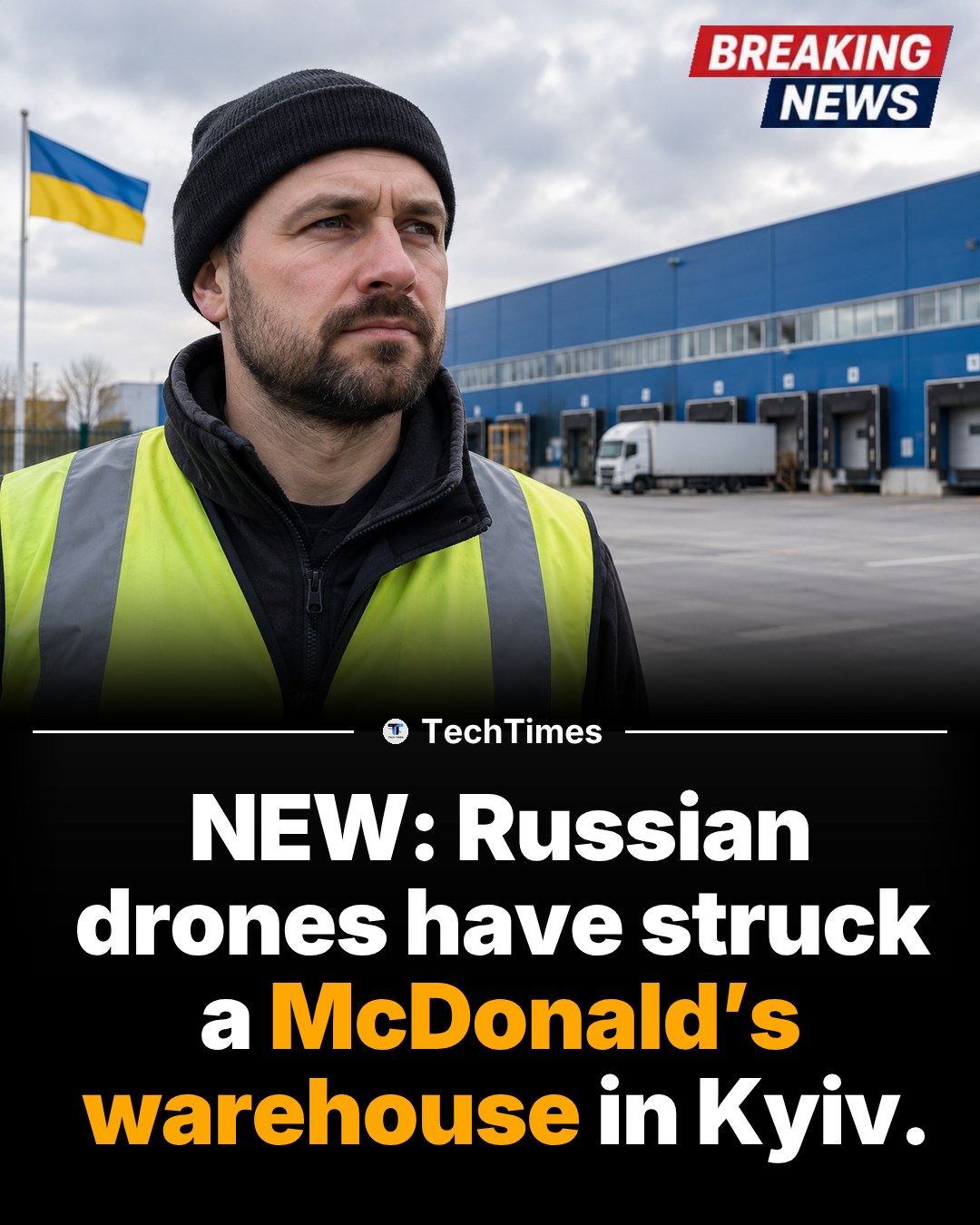
A McDonald’s warehouse in Kyiv became the latest target of Russian drones. The strike, reported with stark simplicity, is a snapshot of the evolving warfare in Ukraine and a stark reminder of the logistical challenges posed by conflict.
The Target
The attack ruined a key storage facility in Ukraine. The warehouse wasn't a McDonald's restaurant, but a distribution center for transporting supplies to nearby restaurants. The warehouse fulfills the same role as McDonald’s distribution centers worldwide — stores are replenished and restaurants can continue operating and serving products. But unlike other McDonald's supply operations, Kyiv's lies in a high-risk area. The warehouse's size, function and strategic importance make it an attractive target. The site stands out for its unassuming appearance. A blue building with a cloudy sky backdrop, it doesn’t stand out to the casual eye. But it’s a vital part of the city's food supply. It is part of the independent operation of McDonald's that supplied the entire region. Prosecuted by Russia’s invasion, Ukraine’s food supply chain is frequently disrupted by airstrikes, making it even harder to sustain operations.
Ukraine's Supply Chain Under Siege
The strike underscores the broader conflict dynamics. Since the outset of war, Ukraine has faced an onslaught of Russian attacks targeting strategic assets in Kyiv and beyond. The conflict has affected daily life. Stores, petrol stations, overhead structures, roads, and bridges are all under fire — not just the military. A 2023 study from the Food and Agriculture Organization of the United Nations, McDonald's warehouse strike is a win for Russia. And with food delivery operations in high demand in Ukraine, Russia's actions on critical infrastructure like the McDonald's warehouse are increasingly felt by the populace. The attack is not just a material disruption, but a psychological one. Even as Ukraine struggles to defend its airspace, attacks continue to create widespread uncertainty. Although it’s being difficult to confirm the exact count.
The Blueprint for Kyiv Distribution Center
Lodging people in the unofficial underground, preventing the delivery of food supplies to the heart of the city — these are not just isolated incidents. The attack on logistics confirms a growing trend in warfare. Targeting supply lines has a clear edge over attacking military forces directly. This attack disrupts the flow of supplies and forces the enemy to adapt or slow down.
Why Logistics Matter
The logistics of food supply in conflict zones like Ukraine are never straightforward. The McDonald’s warehouse serves dozens of restaurants in the area, and the city now faces supply issues and longer lead times. Managing a supply chain during wartime requires a deliberate balancing of speeds to avoid detection. It’s not just about getting all the orders. Up against Russia’s military might, McDonald's must balance between maintaining routines and ensuring safety. Surviving it with minimal interruption requires a lot of acrobatics.
The Kyiv Warehouse
Few photographs of the warehouse remain, and it doesn’t offer much detail. But what it holds gives a sense of the impact. The facility is a critical point in the company’s operations, handling everything that goes to the restaurants and the many other suppliers. The warehouse stocks all the dairy, meat, and other perishable items. Goods might arrive from Kyiv, and then cross-loads that head to the restaurants. Kyiv is one of the central connecting points of the region. But Russia's attacks now add what might be an even bigger hurdle.
Defense Efforts
Ultimately, the broader problem of securing food and other essential supplies from the warehouse will continue to prove to be a formidable task to achieve for Ukraine. It's unclear what the long-term implications of the strike will be. It’s unclear who should be accountable. But the effects will likely continue to spread beyond the warehouse itself. With the McDonald's warehouse's destruction.
"What Are the Alternatives?" Support Ukraine
If the conflict continues, the McDonald’s warehouse strike underscores the urgency that Ukraine’s food supply chains need support.
- Understand Logistics: Learn about the logistics of food supply chains and how they are impacted by conflict. This can be done by researching the topic or talking to experts.
- Support Local Supply Chains: If you are in Ukraine, support local supply chains by purchasing goods from local suppliers. This will help to keep the economy running and ensure that food supplies continue to reach the people who need them. McDonald's staff, and other volunteers can work towards organizing food.
- Farmers must be provided with credit: Launch digital services. Ensure there is micro-finance available, so that farmers can manage their own finances and plan for future purchases. This will help to keep the economy running and ensure that food supplies continue to reach the people who need them.
- Donate to food banks: Donate to food banks and other organizations that are working to ensure that food supplies reach those in need. This will help to keep the economy running and ensure that food supplies continue to reach the people who need them.
The Future
The McDonald’s warehouse strike and Ukraine’s attack on its supply lines should serve as a point of reflection. The conflict is much bigger than a single warehouse. The warehouse strike speaks to the broader impact of war.
Watch the Reel
Questions readers ask
What exactly was the McDonald's warehouse in Kyiv used for?
The warehouse in Kyiv was a distribution center, not a restaurant. It served as a key storage facility for supplies that were then transported to nearby McDonald's restaurants, ensuring they could continue operating and serving products.
Why did Russia choose to target this particular warehouse?
The warehouse's strategic importance made it an attractive target. It's crucial to Kyiv's food supply, and disrupting it aligns with Russia's strategy of targeting civilian infrastructure to disrupt daily life and create logistical challenges for Ukraine.
How does an attack on a logistics center like the McDonald's warehouse impact the broader conflict?
Such attacks disrupt the flow of supplies, making it harder for stores and restaurants to operate. This not only creates material disruptions but also psychological uncertainty, affecting the morale and daily life of civilians in Ukraine.
What makes logistics a critical target in modern warfare, as seen in the McDonald's warehouse attack?
Targeting supply lines can be more effective than attacking military forces directly. It forces the enemy to adapt or slow down, creating significant disruptions in daily operations and supply chains, which can be crucial in prolonged conflicts.
How does McDonald's manage its supply chain in a conflict zone like Ukraine?
Managing a supply chain during wartime requires balancing speed and safety. McDonald's must ensure that supplies are delivered efficiently while minimizing the risk of detection and attack. This involves a lot of planning and adaptation to maintain routines and ensure safety.
Related deep dives
Similar reads based on topic and creator.




Recent articles
Fresh deep dives from the latest Reels we unpacked.




Comments
Be the first to comment.