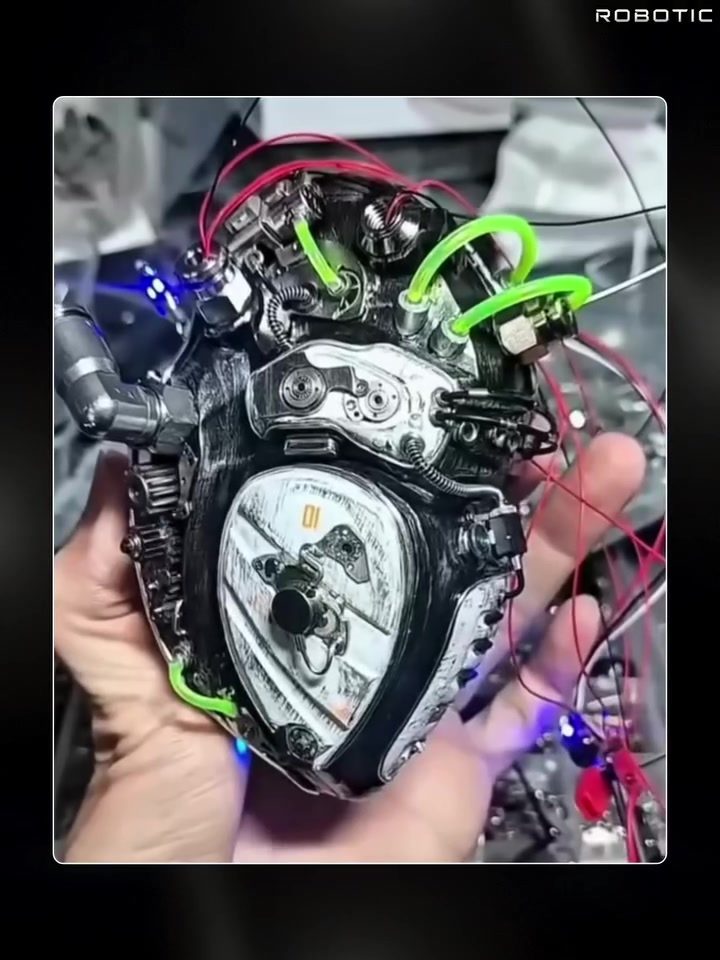
Robotic Hearts and Their Role in Medical Research
Robotic hearts, built to mimic the movement and behavior of real human cardiac tissue, are revolutionizing the way researchers study and treat heart conditions. Using soft robotics and advanced fabrication techniques, these mechanical models can recreate realistic heart motion and allow researchers to study a variety of cardiovascular dynamics in a controlled lab setting. This technology has the potential to simplify the study of complex heart conditions through repeatable laboratory experiments.
Context: The Importance of Robotic Hearts
The ability to replicate the intricate behavior of heart tissue is invaluable for researchers. Real human hearts are complex and sensitive, making in vivo experimentation challenging. Robotic hearts provide a controlled environment where researchers can study fluid flow, valve behavior, pressure, and mechanical stress without the ethical and practical constraints of using human subjects. This controlled environment is essential for testing new implants, surgical techniques, and drug effects before they are applied to patients.
Main Discussion
Recreating Human Cardiac Motion
Researchers use soft robotics and advanced fabrication techniques to closely replicate the movement of human cardiac tissue. By achieving this, they can simulate the fluid flow, pressure, and stress that real hearts experience. The models help researchers understand how these factors affect the performance of implants, surgical techniques, and drug treatments.
Fluid Flow and Valve Behavior
One of the key benefits of these robotic hearts is the ability to study fluid flow and valve behavior in a controlled setting. Researchers can observe how blood flows through the heart, identify potential blockages, and test new valve designs. This information is crucial for developing more effective treatments for heart conditions that affect blood flow and valve function.
Testing Implants and Surgical Techniques
Robotic hearts allow researchers to test implants and surgical techniques in a laboratory setting before conducting clinical trials. This means that new devices and procedures can be refined and optimized before being applied to patients, reducing risks and improving outcomes. By allowing for repeatable experiments, robotic hearts make it easier to study the effectiveness of different treatments.
Studying Drug Effects
Researchers can also use robotic hearts to study the effects of drugs on cardiac tissue. By observing how drugs interact with the mechanical heart, scientists can better understand their potential benefits and side effects. This information is vital for developing new medications that can treat heart conditions more effectively and safely.
Pressure and Mechanical Stress
Pressure and mechanical stress are significant factors in the health of the human heart. Robotic hearts allow researchers to study these factors in a controlled environment, providing insights into how they contribute to heart conditions. This knowledge can help in developing treatments that reduce mechanical stress and improve heart function.
Practical Tips
Building Effective Models
When building robotic hearts, it is essential to focus on the precision and complexity of the device. Use advanced fabrication techniques to ensure that the model can accurately replicate the movement and behavior of real cardiac tissue. Attend to the intricate construction of the device, including the manipulation and connection of various components.
Incorporating Soft Robotics
Soft robotics plays a crucial role in creating realistic heart models. These materials can closely mimic the flexibility and movement of human tissue, making the models more effective for research. Integrating soft robotics into the design can help achieve the desired level of realism and functionality.
Utilizing a Controlled Environment
A controlled environment is essential for accurate and reliable research. When using robotic hearts, ensure that all experiments are conducted in a controlled setting to minimize external variables. This will allow for more precise measurements and consistent results.
Collaborating with Researchers
Collaboration with experts in the field is key to successfully using these models. Researchers can provide insights and guidance, ensuring that the models are used effectively and that the results are reliable. Collaboration also opens up new avenues for research, enabling a deeper understanding of heart conditions and potential treatments.
Important Takeaways
Robotic hearts offer a powerful tool for studying and treating heart conditions. By closely replicating the movement and behavior of real human cardiac tissue, these models provide a controlled environment for researchers to study fluid flow, valve behavior, pressure, and mechanical stress. This technology has the potential to simplify the study of complex heart conditions, making it easier to test new implants, surgical techniques, and drug effects.
Conclusion
Robotic hearts are transforming the way researchers approach heart conditions. By providing a controlled and repeatable environment for experimentation, these models offer invaluable insights into the complexities of the human heart. This technology, combined with advanced fabrication and soft robotics, paves the way for more effective treatments and a deeper understanding of cardiovascular health. As research continues to advance, robotic hearts will play an increasingly important role in improving patient outcomes and pushing the boundaries of medical technology.
Watch the Reel
Questions readers ask
How do robotic hearts contribute to heart condition research?
Robotic hearts provide a controlled and replicable environment for researchers to study complex heart conditions. By mimicking human cardiac tissue, they allow for the testing of various treatments, including drugs and surgical techniques, without the need for human subjects.
What are the advantages of using robotic hearts over traditional methods?
Robotic hearts offer several advantages, such as the ability to replicate the movement and behavior of real human hearts. This makes them invaluable for studying cardiovascular dynamics and testing new treatments. Additionally, they provide a consistent and controlled lab setting, which is not possible with real human hearts.
Can robotic hearts be used to test heart implants and surgical techniques?
Yes, robotic hearts are specifically designed to test heart implants and surgical techniques. Their advanced fabrication allows them to mimic the behavior of real cardiac tissue, providing a realistic platform for researchers to evaluate the effectiveness and safety of new procedures and devices.
How do researchers create robotic hearts that mimic human cardiac tissue?
Robotic hearts are created using soft robotics and advanced fabrication techniques. These methods enable the replication of the intricate movements and behaviors of human cardiac tissue, allowing for a high level of realism in the mechanical models.
What is the role of robotic hearts in improving heart surgery procedures?
Robotic hearts provide a realistic and controlled setting for practicing and refining surgical techniques. This can help surgeons improve their skills and develop new procedures, ultimately leading to better outcomes for patients.
What are the potential benefits of robotic hearts for drug development in heart condition treatments?
Robotic hearts can be used to test the effects of new drugs on cardiac tissue in a controlled environment. This can help researchers identify potential treatments and understand how drugs interact with heart tissue, ultimately accelerating the development of effective medications.
Recent articles
Fresh deep dives from the latest Reels we unpacked.




Comments
Be the first to comment.