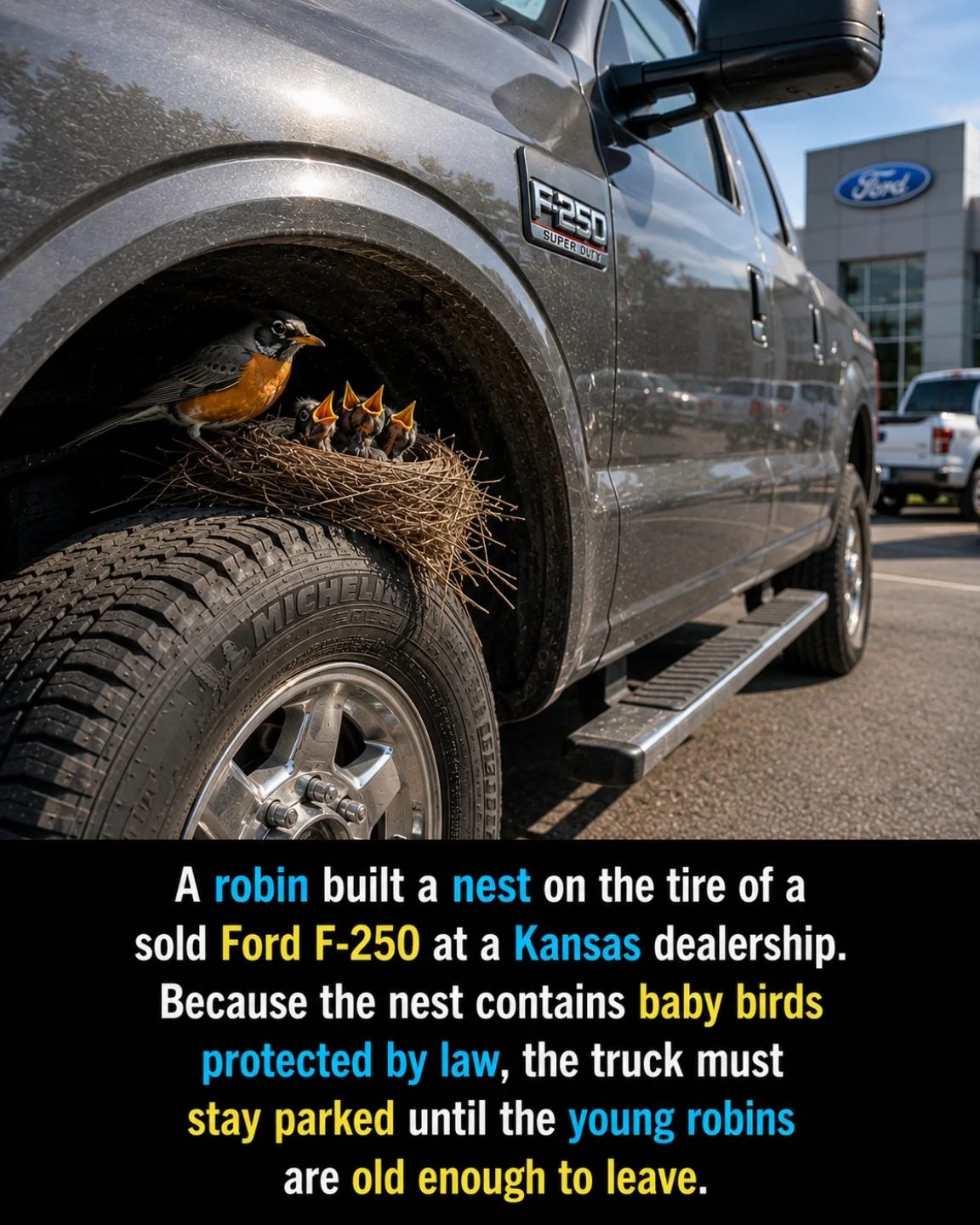
Robin's Nest on Truck Tire
A robin's nest built on the tire of a Ford F-250 truck at a Kansas dealership has sparked interest, highlighting the unexpected challenges of wildlife encounters in urban and industrial settings. This situation raises awareness about the legal protections for wildlife and the practical considerations for vehicle owners and businesses.
Why This Matters
The encounter between wildlife and human activity is a common yet often overlooked aspect of urban and industrial life. Understanding the legal protections in place for wildlife and the practical implications for vehicle owners can help prevent conflicts and ensure the safety of both humans and animals. This situation serves as a reminder of the importance of coexistence and the responsibilities that come with it.
The Ford F-250 and the Robin's Nest
The Ford F-250, a popular heavy-duty pickup truck, is a versatile vehicle designed for various tasks, from towing to off-road adventures. Its robust construction and durable tires make it a reliable choice for many drivers. However, encountering a robin’s nest on the tire of such a vehicle highlights an unexpected challenge.
The nest, built on the tire of a Ford F-250 at a Kansas dealership, contains baby birds. This situation underscores the legal and practical considerations that arise when wildlife intersects with human activity. The truck must remain parked until the young robins are old enough to leave, ensuring their safety and compliance with legal protections.
Legal Protections for Wildlife
The legal framework surrounding wildlife protection varies by location, but in many areas, nesting birds are protected by law. In the United States, for instance, the Migratory Bird Treaty Act of 1918 prohibits the disturbance or destruction of nests and eggs of migratory birds. This means that any action that could harm or disturb the young robins and their nest is illegal.
Practical Considerations for Vehicle Owners
For vehicle owners facing a similar situation, there are several practical steps to consider:
- Assess the Situation: Determine if the nest is actively in use and if it contains eggs or young birds. If it does, legal protections are likely in place.
- Contact Local Authorities: Reach out to local wildlife authorities or a wildlife rehabilitation center for guidance. They can provide specific advice tailored to your location and the species involved.
- Minimize Disturbance: Avoid moving the vehicle or taking any actions that could disturb the nest. This ensures the safety of both the birds and the vehicle owner.
- Monitor Progress: Keep an eye on the nest to determine when the young birds have left. This can take several weeks, depending on the species and the time of year.
The Role of Dealerships and Businesses
For businesses like the Kansas dealership, encountering a robin’s nest on a vehicle can present unique challenges. Here are some steps businesses can take to handle such situations:
- Training Staff: Educate employees on wildlife protection laws and the appropriate actions to take if they encounter a nest on company property.
- Create a Protocol: Develop a clear protocol for handling wildlife encounters, including when to contact local authorities and how to document the situation.
- Public Communication: Inform customers and the public about the situation to build goodwill and transparency. This can also serve as an educational opportunity, highlighting the importance of wildlife protection.
Important Takeaways
- Legal Protections: Wildlife, especially nesting birds, is protected by law. Understand and comply with local regulations to avoid legal issues.
- Practical Steps: Take practical steps to ensure the safety of both the wildlife and the vehicle. This includes assessing the situation, contacting local authorities, and minimizing disturbance.
- Business Responsibilities: Businesses should have protocols in place for handling wildlife encounters and educating staff on the appropriate actions to take.
Conclusion
Wildlife encounters, such as a robin’s nest on a Ford F-250 truck, are a reminder of the delicate balance between human activity and the natural world. By understanding the legal protections in place and taking practical steps, vehicle owners and businesses can ensure the safety of wildlife while minimizing disruption to their activities. Whether you're a driver facing an unexpected nest or a business dealing with wildlife encounters, knowledge and preparation are key to handling these situations successfully.
Watch the Reel
Questions readers ask
What should I do if I find a robin's nest on my vehicle at a dealership?
If you discover a robin's nest on your vehicle, it is important to contact the dealership and local wildlife authorities. Robins are protected under the Migratory Bird Treaty Act, so it is illegal to disturb the nest. They will be able to advise on the best course of action.
Can I drive away with the robin's nest still on my tire?
No, it is not advisable to drive away with a robin's nest on your tire. Not only could it harm the nest and the birds, but it could also potentially damage your vehicle. Additionally, it is illegal to disturb or destroy an active nest of protected species.
Who is responsible for handling the robin's nest on the vehicle?
The responsibility typically falls on the vehicle owner, but in this case, since the nest was found on a vehicle parked at a dealership, the dealership should take the lead in contacting local wildlife authorities. They will provide guidance on how to handle the situation legally and safely.
What should the dealership do when a bird's nest is found on a customer's vehicle?
The dealership should immediately contact local wildlife authorities to report the nest and seek guidance. They should not attempt to remove the nest themselves. In the meantime, they should inform the vehicle owner about the situation and the steps being taken to address it.
What are the legal protections for birds and their nests in Kansas?
In Kansas, birds and their nests are protected under state and federal laws, including the Migratory Bird Treaty Act. It is illegal to disturb, harm, or destroy an active nest or its eggs without proper authorization. Violations can result in fines or other penalties.
What are the potential consequences of disturbing a robin's nest?
Disturbing a robin's nest can have several consequences. Legally, it can result in fines or other penalties under the Migratory Bird Treaty Act. Additionally, it can harm the birds and potentially disrupt their breeding cycle, which may lead to a decline in the local bird population.
What precautions can vehicle owners take to prevent birds from nesting on their vehicles?
While it can be challenging to prevent birds from nesting on vehicles, there are some precautions vehicle owners can take. Parking in covered or enclosed areas can help, as can regularly inspecting and cleaning vehicles, especially if they are often parked in areas with significant bird activity.
Related deep dives
Similar reads based on topic and creator.

Recent articles
Fresh deep dives from the latest Reels we unpacked.




Comments
Be the first to comment.