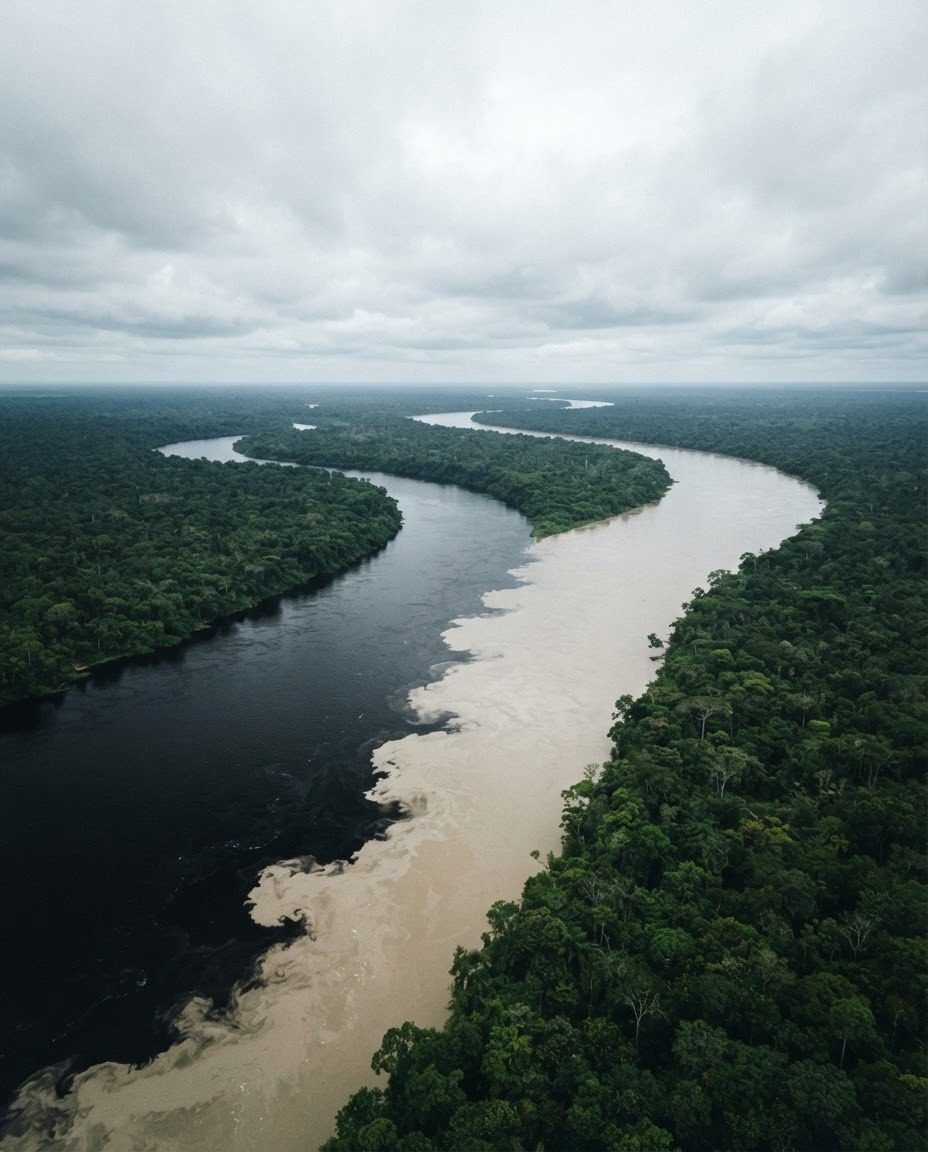
A striking display of river confluence
Nature's engineering marvels often leave us in awe, and the meeting point of two rivers is a prime example. This striking aerial view of a river confluence showcases a dark river merging with a light-colored one. The dramatic contrast is not simply a matter of aesthetics. The color disparity between the two rivers is due to varying sediment loads. Rivers carry sediment from their sources, and the amount of sediment can differ greatly. The darker river likely carries more sediment, possibly due to a higher velocity or a source area with more exposed soil. The confluence creates a stark visual display, highlighting the scale and complexity of river systems. When two rivers meet, they do not simply blend together instantly due to differences in velocity, sediment load, and even temperature. Instead, they merge gradually, creating intricate patterns that can persist for miles. The interplay of these variables generates the mesmerizing sight of the rivers' colors remaining distinct for a considerable distance.
The vital role of such landscapes in biodiversity
Where water meets land, life thrives. The surrounding landscape of this confluence is dense with lush green forest. Such ecosystems are not mere backdrops but are integral to the health of the river system and the broader environment. The rainforest acts as a filter, slowing down rainfall and reducing erosion, which in turn affects the sediment load of the rivers. This buffer helps maintain the water quality and supports the ecosystems. The forests along rivers are often hotspots of biodiversity. The intricate web of life in these ecosystems includes countless species of plants, birds, and animals. Each species plays a role in the ecosystem, from pollination to nutrient cycling. This biodiversity is crucial for the resilience of the ecosystem, allowing it to adapt to changes and recover from disturbances. Moreover, the health of these riparian forests is essential for the river's health. The roots of the trees and plants along the riverbanks help stabilize the soil, preventing erosion and maintaining the river's course.
Understanding the mechanics of river confluence
Rivers are complex systems shaped by a multitude of factors. Their behavior at confluence points can significantly influence the ecosystem as a whole. One notable phenomenon is the difference in sediment load. Rivers carry sediment from their sources, and the amount of sediment can differ greatly. The darker river likely carries more sediment, possibly due to a higher velocity or a source area with more exposed soil. This sediment not only affects the river's color but also influences its flow and the habitats it creates. For instance, sediment deposits can form islands, bars, and other features that provide critical habitats for various species. Additionally, the confluence of rivers can create unique habitats. The mixing of waters with different velocities and temperatures can generate turbulence, which aerates the water and supports diverse aquatic life.
Watch the Reel
Related deep dives
Similar reads based on topic and creator.




Recent articles
Fresh deep dives from the latest Reels we unpacked.



Comments
Be the first to comment.