New Medical Imaging Technology: Water and Sound for Faster, Easier Scans
There are exciting advancements in medical imaging with technology that could revolutionize how we see inside the body. This new approach uses only water and sound, offering a faster and potentially more comfortable alternative to traditional MRI machines. Understanding how this innovative technology works can provide insight into the future of medical diagnostics.
Context / Why this matters
Medical imaging is crucial for diagnosing and monitoring various health conditions. Traditional MRI (Magnetic Resonance Imaging) machines use powerful magnets and radio waves to create detailed images of the body's internal structures. While MRI technology is highly effective, it has limitations, including long scan times, claustrophobia-inducing enclosed spaces, and the need for patients to remain still for extended periods.
This new technology, which relies on water and sound waves, addresses some of these limitations. By harnessing the principles of sound wave propagation and data capture, this method offers the potential for faster, more comfortable scans. This could lead to broader access to diagnostic imaging, improved patient experiences, and more efficient healthcare delivery.
Water and Sound: The Basics
The new imaging technology uses a combination of water and sound waves to generate detailed internal body images. Here’s a closer look at how it works:
The Water Bath
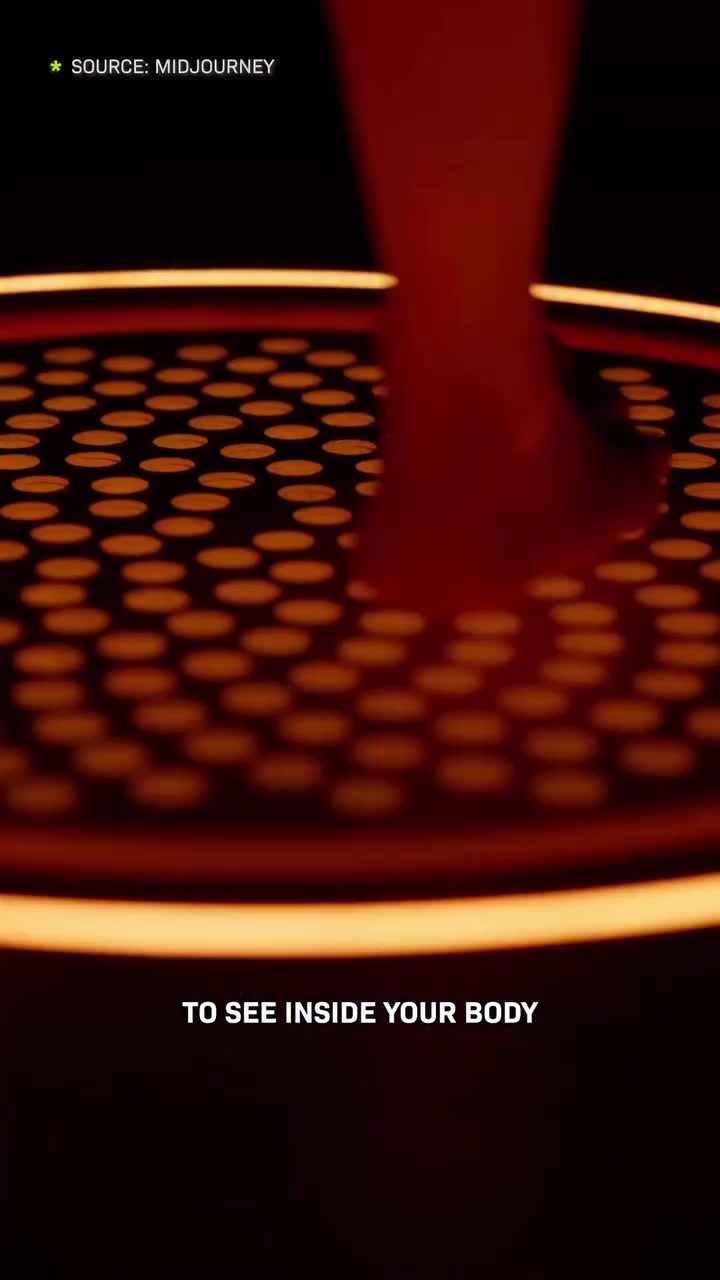
Much like traditional MRI machines, this new technology requires patients to step into a water bath. However, the process is significantly different. The water bath serves as a medium for sound wave propagation, allowing sound waves to travel through the body more efficiently.
Sound Waves and Data Capture
Sound waves travel through the water and body at a remarkably fast pace—one-two thousandth of a second. As these waves pass through different tissues and structures, they change shape depending on the density and composition of the material they encounter. Sensors placed around the body capture these changes, generating a wealth of data—up to 17 gigabytes per second.
Sensors and Data Processing
The sensors used in this technology are incredibly small, about the size of a grain of sand. These tiny sensors are arranged in a ring around the patient, capturing data as the sound waves pass through. The data is then processed to create detailed images of the body's internal structures.
Imaging Speed and Efficiency
One of the most impressive aspects of this technology is its speed. Traditional MRI scans can take several minutes to complete, but this new method can image several hundred slices of the body in just 60 seconds. This is nearly 100 times faster than conventional MRI machines.
How it Works
Understanding the technical details of this new imaging method reveals its potential advantages over traditional MRI technology.
The Role of Sound Waves
Sound waves are used to create detailed images of the body's internal structures. The key lies in how these waves interact with different tissues:
- Wave Propagation: The sound wave travels through both the water and the body. As it encounters different tissues, such as muscle, bone, or organs, the wave's shape changes.
- Data Capture: The sensors, arranged in a ring, capture these changes in real-time. Each sensor collects data as the wave passes, creating a comprehensive dataset.
- Image Reconstruction: The collected data is used to reconstruct detailed images of the body's internal structures. By analyzing how the wave changes shape, the system can determine the composition and density of the tissues it encounters.
The Scanning Process
The scanning process is designed to be fast and efficient:
- Preparation: The patient steps into a water bath and is slowly lowered into a ring of tiny sensors.
- Data Collection: Sound waves travel through the body, and the sensors capture data as the waves change shape. This process is repeated multiple times, imaging several hundred slices of the body in just 60 seconds.
- Image Generation: The collected data is processed to create detailed images of the body's internal structures.
Scanning Speed
The scanning speed of this new technology is a significant advantage. Traditional MRI scans can take several minutes to complete, but this new method can image several hundred slices of the body in just 60 seconds. This speed is achieved through the efficient use of sound waves and advanced data processing techniques.
Practical Tips
While this technology is still in the testing phase, there are a few practical tips to consider for those interested in learning more:
Understanding the Benefits
- Comfort: The new imaging technology offers a more comfortable experience for patients. The water bath and the lack of enclosed spaces can alleviate claustrophobia.
- Speed: The faster scanning process means less time spent in the imaging machine, which can be beneficial for patients and healthcare providers alike.
- Accessibility: The potential for broader access to imaging technology.
Preparing for the Scanning Process
- Stay Informed: Follow updates from researchers and healthcare providers to stay informed about the availability and benefits of this new technology.
- Consult Healthcare Providers: Speak with healthcare providers to understand how this technology might be integrated into diagnostic procedures and its potential impact on patient care.
Important Takeaways
Advantages of the New Technology
- Faster Scanning: The ability to image several hundred slices of the body in just 60 seconds makes this technology significantly faster than traditional MRI machines.
- More Comfortable: The use of a water bath and the lack of an enclosed space can make the scanning process more comfortable for patients, especially those with claustrophobia.
- Detailed Imaging: The technology captures detailed images of the body's internal structures, providing valuable diagnostic information.
Future Potential
This new imaging technology has the potential to revolutionize medical diagnostics by offering a faster, more comfortable, and more efficient alternative to traditional MRI machines. As the technology advances and becomes more widely available, it could lead to broader access to diagnostic imaging and improved patient experiences.
Conclusion
The new imaging technology that uses water and sound waves represents a significant advancement in medical diagnostics. By offering faster, more comfortable scans, this technology has the potential to improve patient experiences and healthcare delivery. Understanding how it works and its potential benefits can help healthcare providers and patients alike embrace this innovative approach to medical imaging.
Watch the Reel
Questions readers ask
How does the new water and sound medical imaging technology work?
The new imaging technology uses a water bath and sound waves to generate images of the body's internal structures. Sound waves are directed through the water and into the body, where they bounce back, creating a visual representation of tissues and organs. This process eliminates the need for powerful magnets and radio waves, making it a distinct alternative to traditional MRI scans.
What are the benefits of this new water and sound scan method?
This innovative method offers several advantages, including significantly reduced scan times and an open, non-claustrophobic environment. It also eliminates the need for powerful magnets, making it safer for patients with certain medical devices or implants. The water bath is a comfortable alternative to the confined spaces of traditional MRI machines.
Is this new technology completely non-invasive?
Yes, this new technology is entirely non-invasive. It uses sound waves and water, so it does not involve any incisions, injections, or exposure to ionizing radiation. This makes it a safe and comfortable option for patients, especially those who may be wary of more invasive procedures or radiation exposure.
How does the speed of these new scans compare to traditional MRI scans?
The new water and sound imaging technology is designed to be much faster than traditional MRI scans. Traditional MRIs can take up to an hour or more, while this new method aims to reduce scan times to just a few minutes, making it a more efficient option for both patients and healthcare providers.
Can this new imaging technology replace traditional MRI machines entirely?
While this new technology holds great promise, it is not yet clear if it will completely replace traditional MRI machines. It is best to think of it as a complementary tool that can provide additional diagnostic options. Traditional MRIs offer unique capabilities, such as detailed soft tissue imaging, which may still be necessary for certain diagnoses.
Is this new technology suitable for patients with claustrophobia?
Yes, this new imaging method is particularly suitable for patients with claustrophobia. Traditional MRI machines can be intimidating due to their enclosed spaces, but this new technology uses an open water bath, providing a more comfortable and less confining experience.
Recent articles
Fresh deep dives from the latest Reels we unpacked.




Comments
Be the first to comment.