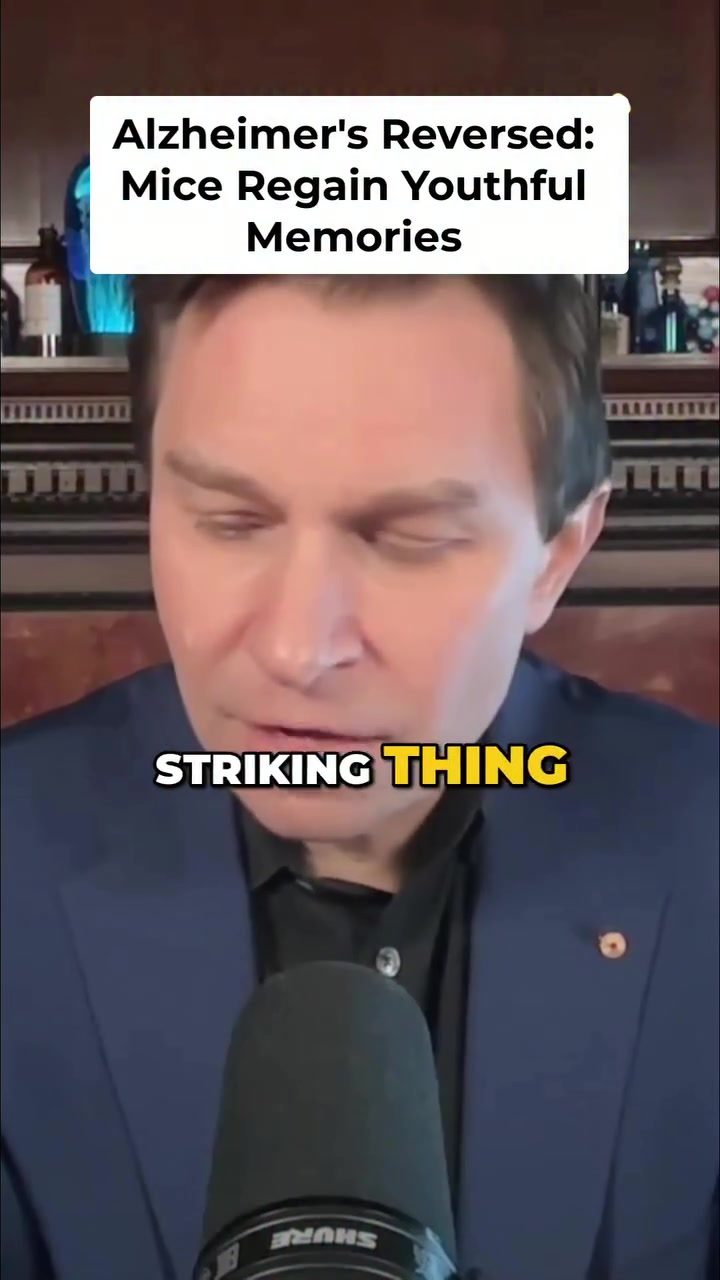
Alzheimer's Reversal Research
The possibility of reversing Alzheimer's disease and age-related memory loss has long been a subject of intense scientific inquiry, but recent research from Dr. David Sinclair’s lab offers a new and intriguing perspective. This research suggests that memories lost to aging may not be permanently erased but rather become inaccessible due to the effects of aging on the brain.
Preclinical studies conducted at Dr. Sinclair’s lab focused on epigenetic reprogramming to reverse aspects of aging in the brains of mice. The results were notable: the mice not only regained the ability to learn and remember, but they also exhibited signs that previously inaccessible memories had become available again. The team used mice that had forgotten how to perform learned tasks, effectively modeling age-related cognitive decline and Alzheimer's-like symptoms.
Why this matters
These findings challenge the conventional understanding of memory loss in aging. Traditionally, scientists have believed that memories are lost due to the degradation of brain cells and neuronal connectivity. However, Dr. Sinclair’s research suggests a more nuanced explanation. According to the study, aging disrupts the brain's ability to access stored information, rendering memories inaccessible rather than destroying them.
If this concept proves true in humans, it could revolutionize how scientists approach Alzheimer's disease and age-related cognitive decline. Instead of focusing on creating new memories, future therapies might concentrate on restoring the brain’s ability to retrieve existing ones. This shift in perspective could lead to novel treatments and interventions that significantly improve the quality of life for individuals affected by Alzheimer's and other forms of dementia.
Main discussion
The Role of Epigenetic Reprogramming
Epigenetic reprogramming involves altering the way genes are expressed without changing the underlying DNA sequence. This process can potentially reverse some aspects of aging in the brain, as demonstrated in the mice studies. By manipulating epigenetic markers, researchers were able to restore the brain's capacity to access stored memories, effectively reversing the cognitive decline associated with old age and Alzheimer's-like symptoms.
Implications for Human Health
The implications of this research extend beyond laboratory settings. If similar epigenetic reprogramming techniques can be safely and effectively applied to humans, the potential benefits are profound. Individuals suffering from Alzheimer's and other forms of dementia could regain access to memories thought to be lost, improving their cognitive function and overall quality of life.
Scientific and Ethical Considerations
While the preliminary findings are encouraging, it is important to note that the research is still in its early stages. The studies have only been conducted on animal models, and human clinical trials are necessary to determine the safety and effectiveness of these techniques. Ethical considerations also come into play, as interventions that alter memory access raise complex questions about identity, consent, and the nature of human experience.
Potential Applications
The potential applications of this research are vast. Beyond Alzheimer's, this approach could be explored for other neurodegenerative diseases and age-related cognitive impairments. By understanding and harnessing the mechanisms that make memories inaccessible, scientists may develop therapies that not only slow down but potentially reverse the effects of aging on the brain.
Limitations and Future Directions
The current research provides a promising foundation, but many challenges lie ahead. Translating these findings from animal models to human trials involves overcoming significant hurdles, including safety concerns, ethical considerations, and the complexity of the human brain. Future studies will need to address these issues to bring this research closer to practical applications.
Practical tips
For those interested in staying informed about the latest developments in longevity science, signing up for a longevity newsletter can be a valuable resource. These newsletters often provide updates on cutting-edge research, actionable strategies for maintaining good health, and insights into emerging therapies and treatments. Staying informed can help individuals make proactive decisions about their health and well-being.
Important takeaways
The research from Dr. David Sinclair’s lab offers a new perspective on Alzheimer's disease and age-related cognitive decline. By demonstrating that memory loss may be reversible through epigenetic reprogramming, this study opens the door to potential new treatments and therapies. However, it is crucial to approach this research with caution, recognizing the need for further studies and the ethical considerations involved.
Conclusion
The possibility that memories lost to aging are not permanently gone but rather inaccessible due to the effects of aging presents an exciting frontier in longevity science. The research from Dr. Sinclair’s lab provides a glimmer of hope for those affected by Alzheimer's and other forms of dementia. While the journey from preclinical studies to human applications is long and complex, the potential benefits are immense. By continuing to explore and understand the mechanisms behind memory accessibility, scientists may one day unlock new ways to improve cognitive health and extend healthy lifespans.
Watch the Reel
Questions readers ask
How does Dr. David Sinclair's research challenge traditional views on memory loss in old age?
Dr. Sinclair's research challenges the traditional view by suggesting that memories lost due to aging are not permanently erased, but rather become inaccessible. This shifts the perspective from a loss of memories to a temporary unavailability, opening new avenues for intervention.
What methods did Dr. Sinclair's lab use to reverse memory loss in mice?
Dr. Sinclair's lab employed epigenetic reprogramming, which involves altering the way genes are expressed without changing the underlying DNA. This method was used to reverse certain effects of aging in the brains of mice, making previously inaccessible memories available again.
Can the findings from mice be applied to humans with Alzheimer's disease?
While the research on mice is promising, it is important to note that human trials are necessary to confirm these findings. The research suggests potential pathways for treating Alzheimer's disease, but direct application to humans requires further study and validation.
What are the implications of this research for future Alzheimer's treatments?
The research implies that treatments targeting memory loss in Alzheimer's patients could focus on making inaccessible memories available again, rather than restoring lost memories. This could lead to novel therapeutic approaches that address the root causes of age-related cognitive decline.
How does aging affect memory accessibility according to Dr. Sinclair's findings?
According to Dr. Sinclair's findings, aging affects memory accessibility by altering the brain's ability to retrieve stored information. This means that memories are still present but become difficult to access due to changes in the brain's structure and function over time.
What specific behaviors did the mice in the study regain?
The mice in the study regained the ability to learn new tasks and remember previously learned behaviors, such as performing tasks they had forgotten due to aging. This demonstrated that the epigenetic reprogramming had a positive effect on cognitive function.
What is epigenetic reprogramming and how does it relate to reversing memory loss?
Epigenetic reprogramming is a process that alters gene expression without modifying the underlying DNA. In the context of Dr. Sinclair's research, it was used to reverse aspects of aging in the brain, making inaccessible memories available again and thereby reversing the effects of memory loss in mice.
Related deep dives
Similar reads based on topic and creator.


Recent articles
Fresh deep dives from the latest Reels we unpacked.




Comments
Be the first to comment.