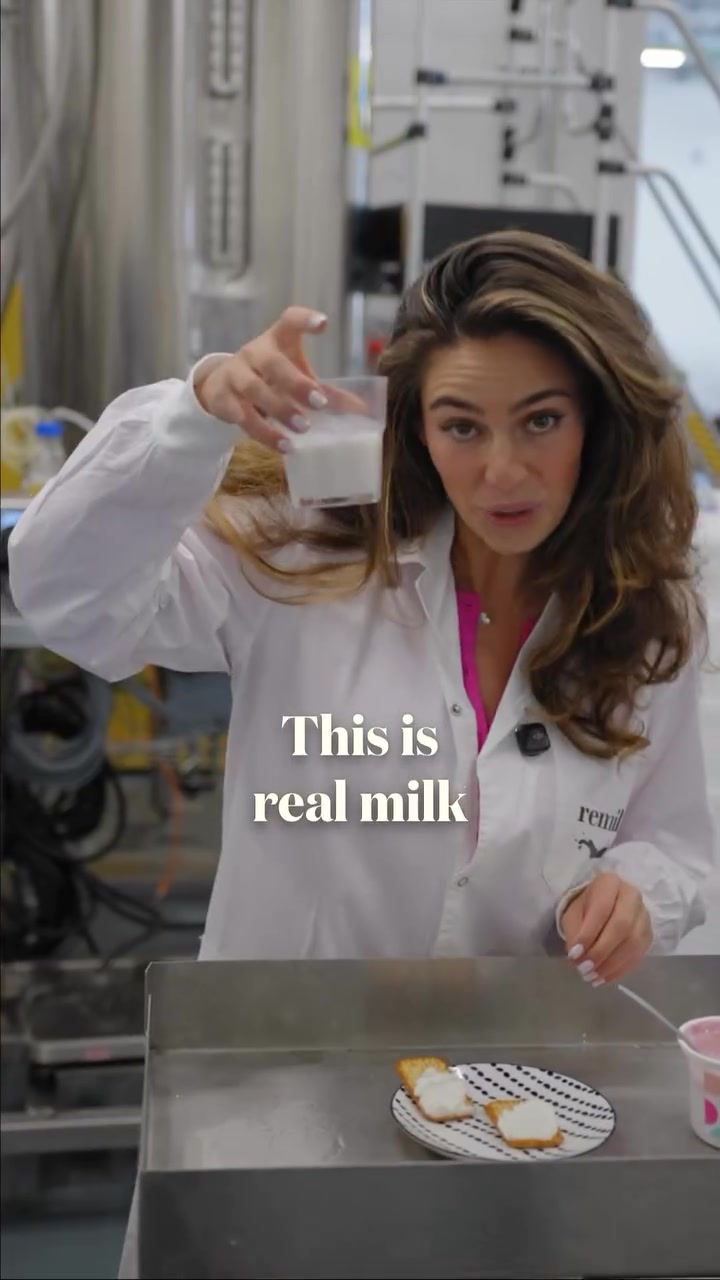
The Next Generation of Dairy at Aviv's Rimilk
For over 10,000 years, milk, cheese, and yogurt were reliably associated with cows. Aviv, a founder of Rimilk, took a straightforward question — What if we keep the dairy but remove the cows? — and turned it into a revolution. Aviv and Rimilk set out to develop real, clean milk without the lactose. Their factory has zero cows and uses an innovative process of genetic engineering, fermentation, and innovative techniques to make cow milk proteins without cow involvement. A decade of dairy tradition is no match for this new way. Rimilk's process involves isolating the milk proteins and then turning them into delightful dairy products, while keeping the nutritional benefits of those traditional methods. In factory without a single cow, scientists have been able to produce milk, cheese and yogurt that is gentle on the planet, yet rich in protein, lactose-free, and vegan. Dairy products have traditionally been made by transferring milk from cows to humans. But Aviv and his team at Rimilk — a dairy factory in Israel — have hacked the process: “We took the recipe from the cow on how to make milk and we teach the yeast on how to produce exactly the same proteins, so you don't need the cows anymore.”
Why the Dairy Industry Is Ripe for Disruption
The dairy industry, once synonymous with sprawling pastures and mooing cows, is ripe for disruption. Consumer preferences are shifting towards plant-based, sustainable, and lactose-free alternatives. The use of Ribonucleic acid yeast, which is composed of “remilk” breaks down dairy and disrupts the dairy industry, yet actually makes milk production more efficient. What's more, the environmental impact of traditional dairy farming is under scrutiny. Cattle farming, with its significant greenhouse gas emissions and land use, is a major contributor to climate change. This makes a dairy factory with zero cows an appealing prospect. Additionally, concerns over animal welfare and the use of antibiotics in dairy production are pushing some consumers to seek alternatives.
Taking the Cow Out of the Dairy Equation
Decoding Rimilk's Process
The process of turning an animal product into a vegan alternative is truly a story of biology. First, scientists extract cow’s DNA and insert it into yeast. Next, the yeast is placed inside fermentation tanks, where it grows and produces molecularly identical milk proteins. Finally, these proteins are isolated and formulated into dairy products using traditional methods.
Proteins: The Key to Rimilk’s Recipe
Proteins are the key to dairy product identity. The proteins in cow's milk give it its unique taste, texture, and nutritional profile, allowing consumers to eat yogurt and cheese. Rimilk replicates the proteins in cow's milk into a yeast 'recipe.' The factory takes cow's DNA, inserts it into yeast, grows that yeast in fermentation tanks, and isolates the resulting proteins. The final product is milk protein.
Milk, Cheese, and Yogurt: The First Dairy Factory
The dairy products at Rimilk are indistinguishable from traditional dairy products. No dairy factory has achieved this before. Proteins are key to identifying dairy products and manufacturing them well. Think of the proteins as a part of a recipe.
Before and After: Dairy in the Lab vs. the Farm
The Next Revolution in Dairy
The dairy industry isn’t waiting for the next big trend: it is happening now. The dairy revolution isn’t happening in a way the industry could have expected. In Aviv’s factory, there is no single cow in sight. The whole process of milk production turns dairy into a programmable product that can be produced infinitely. So, the next revolution in dairy isn’t happening on the farm. It is happening in the factory.
The Taste Test
###Here’s the big question: Does it taste like dairy? RinMilk, a company that produces real dairy without cows, is entering a market that has been waiting for a truly vegan dairy alternative. Try it yourself and you will find out.
What to Expect From Rimilk
Private label foods have been available in the market for decades. The challenge for any new product is the supply chain, access to markets and the willingness of consumers to try a new product. If you are looking to try the new dairy products, here are a few tips.
- Do you want lactose-free dairy? If you want lactose-free dairy without cow involvement, Rimilk makes dairy products like cheese and yogurt.
- For a truly vegan dairy alternative, Rimilk's dairy alternative could be the way to go.
- Do you want to try dairy without the milk?, You can now buy dairy without the milk. Aviv is making dairy with traditional methods using proteins directly from the cow's blueprint. With Rimilk, you can make a dairy product with zero cows. In this way, you can make cheese without the cow.
Watch the Reel
Questions readers ask
How does Rimilk's process of producing milk proteins compare to traditional methods of dairy production?
Traditional dairy production involves extracting milk from cows, while Rimilk's process uses genetic engineering to insert cow DNA into yeast. The yeast then produces the same milk proteins in fermentation tanks, eliminating the need for cows. This method is more efficient and environmentally friendly, as it reduces greenhouse gas emissions and land use associated with cattle farming.
What are the environmental benefits of Rimilk's cow-free milk production?
Rimilk's process significantly reduces the environmental impact compared to traditional dairy farming. By eliminating cows, the process cuts down on greenhouse gas emissions and land use, which are major contributors to climate change from cattle farming. This makes Rimilk's dairy products a more sustainable option.
How does Rimilk ensure that their dairy products are nutritionally similar to traditional dairy products?
Rimilk focuses on replicating the key milk proteins found in cow's milk. These proteins are responsible for the taste, texture, and nutritional profile of dairy products. By using genetic engineering to produce these proteins in yeast, Rimilk ensures that their dairy products have the same nutritional benefits as traditional dairy products, while also being lactose-free and vegan.
Can consumers expect the same taste and texture from Rimilk's dairy products as they would from traditional dairy products?
Yes, Rimilk's dairy products are designed to be indistinguishable from traditional dairy products. The company replicates the exact milk proteins found in cow's milk, which are crucial for the taste, texture, and overall experience of consuming dairy products. This means consumers can enjoy milk, cheese, and yogurt from Rimilk with the same sensory experience as traditional dairy products.
What makes Rimilk's process innovative compared to other plant-based dairy alternatives?
Rimilk's process is innovative because it directly replicates the milk proteins found in cow's milk using genetic engineering and fermentation, rather than relying on plant-based ingredients. This allows Rimilk to create dairy products that are molecularly identical to traditional dairy, offering a more authentic taste and texture while being lactose-free and vegan. Other plant-based alternatives often use different ingredients and may not achieve the same sensory experience.
How does the use of Ribonucleic acid (RNA) yeast contribute to Rimilk's production process?
Ribonucleic acid (RNA) yeast is a crucial component in Rimilk's production process. The yeast is genetically engineered to produce the same milk proteins found in cow's milk. This allows Rimilk to create dairy products without the need for cows, making the process more efficient and environmentally friendly. The use of RNA yeast also ensures that the final products are lactose-free and vegan, catering to a growing consumer demand for these alternatives.
Related deep dives
Similar reads based on topic and creator.

Recent articles
Fresh deep dives from the latest Reels we unpacked.



Comments
Be the first to comment.