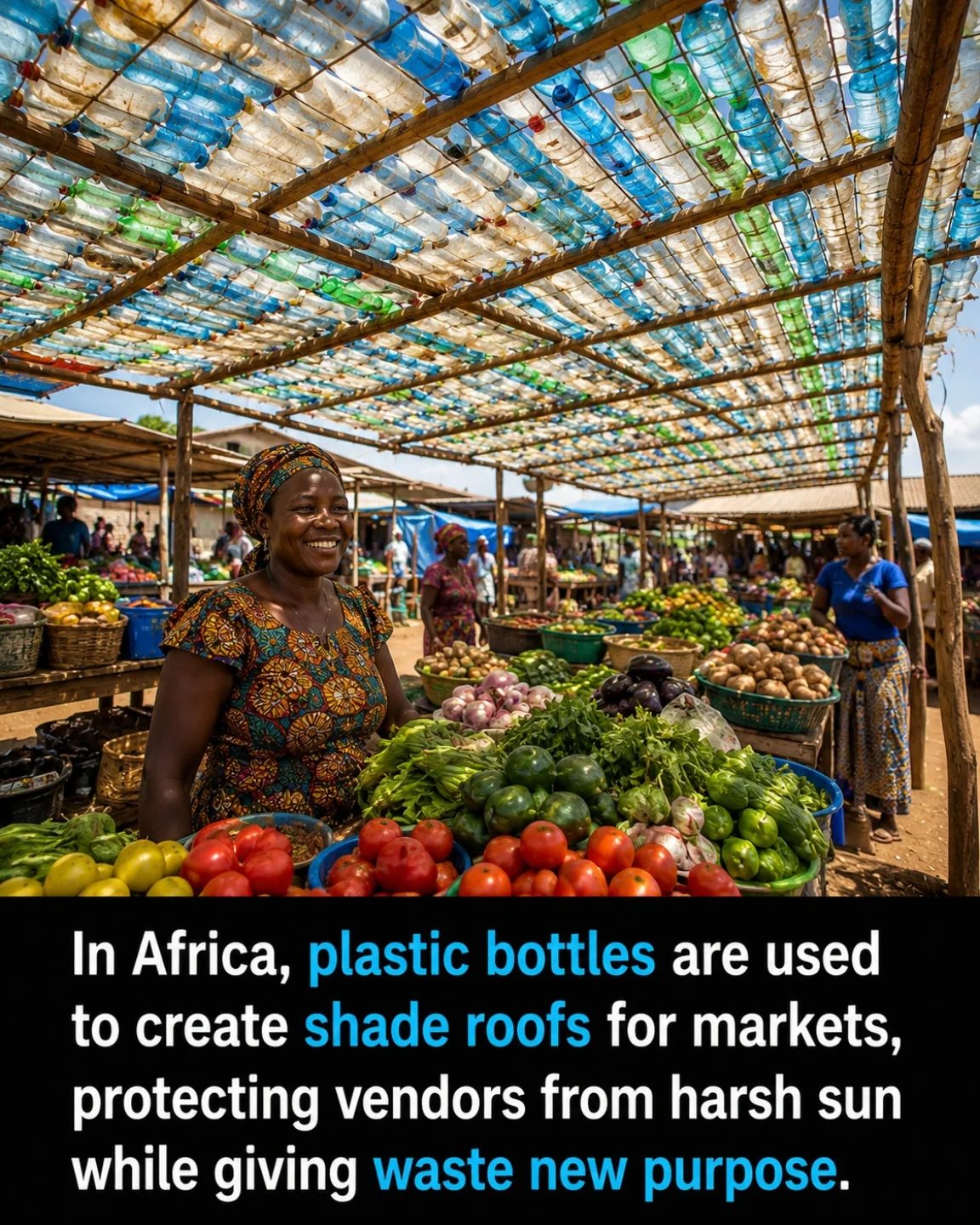
Sustainable Market Shade: Innovative Use of Plastic Bottles in African Markets
In many African markets, vendors face a significant challenge: protecting their produce and themselves from the harsh sun. A innovative solution has emerged to tackle this issue while also addressing the problem of plastic waste. Plastic bottles are being repurposed to create shade roofs, providing a dual benefit of protection and waste reduction.
Why This Matters
Africa's vibrant market culture is a cornerstone of local economies. Ensuring the well-being of vendors and their produce is crucial for maintaining these economic hubs. Additionally, the continent faces a growing plastic waste crisis, with many countries struggling to manage the influx of non-biodegradable materials. By repurposing plastic bottles to create shade roofs, these markets are not only addressing immediate needs but also contributing to a larger environmental solution.
The Plastic Bottle Shade Roof Initiative
Transforming Waste into Shelter
The initiative involves collecting discarded plastic bottles and transforming them into durable, weather-resistant roofing materials. This process not only gives new life to waste that would otherwise clog landfills or pollute waterways but also provides a practical solution for market vendors.
Construction and Installation
The construction process is straightforward and cost-effective. Plastic bottles are cleaned, cut, and then interwoven to form a sturdy, interlocking structure. These structures are then attached to existing market stalls, creating a protective canopy that shields vendors and their products from direct sunlight.
Benefits for Vendors
For market vendors, these shade roofs offer several key advantages:
- Protection from the Sun: The primary benefit is the protection from the intense African sun, which can be particularly harsh during the midday hours. This helps vendors and their customers stay cool and comfortable, enhancing the overall market experience.
- Improved Product Preservation: By reducing exposure to direct sunlight, the shade roofs help preserve perishable goods, extending their shelf life and reducing waste.
- Enhanced Market Appeal: A well-shaded market is more inviting and attractive to customers, potentially increasing foot traffic and sales.
Environmental Impact
The environmental benefits of this initiative are multifaceted:
- Reduction in Plastic Waste: By repurposing plastic bottles, the initiative helps to reduce the amount of waste that ends up in landfills and waterways. This is a significant step towards a cleaner, more sustainable Africa.
- Promoting Recycling: The initiative encourages recycling and upcycling, fostering a culture of waste management and sustainability.
- Carbon Footprint Reduction: By extending the lifespan of products and reducing waste, the initiative indirectly contributes to lowering carbon footprints.
Practical Tips for Implementing Plastic Bottle Shade Roofs
For those interested in implementing similar solutions, here are some practical tips to consider:
- Community Involvement: Engage the local community in the collection and preparation of plastic bottles. This not only ensures a steady supply of materials but also fosters a sense of ownership and responsibility.
- Training and Workshops: Conduct training sessions and workshops to teach the construction techniques. This ensures that the roofs are built correctly and can be maintained over time.
- Partnerships and Sponsorships: Partner with local businesses, NGOs, and government agencies to secure funding and resources. This can help sustain the initiative and expand its reach.
- Maintenance and Repair: Establish a maintenance and repair program to keep the shade roofs in good condition. Regular checks and repairs can extend the lifespan of the structures and ensure their continued effectiveness.
Important Takeaways
The use of plastic bottles to create shade roofs in African markets is a testament to innovative thinking and practical problem-solving. This initiative highlights the potential for repurposing waste materials to address everyday challenges, while also contributing to environmental sustainability. By adopting similar approaches, communities around the world can tackle local issues and promote a cleaner, greener future.
Conclusion
The repurposing of plastic bottles to create shade roofs in African markets is a brilliant example of how innovative solutions can address multiple challenges simultaneously. By providing protection from the sun and giving waste plastic a new purpose, this initiative not only enhances the well-being of vendors and customers but also contributes to a cleaner, more sustainable environment. This approach serves as an inspiration for communities everywhere, demonstrating how creative thinking and resourcefulness can lead to tangible, impactful solutions.
Watch the Reel
Questions readers ask
How do recycled plastic bottles help African markets?
Recycled plastic bottles are transformed into durable, eco-friendly roofs that provide essential shade for African markets. This not only protects vendors and their produce from the harsh sun but also addresses the issue of plastic waste, promoting a cleaner environment.
What are the benefits of using recycled plastic bottles for market roofs?
Using recycled plastic bottles for market roofs offers multiple benefits. It reduces plastic waste, provides sustainable sun protection for vendors, and creates a more comfortable shopping environment. Additionally, it supports the local economy by repurposing readily available materials.
How does this initiative support local vendors?
This initiative supports local vendors by providing them with reliable shade structures that protect their goods from sun damage and create a more welcoming space for customers. This can lead to increased sales and improved working conditions for vendors.
How are the recycled plastic bottles turned into shade structures?
The plastic bottles are carefully cleaned, filled with sand or water for stability, and then attached to a framework, creating a solid, interlocking roof. This method ensures durability and effective sun protection for the market stalls.
What impact does this have on the environment?
By repurposing plastic bottles, this initiative significantly reduces plastic waste in African communities. It also promotes sustainable practices by utilizing recycled materials, contributing to a cleaner and greener environment.
Can this solution be replicated in other regions?
Yes, the concept of using recycled plastic bottles for shade structures can be adapted to other regions facing similar challenges with plastic waste and the need for sustainable shade solutions. The specific design and materials might vary, but the core idea remains applicable.
How does this solution benefit the local economy?
This solution benefits the local economy by creating jobs in the collection, cleaning, and installation of the recycled plastic bottles. Additionally, the improved market conditions can lead to increased sales and economic activity, further stimulating local growth.
Related deep dives
Similar reads based on topic and creator.



Recent articles
Fresh deep dives from the latest Reels we unpacked.




Comments
Be the first to comment.