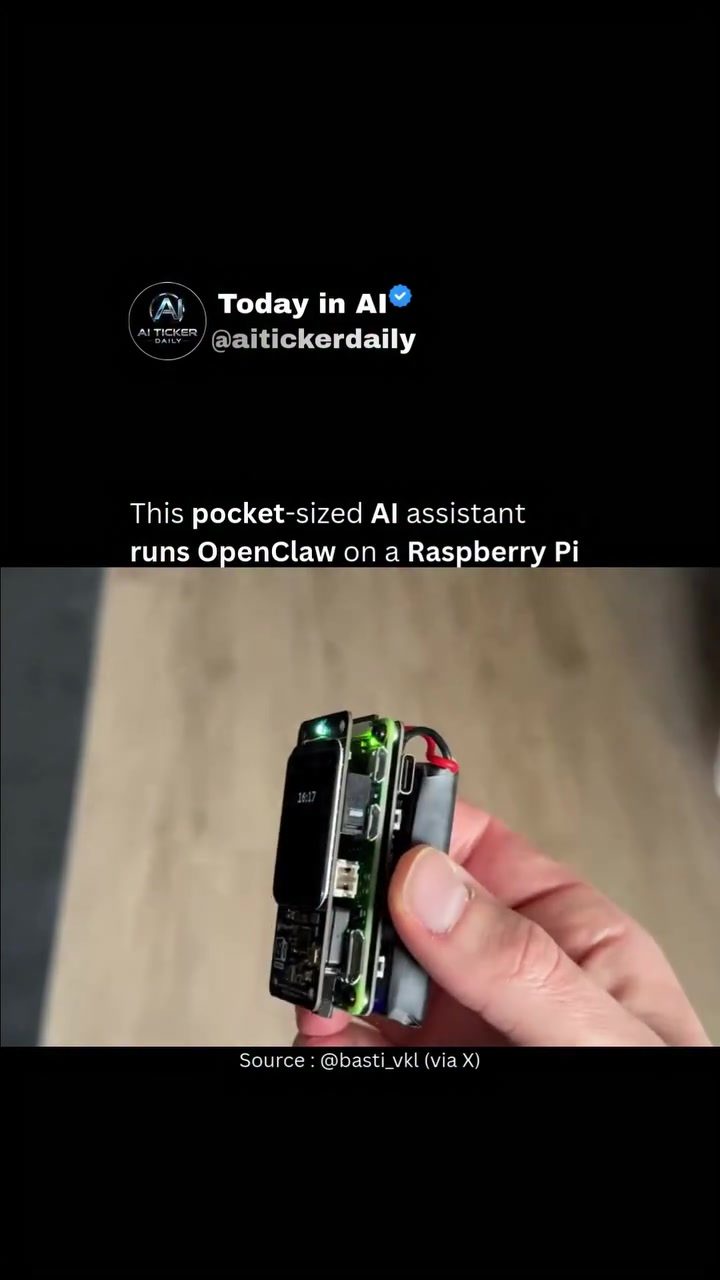
Pocket-Sized AI Assistant: A Revolution in Personal Tech
The dream of a private, pocket-sized AI assistant is now a reality, thanks to the innovative work of Sebastian Völkl. This compact device, built using a Raspberry Pi Zero 2 W and the WhisPlay board, leverages advanced technologies to provide a seamless AI experience. Let's dive into the technical breakthroughs and capabilities of this groundbreaking device.
Why This Matters
The development of a pocket-sized AI assistant represents a significant leap in personal technology. This device brings the power of AI into the palm of your hand, making it accessible for real-time interactions and information processing. The implications for productivity, convenience, and privacy are immense, offering users a new way to interact with technology in their daily lives.
Main Discussion
Technical Breakthroughs
Ultra-Compact Form Factor
One of the standout features of this AI assistant is its ultra-compact form factor. Powered by the Raspberry Pi Zero 2 W, this device packs full AI assistant capabilities into a tiny, portable package. The Raspberry Pi Zero 2 W is a single-board computer known for its efficiency and performance, making it an ideal choice for a compact AI device.
Secure Cloud Orchestration
Security is a top priority for any device handling sensitive information. This AI assistant uses Tailscale Serve to securely bridge the Raspberry Pi to a cloud-hosted OpenClaw gateway. Tailscale is a VPN service that provides secure, encrypted connections, ensuring that data transmitted between the device and the cloud is protected from unauthorized access.
Real-Time Streaming UI
The device features a real-time streaming UI, powered by a Python-based state machine. This state machine allows the assistant to seamlessly transition between listening, thinking, and streaming responses. The integrated LCD screen displays real-time information, providing users with immediate feedback and updates. This seamless interaction makes the device incredibly user-friendly and efficient.
Key Components
Raspberry Pi Zero 2 W
The Raspberry Pi Zero 2 W is a crucial component of this AI assistant. It is a compact, low-cost, and high-performance single-board computer that serves as the brain of the device. The Raspberry Pi Zero 2 W is equipped with a quad-core ARM Cortex-A53 CPU and 512MB of LPDDR2 SDRAM, making it capable of handling complex AI tasks efficiently.
WhisPlay Board
The WhisPlay board is another essential component. It provides the necessary audio and I/O capabilities for the device. The WhisPlay board's design allows for easy integration with various audio inputs and outputs, making it an ideal choice for a voice-controlled AI assistant.
OpenClaw
OpenClaw is a key software component that handles LLM (Large Language Model) orchestration. It ensures that the device can process and respond to voice commands accurately and efficiently. OpenClaw's integration with the Raspberry Pi allows for seamless operation, making the AI assistant responsive and reliable.
Practical Applications
The practical applications of this AI assistant are vast and varied. Here are a few scenarios where this device can be particularly useful:
- Personal Productivity: The AI assistant can handle push-to-talk voice commands, making it easy to send messages, set reminders, and manage your schedule hands-free.
- Real-Time Information: With real-time transcription and streaming responses, the device can provide instant updates on various topics, from news to weather to traffic conditions.
- Secure Connectivity: The use of Tailscale ensures that all data transmitted is secure, making it suitable for handling sensitive information.
- Portability: The compact size and integrated LCD screen make it easy to carry and use the device in various settings, from the office to the home.
Practical Tips
If you're interested in building or using a pocket-sized AI assistant, here are some practical tips to get you started:
- Get the Right Hardware: Ensure you have the necessary components, including the Raspberry Pi Zero 2 W and the WhisPlay board. These are essential for the device's functionality.
- Install OpenClaw: Follow the instructions on the official OpenClaw GitHub repository to install and configure the software. This will handle the LLM orchestration and ensure smooth operation.
- Set Up Tailscale: Install and configure Tailscale to secure your connection to the cloud-hosted OpenClaw gateway. This step is crucial for maintaining the device's security.
- Develop the UI: If you have the skills, consider developing a custom UI or modifying the existing Python-based state machine to suit your needs. This will enhance the user experience and make the device more intuitive.
- Test and Iterate: Spend time testing the device in various scenarios to ensure it meets your needs. Based on your feedback, make necessary adjustments and improvements.
Important Takeaways
- The pocket-sized AI assistant is a groundbreaking device that brings the power of AI into a compact, portable form factor.
- The use of the Raspberry Pi Zero 2 W, WhisPlay board, and OpenClaw ensures efficient and secure operation.
- Real-time streaming and push-to-talk voice commands make the device highly user-friendly and versatile.
- Security is a top priority, with Tailscale providing secure, encrypted connections.
Conclusion
The development of a pocket-sized AI assistant by Sebastian Völkl represents a significant advancement in personal technology. This device offers a unique blend of portability, security, and functionality, making it a valuable tool for anyone looking to enhance their productivity and convenience. As technology continues to evolve, devices like this will play an increasingly important role in our daily lives. Whether you're a tech enthusiast or a casual user, the pocket-sized AI assistant is a device worth exploring.
Watch the Reel
Questions readers ask
What is the Raspberry Pi AI assistant developed by Sebastian Völkl?
The Raspberry Pi AI assistant is a compact device created by Sebastian Völkl using a Raspberry Pi Zero 2 W and the WhisPlay board. It offers real-time AI interactions and processing, fitting comfortably in the palm of your hand.
How does the Raspberry Pi WhisPlay device enhance personal technology?
The device brings AI capabilities directly to users' hands, providing a new level of convenience and accessibility. It allows for real-time interactions and information processing, which can significantly boost productivity and ease of use.
What are the key security features of the Raspberry Pi AI assistant?
The AI assistant prioritizes security, with features designed to protect user data. The use of Tailscale ensures secure communication, while the compact design minimizes physical access risks, providing a secure AI experience.
Can I use the Raspberry Pi AI assistant without an internet connection?
While the device can function offline for many tasks, some advanced features may require an internet connection. This depends on the specific use case and the apps or services being utilized, as it is designed to process AI tasks both locally and in the cloud.
What programming languages are supported by the Raspberry Pi AI assistant?
The device leverages Python for its AI capabilities, making it accessible for users familiar with the language. This allows for extensive customization and the development of new features tailored to specific needs.
How does the voice-controlled feature work in the Raspberry Pi AI assistant?
The voice-controlled feature allows users to interact with the device hands-free. It utilizes advanced speech recognition and natural language processing technologies, ensuring accurate and responsive AI interactions.
Is the Raspberry Pi AI assistant designed for professional or personal use?
The Raspberry Pi AI assistant is versatile and can be used for both professional and personal purposes. Its compact size and real-time processing capabilities make it suitable for a wide range of applications, from enhancing productivity at work to providing convenience in daily tasks.
Related deep dives
Similar reads based on topic and creator.




Recent articles
Fresh deep dives from the latest Reels we unpacked.




Comments
Be the first to comment.