Rajasthan Monsoon Travel
Rajasthan, known for its arid landscapes and magnificent forts, undergoes a dramatic transformation during the monsoon season. The lush greenery, flowing rivers, and vibrant landscapes create a stark contrast to the usual dry and dusty image of the state, turning it into a magical retreat.
Why This Matters
Travelers often overlook Rajasthan as a destination for monsoon travel, assuming it remains dry and barren. However, the monsoon season paints a completely different picture, offering unique experiences and breathtaking sights. Understanding the beauty and potential of Rajasthan during this season can open up new travel opportunities, allowing visitors to explore the state from a fresh perspective and appreciate its natural beauty.
Main Discussion
The Transformation of Rajasthan
During the monsoon season, Rajasthan's landscape is reborn. The dry, dusty plains are replaced with lush green fields, and the rivers that are often dry begin to flow. This transformation is not just about the greenery but also about the overall atmosphere. The air becomes cooler, and the region comes alive with a renewed energy. This is a side of Rajasthan that is often overlooked, yet it offers a unique and enchanting experience for travelers.
Iconic Landmarks in a New Light
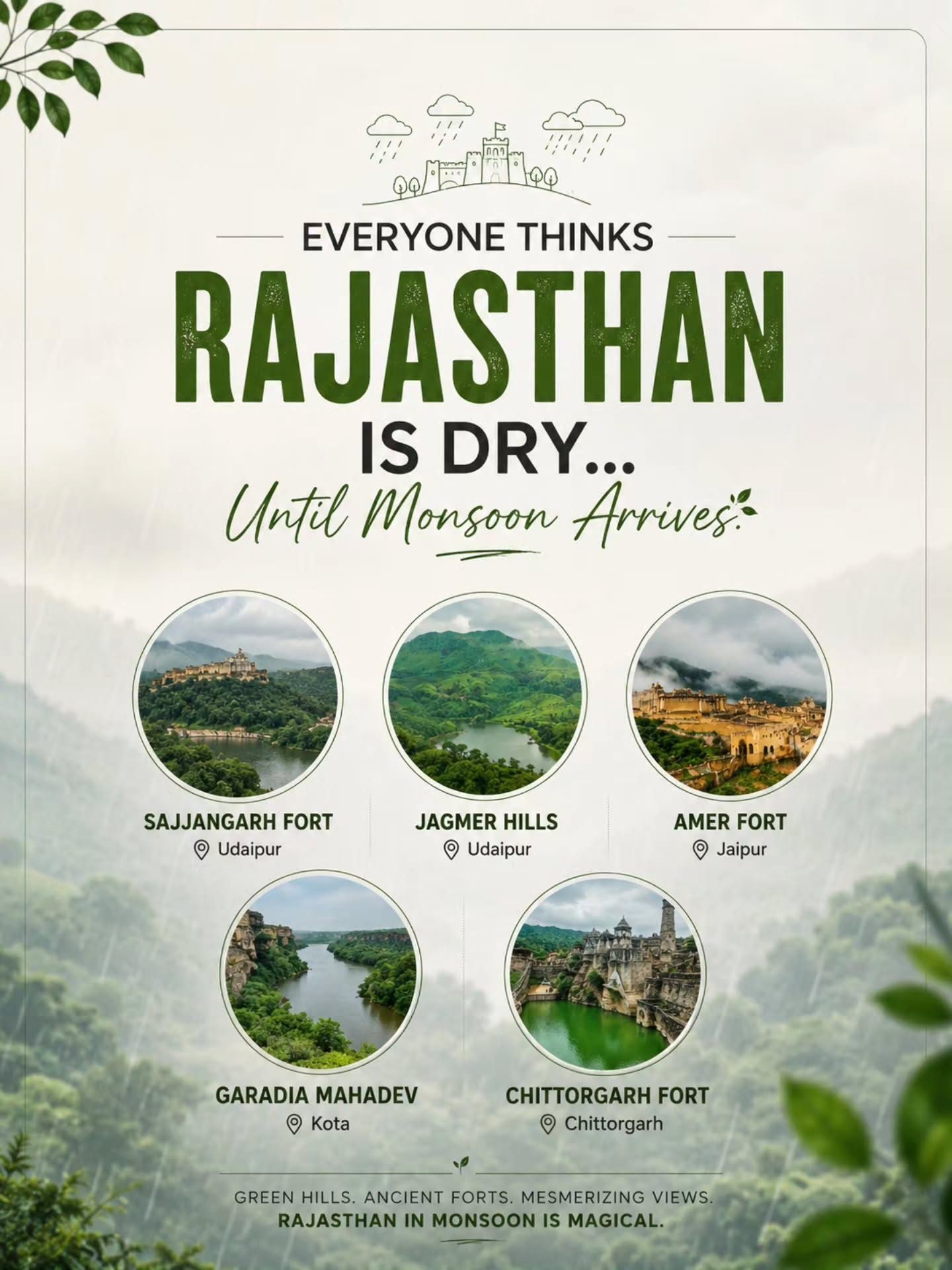
Several of Rajasthan's iconic landmarks take on a new charm during the monsoon. Forts and palaces, which are usually surrounded by barren landscapes, are now enveloped in greenery. This adds a layer of mystery and beauty to these historical sites, making them even more captivating to visitors.
Sajjangarh Fort, Udaipur
Sajjangarh Fort, located in the picturesque city of Udaipur, is a must-visit during the monsoon. The fort, also known as the Monsoon Palace, is built atop a hill and offers panoramic views of the surrounding hills and lakes. During the monsoon, the fort is often shrouded in mist, creating an ethereal atmosphere that is both romantic and mystical.
Jagmer Hills, Udaipur
The Jagmer Hills, situated in Udaipur, are another gem during the monsoon season. The hills, which are usually dry and dusty, come alive with lush green foliage. The region is known for its rich biodiversity and is a haven for nature lovers. The monsoon rains bring a variety of flora and fauna, making it an ideal time for trekking and wildlife spotting.
Amer Fort, Jaipur
Amer Fort, located in Jaipur, is a stunning example of Rajasthani architecture. During the monsoon, the fort is surrounded by greenery, enhancing its majestic appearance. The monsoon rains also add a refreshing layer to the fort, making it a popular spot for both locals and tourists.
Garadia Mahadev, Kota
Garadia Mahadev, located in Kota, is a serene and tranquil spot. The area is surrounded by lush greenery and the river Chambal. During the monsoon, the river flows with renewed vigor, and the surrounding forests are a sight to behold. This spot is ideal for those looking to escape the bustle of city life and spend some quiet time in nature.
Chittorgarh Fort, Chittorgarh
Chittorgarh Fort, located in the city of Chittorgarh, is one of the most historic and largest forts in India. During the monsoon, the fort's vast grounds are covered in green, and the monsoon rains add a layer of mystique to its ancient walls. The fort is a must-visit for history enthusiasts, offering a glimpse into the region's rich past.
The Magic of Monsoon in Rajasthan
The monsoon season in Rajasthan is a magical time. The state comes alive with festivals, celebrations, and a renewed energy that is infectious. For those who have only experienced Rajasthan during the dry season, the transformation during the monsoon is a revelation. The state, which is often associated with arid landscapes, is reborn as a lush green paradise, offering a completely different travel experience.
Practical Tips
Best Time to Visit
The monsoon season in Rajasthan typically lasts from July to September. However, the best time to visit is from mid-August to mid-September, when the rains are at their peak and the landscape is lushest.
What to Pack
When visiting Rajasthan during the monsoon, it's essential to pack the right gear. Here are some tips:
- Rain Gear: Pack a good-quality raincoat and waterproof shoes to keep dry.
- Insect Repellent: Monsoons bring out insects, so it's a good idea to carry insect repellent.
- Light Clothing: While it may rain, the days can still be warm. Pack light, breathable clothing.
- Umbrella: While a raincoat is essential, an umbrella can also come in handy, especially when you want to explore outdoors.
Getting Around
Traveling around Rajasthan during the monsoon can be challenging due to potential road closures and flooding. It's advisable to use reliable transportation services, and it's a good idea to check road conditions and weather forecasts before setting out. Opting for guided tours with experienced local guides can also be beneficial.
Important Takeaways
Monsoon is a magical time to explore Rajasthan. The lush greenery, flowing rivers, and vibrant landscapes create a unique travel experience that is vastly different from the dry season. Iconic landmarks like Sajjangarh Fort, Amer Fort, and Chittorgarh Fort offer stunning views and a rich cultural experience. The monsoon season is not just about the greenery; it is about the overall transformation of the state, offering a unique and enchanting experience for travelers.
Conclusion
Rajasthan's monsoon season is a hidden gem that offers a completely different travel experience. The lush greenery, vibrant landscapes, and cool weather provide a refreshing change from the usual dry and dusty image of the state. Iconic landmarks like Sajjangarh Fort, Amer Fort, and Chittorgarh Fort take on a new charm during the monsoon, making them even more captivating to visitors. Whether you are a nature lover, a history enthusiast, or simply looking for a unique travel experience, Rajasthan during the monsoon is a must-visit.
Watch the Reel
Questions readers ask
When is the best time to visit Rajasthan for monsoon experiences?
The monsoon season in Rajasthan typically starts in late June and lasts until September. For the best monsoon experience, plan your visit during the Rajasthan monsoon fortnight, which falls in mid-July to early August. During this period, the landscapes are at their greenest, and the weather is pleasant.
Which forts in Rajasthan are particularly stunning during the monsoon season?
Rajasthan is home to many fortresses, but during the monsoon, these 3 stand out: Chittorgarh Fort, Mehrangarh Fort, and Kumbhalgarh Fort. The lush greenery and misty atmosphere during the monsoon season transform these historical landmarks, offering a unique and enchanting experience.
What makes Udaipur special during the monsoon season?
Udaipur, known as the 'City of Lakes,' becomes even more enchanting during the monsoon. The lush landscapes, vibrant colours, and flowing rivers create a breathtaking backdrop. The city's palaces and forts, such as the Lake Palace and Monsoon Palace, offer stunning views of the surrounding greenery and mist.
Are there any specific activities to enjoy in Rajasthan during the monsoon season?
Rajasthan's monsoon season offers a variety of unique activities. You can explore the vibrant landscapes on a jeep safari, visit ancient forts and palaces, or enjoy a boat ride on the serene lakes in Udaipur. Additionally, the monsoon season is an excellent time to indulge in local cuisine, with many delicious seasonal dishes to try.
Is it safe to travel to Rajasthan during the monsoon season?
Yes, it is generally safe to travel to Rajasthan during the monsoon season. However, it's essential to be prepared for rain and potential road closures. Stick to well-maintained roads, and always check weather updates before planning outdoor activities. Additionally, be aware of local weather forecasts and climatic conditions.
What should I pack for a monsoon trip to Rajasthan?
When packing for a monsoon trip to Rajasthan, include lightweight, breathable clothing, a waterproof jacket, comfortable walking shoes, and an umbrella. Don't forget to bring insect repellent, sunscreen, and a hat to protect yourself from both rain and sun. Also, pack a waterproof cover for your belongings to keep them safe from the rain.
What kind of weather can I expect during the monsoon season in Rajasthan?
During the monsoon season, Rajasthan experiences moderate to heavy rainfall, with temperatures ranging from 25°C to 35°C (77°F to 95°F). The weather is generally humid, with pleasant breezes and occasional thunderstorms. The landscapes are lush and vibrant, with rivers and lakes filled with water, creating a stark contrast to the typical arid environment.
Related deep dives
Similar reads based on topic and creator.


Recent articles
Fresh deep dives from the latest Reels we unpacked.



Comments
Be the first to comment.