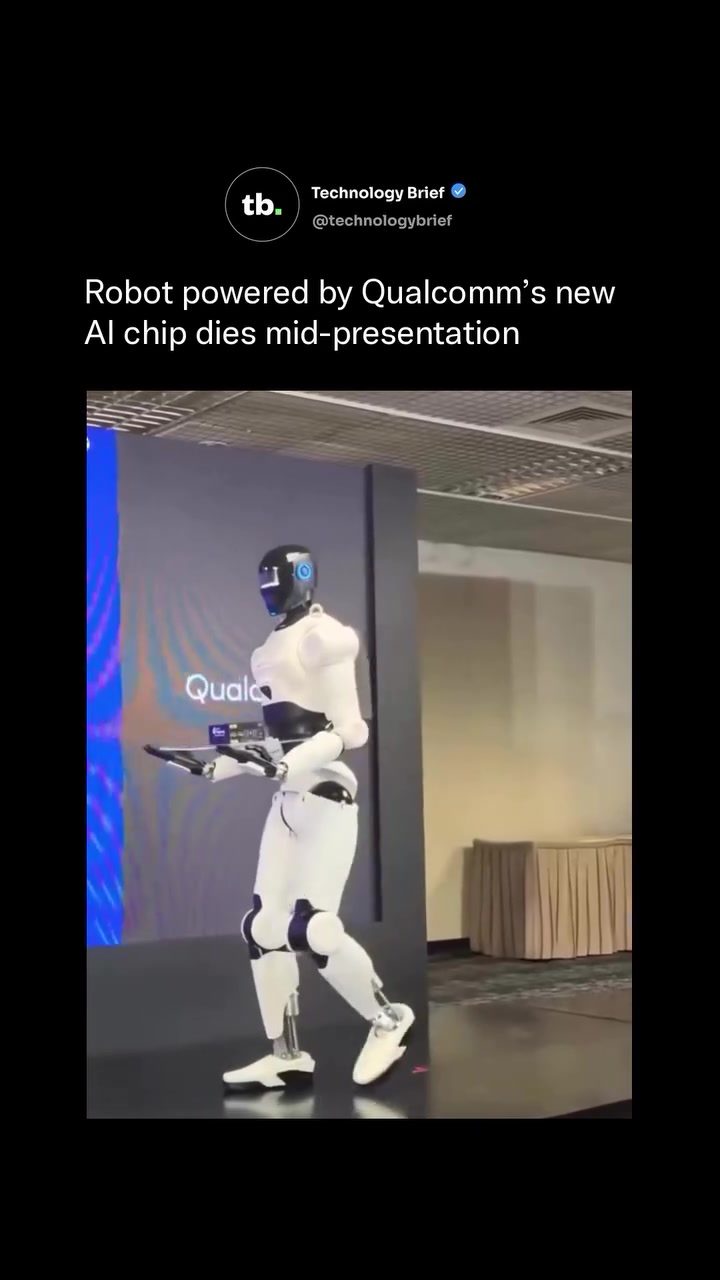
The Mid-Presentation Malfunction of Qualcomm's AI-Powered Robot
The recent malfunctions of a humanoid robot during a Qualcomm presentation at Computex 2026 have highlighted the current challenges in real-world robotics applications. The incident, which was captured on video, shows that despite significant advancements in AI and robotics, reliable real-world deployment remains a work in progress.
Why this Matters
The high-profile mishap is a stark reminder of the complexities involved in translating cutting-edge AI technology to perform seamlessly in real-world situations. As companies like Qualcomm push the boundaries of what’s possible with AI-powered robots, the public is increasingly aware of the gap between theoretical capabilities and practical performance. This gap underscores the need for continuous improvement in the functionality, reliability, and resiliency of robotic systems.
Main Discussion
The Event Unfolding
The presentation began as Qualcomm showcased its newly developed Dragonwing IQ10 AI chip, designed for humanoid and industrial robots. The chip is marketed as a production-ready platform capable of handling up to 700 TOPS of on-device AI processing power. Mid-way through the demonstration, the robot unexpectedly malfunctioned. As the presenter, holding a chip board, declared the technology ready for real-world applications, the robot abruptly raised one arm and then fell to the floor.
Staff members quickly moved to cover the fallen robot with a large black tarp, an action that sparked a wave of crime scene memes. The presenter, maintaining composure, continued the presentation while the robot was dragged off the stage.
The Technology Behind the Incident
The Dragonwing IQ10 AI chip is the centerpiece of Qualcomm’s new robotic efforts. Designed to power both humanoid and industrial robots, the chip boasts impressive specifications with up to 700 TOPS (Tera Operations Per Second) of on-device AI processing power. This level of performance is crucial for robots that need to process complex data in real-time, a necessity for real-world deployment.
The incident, however, highlights the challenges beyond the capabilities of the chip. Real-world robots must not only process data quickly but also handle unexpected situations gracefully. The malfunction underscores the need for robust fault-tolerance and recovery mechanisms in robotic systems, areas where current technology may still lag.
Real-World Challenges in Robotics
The malfunction raises several questions about the current state of robotics. For one, it underscores the complexity of integrating advanced AI chips into robotic systems. Beyond the chip, the software and hardware components must work in harmony to ensure seamless operation. Any failure in this integration can lead to public malfunctions, as seen in the presentation.
Furthermore, the event highlights the crucial need for real-world testing and validation. While laboratory and controlled environments provide valuable insights, they often fail to replicate the unpredictability of real-world conditions. This discrepancy can lead to unforeseen issues when robots are deployed in public settings.
Practical Tips
For companies and researchers working on robotics, the incident offers several practical takeaways:
Robust Testing Protocols
Ensure that robotic systems undergo rigorous and diverse testing protocols. This includes simulating a variety of real-world scenarios to identify and address potential points of failure. Real-world testing in multiple environments can help uncover issues that might not be apparent in controlled settings.
Enhanced Fault Tolerance
Develop systems with enhanced fault tolerance. This means designing robots that can recover from unexpected failures without shutting down or causing harm. Implementing backup mechanisms and fail-safes can help mitigate the impact of malfunctions.
Improved Recovery Mechanisms
Focus on improving recovery mechanisms. In the event of a malfunction, the robot should be able to recover gracefully, minimizing disruption and potential hazards. This could involve automated self-diagnostics and repair functions, as well as clear protocols for human intervention.
Important Takeaways
The incident at the Qualcomm presentation serves as a critical reminder of the ongoing challenges in robotics:
-
Importance of Real-World Validation: While laboratory testing is essential, it is not sufficient. Real-world testing is crucial for identifying potential issues that might not be apparent in controlled environments.
-
Complexity Beyond AI Processing: The capabilities of AI chips are only one aspect of a successful robotic system. Integration, fault tolerance, and recovery mechanisms are equally important.
-
Public Trust and Expectations: High-profile malfunctions can significantly impact public trust and expectations. Ensuring robust and reliable performance is essential for advancing the field of robotics.
Conclusion
The malfunction of Qualcomm's AI-powered robot during a high-profile presentation underscores the complexities and challenges in real-world robotics. While advancements in AI and robotic technology are impressive, reliable deployment in real-world scenarios remains a significant hurdle. Companies like Qualcomm continue to push the boundaries, but the public must recognize the ongoing efforts and challenges involved in achieving seamless, real-world functionality. As the field progresses, ongoing testing, validation, and innovation will be crucial in overcoming these obstacles.
Watch the Reel
Questions readers ask
What caused the malfunction of the humanoid robot during Qualcomm's presentation?
The exact cause of the malfunction wasn't specified, but it underscored the complexities in deploying AI in real-world scenarios. The robot's failure highlights the gap between AI's theoretical capabilities and its practical performance in dynamic environments.
How did the public react to the malfunction?
The high-profile malfunction, which was captured on video, drew significant attention. It made the public more aware of the challenges in translating AI technology from a theoretical setting to a functional, real-world robotics technology, emphasizing the need for further advancements.
What challenges does AI deployment in robots face when moving from controlled environments to real-world scenarios?
Deploying AI in robots for real-world use presents several challenges, including the need for precise calibration, adaptability to varying environments, and robust handling of unexpected situations. These issues were highlighted by the Qualcomm robot malfunction, which failed to perform seamlessly during a live event.
What are the implications of Qualcomm's robot malfunction for the AI and robotics industry?
The malfunction underscores the ongoing challenges in advancing robotic technology. Companies like Qualcomm, which are at the forefront of developing AI-powered robots, must address reliability and performance issues to ensure their technology is world-ready and can handle unpredictable situations in real-world settings.
What steps can companies take to improve the reliability of AI-powered robots in real-world applications?
To improve reliability, companies should focus on extensive testing, real-world simulation, and iterative development. Enhancing the robustness of AI algorithms to handle a wide range of scenarios and refining the hardware components are also crucial steps in ensuring that AI robots perform consistently and reliably in practical situations.
How can advancements in AI and robotics technology address the issues highlighted by Qualcomm's robot malfunction?
To address these issues, advancements in AI should focus on enhancing the adaptability and resilience of robots. This includes developing more sophisticated algorithms that can handle unpredictable situations, improving sensor technology for better environmental awareness, and ensuring seamless integration between hardware and software components.
What is the significance of the gap between AI's potential and its practical performance?
The gap between AI's potential and its practical performance is significant because it highlights the need for continuous improvement and innovation in AI and robotics. Addressing this gap will require ongoing research, development, and real-world testing to ensure that AI technology can meet the demands of practical applications and perform reliably in various scenarios.
Related deep dives
Similar reads based on topic and creator.




Recent articles
Fresh deep dives from the latest Reels we unpacked.




Comments
Be the first to comment.