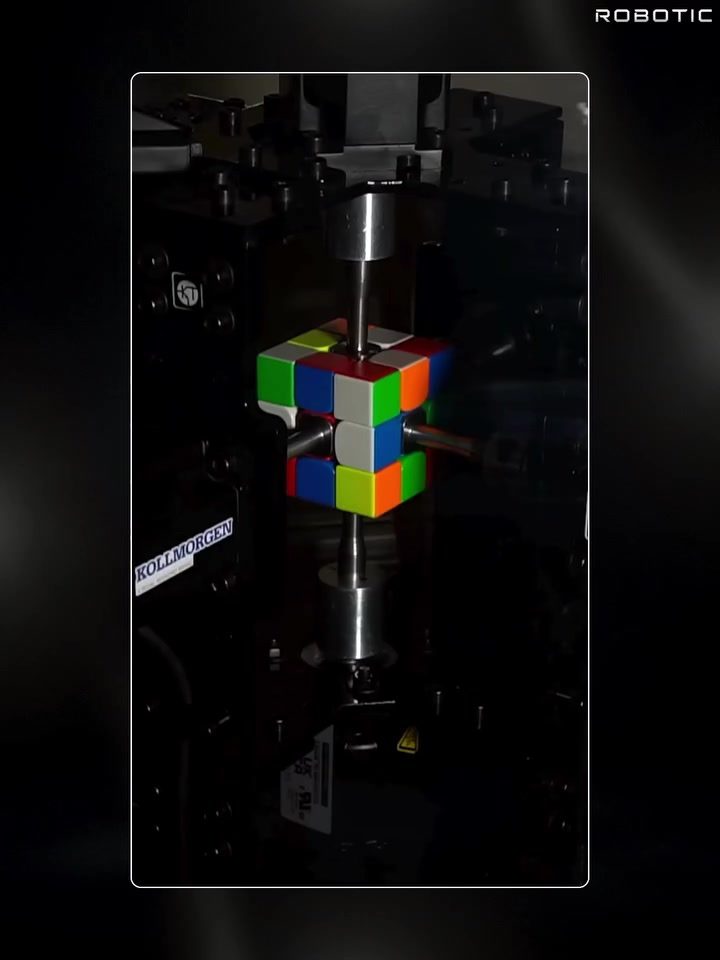
Robotic Rubik's Cube Solver
Purdue University students have achieved a remarkable feat in robotics by developing a robotic arm that solved a Rubik's Cube in an astonishing 0.103 seconds. This achievement not only set a new Guinness World Record but also showcased the incredible capabilities of modern robotics, precision engineering, and high-speed control systems. The robust KOLLMORGEN robotic arm, which is at the heart of this setup, demonstrated exceptional precision and control while manipulating the cube.
Engineering Behind the Speed
The process of solving a Rubik's Cube involves a series of precise movements to align each face's colors correctly. This was achieved through the collaboration of robotics, computer vision, and advanced engineering. The robotic arm uses specialized tools to rotate the cube's faces, ensuring that each move is executed with millisecond precision. The entire system relies on high-speed control systems and computer vision algorithms that can analyze and respond to changes in real-time.
The custom-engineered cube core was designed to withstand the extreme forces and speed involved in the record attempt. This customization ensures that the cube can endure the rapid movements and high torque generated by the robotic arm without degrading or malfunctioning. For reference, the team broke the previous record of 0.305 seconds by more than half.
Bridging Precision Robotics and Automation
The robotic arm, highlighted by the precision engineering of KOLLMORGEN, is a cornerstone of this automation technology. This arm not only manipulates the cube but also demonstrates the potential of robotic automation in solving complex tasks. The integration of computer vision and high-speed control systems allows the robot to perform tasks that require extreme precision and quick decision-making.
The KOLLMORGEN robotic arm is a testament to the advancements in robotic technology. Its ability to manipulate objects with such precision and speed opens up possibilities for various applications beyond just entertainment or record-breaking attempts. From manufacturing to healthcare, the precision and control demonstrated by this robotic arm can significantly impact various industries.
Practical Tips for Building High-Performance Robotic Systems
Building a high-performance robotic system like the one used to solve the Rubik's Cube involves several key considerations:
Robotic Arm Selection
Choosing the right robotic arm is crucial. The KOLLMORGEN robotic arm, known for its precision and control, is an excellent choice for tasks that require high-speed and accurate movements. When selecting a robotic arm, consider factors such as the arm's payload capacity, reach, and precision.
Computer Vision Integration
Integrating computer vision systems is essential for tasks that require real-time decision-making. The computer vision algorithms used in this setup can analyze the cube's state and make quick decisions on the next moves. Ensure that the computer vision system is correctly calibrated and can process data in real-time.
Engineering High-Speed Control Systems
High-speed control systems are vital for executing precise movements quickly. The control systems must be able to communicate effectively with the robotic arm and computer vision system. Ensure that the control systems can handle the high-speed requirements of the task and provide the necessary feedback for precise movements.
Custom Engineering for Specialized Tasks
Custom engineering solutions, like the customized cube core, can significantly enhance the performance of robotic systems. When designing a robotic system, consider the specific requirements of the task and engineer custom solutions to optimize performance. For tasks like solving a Rubik's Cube, the ability to withstand high forces and speeds is crucial.
Important Takeaways
The robotic arm built by Purdue University students has pushed the boundaries of what is possible with modern robotics and high-speed control systems. This achievement demonstrates the potential of robotic automation in solving complex tasks with precision and speed. Key takeaways from the project include:
- The combination of robotics, computer vision, and precision engineering can achieve remarkable feats.
- High-speed control systems and custom-engineered components are essential for tasks that require extreme precision.
- The KOLLMORGEN robotic arm showcases the potential of robotic automation in various applications.
- Integrating advanced technologies in a well-coordinated system can lead to groundbreaking achievements.
- Future advancements in robotic and automation technology will continue to push the limits of what machines can achieve.
Conclusion
The KOLLMORGEN robotic arm's ability to solve a Rubik's Cube in 0.103 seconds is a testament to the rapid advancements in robotic technology, precision engineering, and high-speed control systems. This achievement not only sets a new Guinness World Record but also showcases the incredible potential of robotic automation in solving complex tasks. As technology continues to advance, the possibilities for robotic systems are boundless, and we can expect to see more groundbreaking achievements in the future. By understanding the engineering behind this project and the key considerations for building high-performance robotic systems, we can appreciate the incredible capabilities of modern robotics and look forward to future innovations.
Watch the Reel
Questions readers ask
What specific technology did Purdue students use to achieve the world record for solving a Rubik's Cube?
Purdue students utilized a KOLLMORGEN robotic arm, which is renowned for its precision and control. This arm was combined with advanced computer vision and high-speed control systems to solve the cube in a record-breaking 0.103 seconds.
How does the robotic arm solve a Rubik's Cube so quickly?
The robotic arm solves the Rubik's Cube by executing a series of precise movements to align the cube's colors. This is made possible through a combination of advanced computer vision, which helps the arm identify the cube's state, and high-speed control systems that allow for swift and accurate movements.
What role does computer vision play in the Rubik's Cube solving process?
Computer vision is crucial for the robotic arm to 'see' and understand the current state of the Rubik's Cube. It helps the system identify which colors are on which faces and guides the robotic arm in making the necessary moves to solve the puzzle correctly.
How does the Purdue robotics achievement compare to previous Rubik's Cube solving records?
The Purdue robotics achievement has surpassed all previous records by a significant margin. The robotic arm solved the Rubik's Cube in 0.103 seconds, which is notably faster than any previous attempts, demonstrating a new level of speed and precision in robotics.
What are the practical applications of the technology used in this Rubik's Cube solving robot?
The technology used in this Rubik's Cube solving robot has various practical applications beyond entertainment. It can be applied in fields such as manufacturing, where precise and high-speed automation is required, as well as in research and development for advancing robotics and control systems.
What are the key components of the robotic system that enabled the world record?
The key components of the robotic system include the KOLLMORGEN robotic arm, advanced computer vision, and high-speed control systems. These components work together to enable the precise and speedy manipulation of the Rubik's Cube, resulting in the world record-solving time.
Related deep dives
Similar reads based on topic and creator.




Recent articles
Fresh deep dives from the latest Reels we unpacked.




Comments
Be the first to comment.