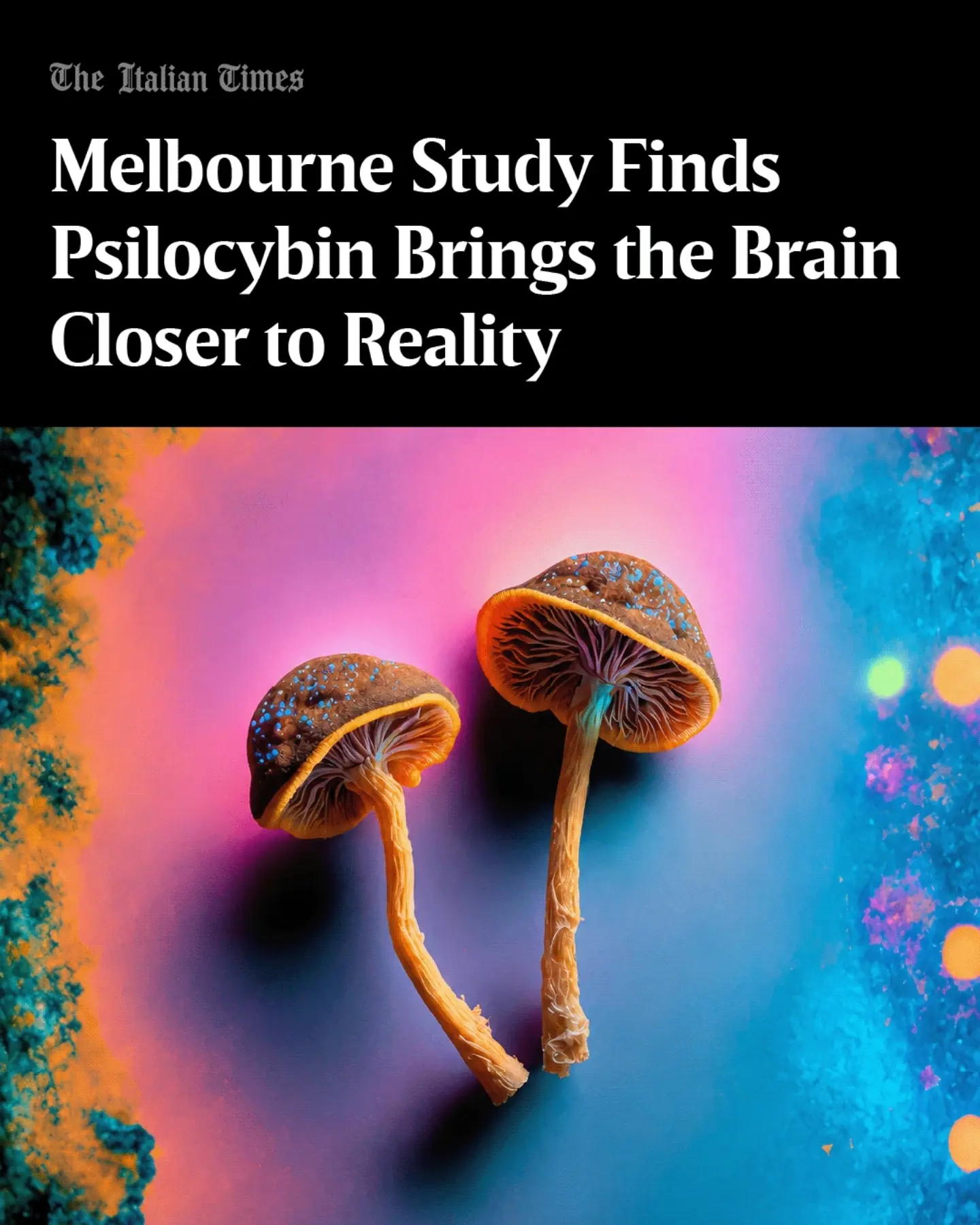
Australian researchers aim to revolutionize our understanding of brain function.
A recent study published by Melbourne researchers found that psilocybin can increase the brain closer to "natural" states of wakefulness.¹ ¹ The Visual Summary.
The Psychedelic Shift
Psilocybin, the psychoactive compound found in certain mushrooms, is known to induce altered states of consciousness. The Melbourne Study published in The Italian Times recently found that these shifts may also bring the brain closer to “natural” states of wakefulness. Unlike conventional stimulants, psilocybin affects the brain in a way that may boost connectivity between different neural networks.² Research has historically focused on the therapeutic potential of psilocybin.⁵ ² The Melbourne Study. The Impact of psilocybin on brain network connectivity and function.
The Brain on Psilocybin
One of the most compelling distinctions of psilocybin is its ability to alter brain states. It reaches the brain relatively quickly, peaking about halfway through the dose and lasting for 4-6 hours. It’s distinct from other stimulants like caffeine or nicotine. It has also shown promise in treating depression and anxiety. The study noted that psilocybin brought the brain closer to a more “natural” firing state during wakefulness. This differs from typical wakefulness, where networks are more rigidly segmented. Psilocybin reduced the brain’s default rigidity, allowing networks to communicate more freely.³ ³ The Impact of psilocybin on brain network connectivity and function.
Rewiring the Brain
Understanding how psilocybin influences brain function can lead to the creation of new diagnostic tools, therapies, and even brain-computer interfaces. But the biggest hurdle is a lack of clarity in how we measure these effects in a way that's useful for diagnosing disorders.⁵
A New Model of Brain Function
Altered brain states may be a useful tool for research on neurological disorders. These findings suggest that psilocybin could potentially be used to model certain aspects of neurological and psychiatric conditions. Models of altered brain function could serve as diagnostic tools or new treatment modalities for conditions like Alzheimer’s or Parkinson’s.⁴ The biggest challenge in bringing this novel treatment method into medical practice is using psilocybin for good. The biggest hurdle is that psilocybin is still a Schedule I drug, which means it's illegal to possess and use, even in a clinical setting.⁵ ⁴ The impact of psilocybin on brain function.
What’s Next for Psilocybin
Legalizing psilocybin for clinical use is a bureaucratic nightmare, and it’s also a major ethical issue. The “psychedelic renaissance” is still in its infancy.⁵ The stakes are high. Those experiencing treatment-resistant depression will need a new model of therapy before traditional options run out, as they most likely will for future generations. There is a need for more controlled studies to establish clinical guidelines, efficacy, safety protocols, and lead the way for more versatile therapies.⁴
Brain Reset: Measuring the Effect of Psilocybin
There’s a high bar for clinical use of a psychedelic drug, but the possibilities are promising. What researchers mean by the brain becoming closer to a "natural" state is not that it behaves like a newborn. What’s actually happening is that the brain is more malleable and adaptable.⁵ The major challenge with using psychological therapies (including psilocybin) is assessing its efficiency. The process is so different from the brain's typical functioning that standard tests fall short. For altered brain states, the brain is so different that typical methods of measuring aren’t helpful.⁵
Psilocybin is more than just an altered state
Psilocybin is more than just a drug. It’s a means of shaping the brain. By understanding the mechanisms of psilocybin, we can develop new therapies for brain disorders. Future models will lead the way for new kinds of treatments that can be translated into widely available modalities.⁵ The challenge for researchers is identifying the potential applications for these novel treatments and developing them into something that is both safe and effective. But with the right steps, psilocybin’s potential is promising.⁵
Recreating the Experience
Aspiring explorers should be aware of the legal landscape before experimenting with psilocybin. While psilocybin mushrooms are found naturally around the world, they’re considered Schedule I drugs in most places, including the US. Of course, you’ll want a safe environment and a sober friend to guide you through the experience.
- Research the legal situation: check out local regulations around psilocybin, and proceed with care. The risks of legal consequences vary widely between jurisdictions.
- Start low and go slow: always begin with a low dose and gradually increase to find the desired effect.
- Have a guide: It’s helpful to have someone sober and knowledgeable nearby in case things get intense.
- Provide for safety: use the drug in an environment that feels safe and comfortable.
- Stay hydrated: have fluids on hand.
The Future of Brain Science
Psilocybin might just be the key to unlocking some of the most mysterious parts of the brain. The recent findings show that psilocybin's ability to rewarp the brain’s connectivity may have the power to offer new insights into treating neurological disorders.⁵
Watch the Reel
Questions readers ask
What exactly does it mean that psilocybin brings the brain to a more 'natural' state of wakefulness?
The study suggests that psilocybin helps the brain operate in a more fluid and interconnected way, unlike the typical segmented brain activity during regular wakefulness. This means that different neural networks can communicate more freely, which could potentially enhance creativity and problem-solving abilities.
How does psilocybin differ from other stimulants like caffeine in terms of its effects on the brain?
Unlike caffeine, which generally boosts neural activity and alertness, psilocybin promotes a more free-flowing brain state. It increases connectivity between different neural networks, allowing them to communicate more openly. This shift in brain function could potentially have therapeutic benefits for conditions like depression and anxiety.
Can psilocybin be used to treat neurological disorders like Alzheimer's or Parkinson's?
The study suggests that psilocybin could potentially serve as a model for understanding and treating neurological disorders. By altering brain states and enhancing connectivity, psilocybin might help researchers develop new diagnostic tools and treatment modalities for conditions like Alzheimer’s or Parkinson’s. However, more research is needed to fully understand its potential therapeutic applications.
What are the biggest challenges in using psilocybin for clinical purposes?
One of the main challenges is the legal status of psilocybin, which is currently classified as a Schedule I drug. This makes it difficult to conduct research and use it in clinical settings. Additionally, there is a need for more controlled studies to establish clinical guidelines, efficacy, and safety protocols before psilocybin can be widely adopted as a therapeutic tool.
How long do the effects of psilocybin last, and what should someone expect during this time?
The effects of psilocybin typically peak about halfway through the dose and can last for 4-6 hours. During this time, users may experience altered states of consciousness, heightened sensory perceptions, and potentially some level of disorientation. It’s important to note that the experience can vary greatly from person to person, and it should always be done in a controlled and safe environment.
Related deep dives
Similar reads based on topic and creator.


Recent articles
Fresh deep dives from the latest Reels we unpacked.




Comments
Be the first to comment.