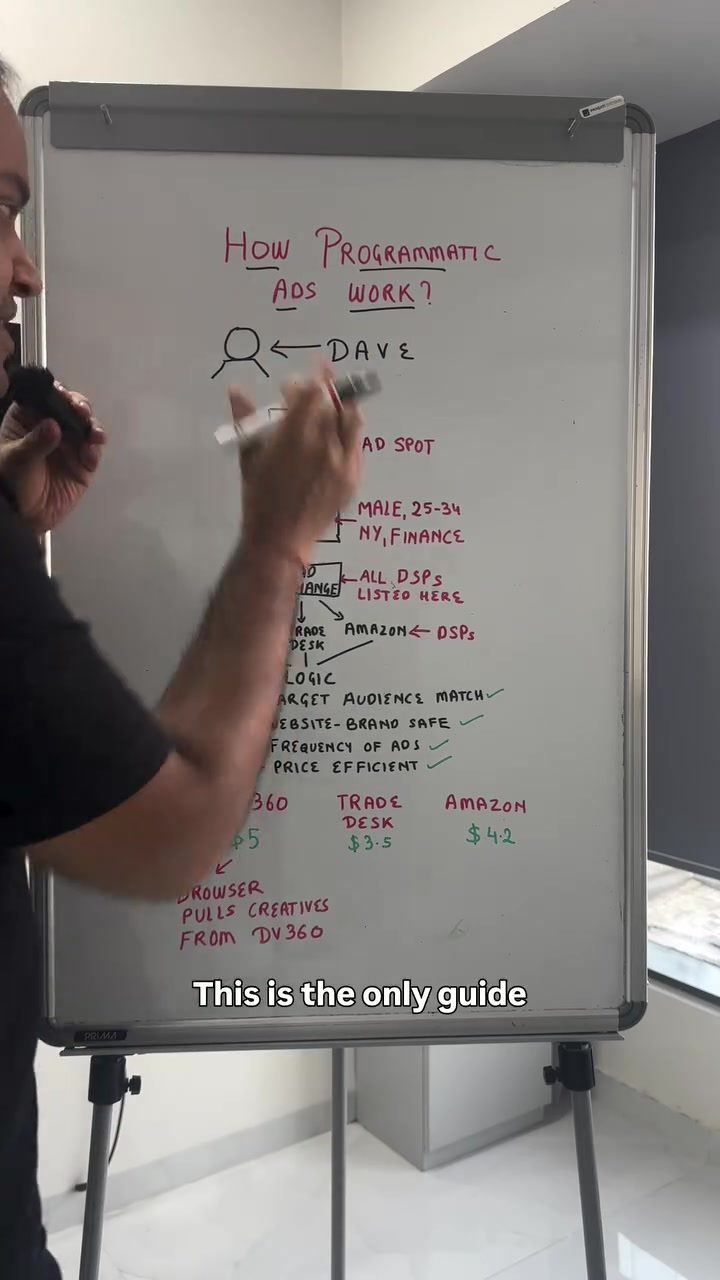
Understanding How Programmatic Ads Work
Programmatic advertising is a powerful tool in the digital marketing landscape, revolutionizing how ads are bought, sold, and displayed. At its core, programmatic advertising involves the automated buying and selling of ad inventory through real-time bidding processes. The process is complex but highly efficient, allowing advertisers to reach their target audiences with precision and speed.
Why This Matters
In the digital age, businesses are constantly seeking ways to maximize their marketing efforts. Programmatic advertising offers a solution by enabling targeted, efficient, and scalable ad campaigns. Unlike traditional methods, programmatic advertising uses data-driven insights to deliver ads to the right people at the right time, enhancing the overall effectiveness of marketing strategies.
The Workflow of Programmatic Ads
To understand how programmatic ads work, let's break down the process step by step.
Initial Ad Spot
The journey of a programmatic ad begins when a user, let's call him Dave, visits a website like CNN.com. As the page loads, there is an empty ad spot where the ad will eventually appear. This ad spot is integral to the process, as it's where the ad will be displayed to Dave.
Supply Side Platform (SSP)
Once the page starts loading, the website's code sends a request to a Supply Side Platform (SSP). The SSP is where publishers list their ad inventory. This platform is crucial because it acts as an intermediary between the publisher (CNN.com) and the ad exchange. The SSP collects information about Dave, such as his demographic details and browsing behavior, and passes this data to the ad exchange.
Ad Exchange
The ad exchange is a marketplace where various Demand Side Platforms (DSPs) are listed. These DSPs, which include top platforms like DV360 (Display & Video 360 by Google), Trade Desk, and Amazon, receive data packets called bid requests from the SSP. These requests contain information about Dave, allowing DSPs to decide whether to bid for the ad spot.
Demand Side Platforms (DSPs)
DSPs play a crucial role in the programmatic process. They run complex algorithms to determine whether to bid for an ad spot based on several factors, including:
- Target Audience Match: Ensuring the ad is shown to the right audience.
- Brand Safety: Ensuring the ad appears on a website that aligns with the brand's values.
- Ad Frequency: Preventing the same ad from being shown too frequently to the same user.
- Price Efficiency: Ensuring the bid is cost-effective. The price is usually based on CPM (Cost Per Thousand Impressions).
The Bidding Process
Once the DSPs receive the bid request, they place their bids. For example, DV360 might bid $5, Trade Desk might bid $3.5, and Amazon might bid $4.2. The highest bidder wins the auction and is notified by the ad exchange. In this case, if DV360 wins, the ad exchange informs CNN.com that DV360 has won the bid.
Delivering the Ad
After winning the bid, the browser pulls the creative from DV360 and starts displaying it to Dave. This entire process, from the initial request to the ad display, happens in under 200 milliseconds, showcasing the speed and efficiency of programmatic advertising.
Practical Tips for Effective Programmatic Advertising
Programmatic advertising offers numerous benefits, but to maximize its potential, consider the following tips:
- Use High-Quality Data: The effectiveness of programmatic ads depends heavily on the quality of the data used. Ensure that your data is accurate, up-to-date, and comprehensive.
- Target the Right Audience: Use demographic and behavioral data to target the right audience for your ads. This helps in increasing the relevance of your ads and improving conversion rates.
- Ensure Brand Safety: Always check the websites where your ads will be displayed to ensure they align with your brand's values and do not appear next to inappropriate content.
- Monitor Ad Frequency: Avoid showing the same ad too frequently to the same user to prevent ad fatigue. This keeps the ad experience fresh and engaging.
- Optimize for Price Efficiency: Use bidding strategies that maximize your return on investment. Focus on CPM and other metrics to ensure your bids are cost-effective.
Important Takeaways
Programmatic advertising is a game-changer in the digital marketing world. Its ability to deliver targeted, efficient, and scalable ad campaigns makes it a valuable tool for businesses of all sizes. By understanding the workflow and implementing best practices, businesses can leverage programmatic advertising to achieve their marketing goals.
Conclusion
Programmatic advertising is an automated, data-driven approach to digital marketing that offers unparalleled efficiency and precision. By understanding the workflow and following best practices, businesses can maximize their marketing efforts and achieve better results. Whether you're a small business or a large enterprise, programmatic advertising provides a powerful way to reach your target audience and drive meaningful engagement.
Watch the Reel
Questions readers ask
What is real-time bidding in programmatic advertising?
Real-time bidding (RTB) is a core component of programmatic advertising. It involves the automated buying and selling of ad inventory through instantaneous auctions, where advertisers bid for ad space in real-time as users load web pages or apps. This dynamic process ensures that ads are displayed to users who are most likely to engage with them, enhancing the effectiveness of ad campaigns.
How does programmatic advertising optimize ad campaigns?
Programmatic advertising optimizes ad campaigns by leveraging data-driven insights to target specific audiences with precision. Through real-time bidding and automated ad buying, advertisers can continuously monitor and adjust their campaigns to improve performance. This includes tailoring ad content, adjusting bids, and targeting strategies based on user behavior and data analytics, ensuring that the right ads reach the right audience at the right time.
What are ad exchange platforms in programmatic advertising?
Ad exchange platforms are digital marketplaces where advertisers and publishers can buy and sell ad inventory through automated, real-time auctions. These platforms facilitate programmatic ad trading by connecting buyers and sellers, allowing for efficient and scalable ad campaigns. Examples of ad exchange platforms include open exchanges and private marketplaces, each offering different levels of transparency and control over ad inventory.
How does programmatic advertising benefit digital marketing automation?
Programmatic advertising enhances digital marketing automation by streamlining the process of buying and selling ad inventory. Through automated systems, advertisers can manage multiple campaigns across various platforms, ensuring that ads are delivered to the right audience efficiently. This automation reduces manual labor, minimizes errors, and allows for real-time optimization, making ad campaigns more effective and cost-efficient.
What role does data play in programmatic advertising?
Data is fundamental to programmatic advertising, driving the precision and effectiveness of ad campaigns. By analyzing user behavior, demographics, and engagement patterns, advertisers can create detailed profiles of their target audience. This data is then used to inform bidding strategies, ad placements, and content personalization, ensuring that ads are delivered to users who are most likely to engage with them, thus maximizing the impact of the campaign.
What is the significance of using platforms like DV360 in programmatic advertising?
Platforms like DV360 (Display & Video 360) are essential for managing and executing programmatic advertising campaigns. DV360 provides a comprehensive suite of tools for real-time bidding, ad buying, and campaign optimization. It enables advertisers to access a wide range of ad inventory, manage campaigns across multiple channels, and gain valuable insights into campaign performance, all from a single interface, making it a powerful tool for efficient and effective digital marketing.
Related deep dives
Similar reads based on topic and creator.




Recent articles
Fresh deep dives from the latest Reels we unpacked.




Comments
Be the first to comment.