When you're working on a computer, your machine is often tasked with multiple demands. Every task in a computer is managed by either a process or a thread — two distinct yet interdependent mechanisms that help your computer manage workloads efficiently.
The Basics of Processes and Threads
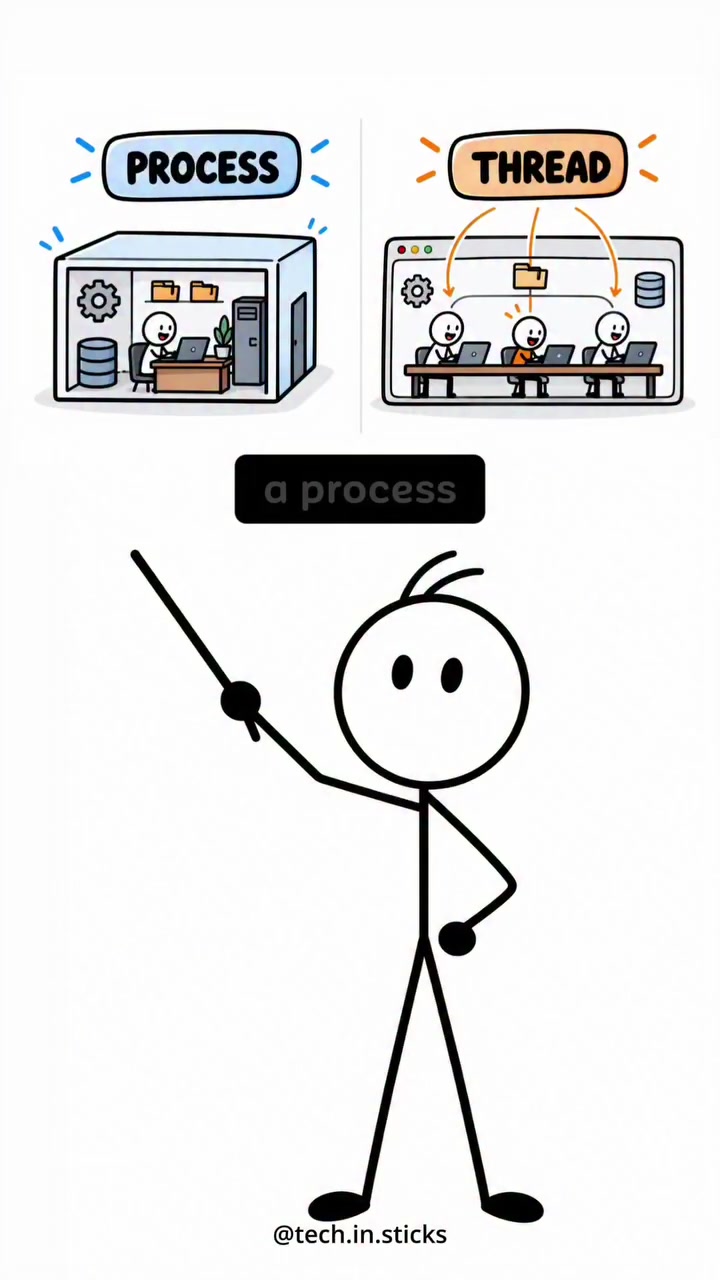
A process is an independent program or task running in your computer's memory. It has its own workspace, resources, and staff, much like a restaurant. The process manages its own components and operates independently within the system. If you open another program, it will have its own set of resources and workspace. Since each process is isolated, they are heavier to create and require more resources. This isolation helps in preventing one process from interfering with another. The downside to processes is their higher overhead, which means they consume more of the computer's resources, such as memory and processing power. Meanwhile, a thread is a smaller unit of execution within a process. Picture a worker inside that restaurant. Multiple workers can work on different tasks at the same time, while sharing the same kitchen and resources. Each thread allows for concurrent execution of tasks within a process. Threads are generally lighter and faster to create than processes, but they also share resources, which means they need to be managed carefully to avoid conflicts. Threads are useful for tasks that need to run concurrently within the same process. Think of it this way: if you have to print multiple documents, a single-threaded process prints each document one by one; a multi-threaded process prints multiple documents at the same time.
The Shift Toward Multithreading
Today's users demand more from their computers. Applications need to be quick and responsive. As hardware speeds hit limits, software optimization becomes essential. Multithreading has become a essential way to make software more responsive and efficient. Smooth video playback relies on multiple threads. One thread decodes the video stream, while another thread renders the video. Multiple threads make it possible to handle multiple user inputs, video frames, and audio simultaneously, providing an unbroken user experience. Yet not all multithreading is created equal. Poorly managed threads can lead to performance issues and crashes. That's why understanding the finer workings of threads and processes can help developers create more robust and efficient applications.
The Parallel Hierarchy of Processes and Threads
The relationship between processes and threads is hierarchical. Every thread exists within a process, and a process can contain multiple threads. This structure helps in managing tasks efficiently without compromising stability. All threads within a process share the same resources, which means they can read and modify the same memory. Developers need to ensure that these shared resources are managed efficiently. This structure allows for flexible and efficient multi-tasking in applications. However, navigating this hierarchy takes careful planning and synchronization to avoid conflicts.
Resource Management
The shared resources between threads are a double-edged sword. On one hand, they help in saving memory and compute power. On the other hand, they can lead to conflicts and data corruption if not managed correctly. Consider the example of multiple threads accessing shared variables. Threads not synchronized properly can cause variables to be altered unexpectedly. Proper synchronization mechanisms such as mutexes, semaphores, and critical sections are necessary to prevent such issues. When managed properly, threads can drastically improve the performance of applications. This careful control is why multithreading is often employed in databases, servers, and real-time applications.
Multithreading Challenges
While threads offer numerous benefits, they also come with challenges. Using multiple threads demands careful management for data integrity. Race conditions, where concurrent access to data leads to unpredictable results, are a common issue. Additionally, thread migration, where a thread is moved from one processor to another, can cause performance degradation. Developing software that effectively manages threads requires a deep understanding of both the application's logic and the underlying hardware architecture.
Choosing Between Processes and Threads
When developing software, developers must decide whether to use processes or threads. This decision depends on the specific requirements of the task at hand and system capabilities. When stronger isolation between tasks is necessary, processes are the better choice. Conversely, when tasks can share resources and need to run concurrently, threads are more efficient. For example, a web server handling multiple client requests may benefit from multithreading. Each request can be handled by a separate thread, allowing for concurrent processing. But if the server needs to handle isolated, heavyweight tasks, using separate processes might be more appropriate.
The Concurrency Revolution
Threads have revolutionized how tasks are executed, making it possible to run tasks concurrently and efficiently. When Apple introduced multithreading capabilities with the Grand Central Dispatch (GCD) framework, it facilitated the development of more responsive applications on Mac and iOS platforms.
Synchronisation and Efficiency
The catch with threads is that while they are faster to create, it's crucial to manage them effectively to harness their benefits. E.g. using a thread to constantly check for updates, could help keep your app responsive, without hogging resources.
Thread-Intensified
Whether you're a developer or a user, understanding the intricacies of threads and processes is important. You've likely experienced the effect of multithread processes on your software. In the end, whether it's manipulating data in a spreadsheet or running complex simulations, efficient management of threads and processes ensures that your computer performs tasks efficiently.
Watch the Reel
Related deep dives
Similar reads based on topic and creator.



Recent articles
Fresh deep dives from the latest Reels we unpacked.




Comments
Be the first to comment.