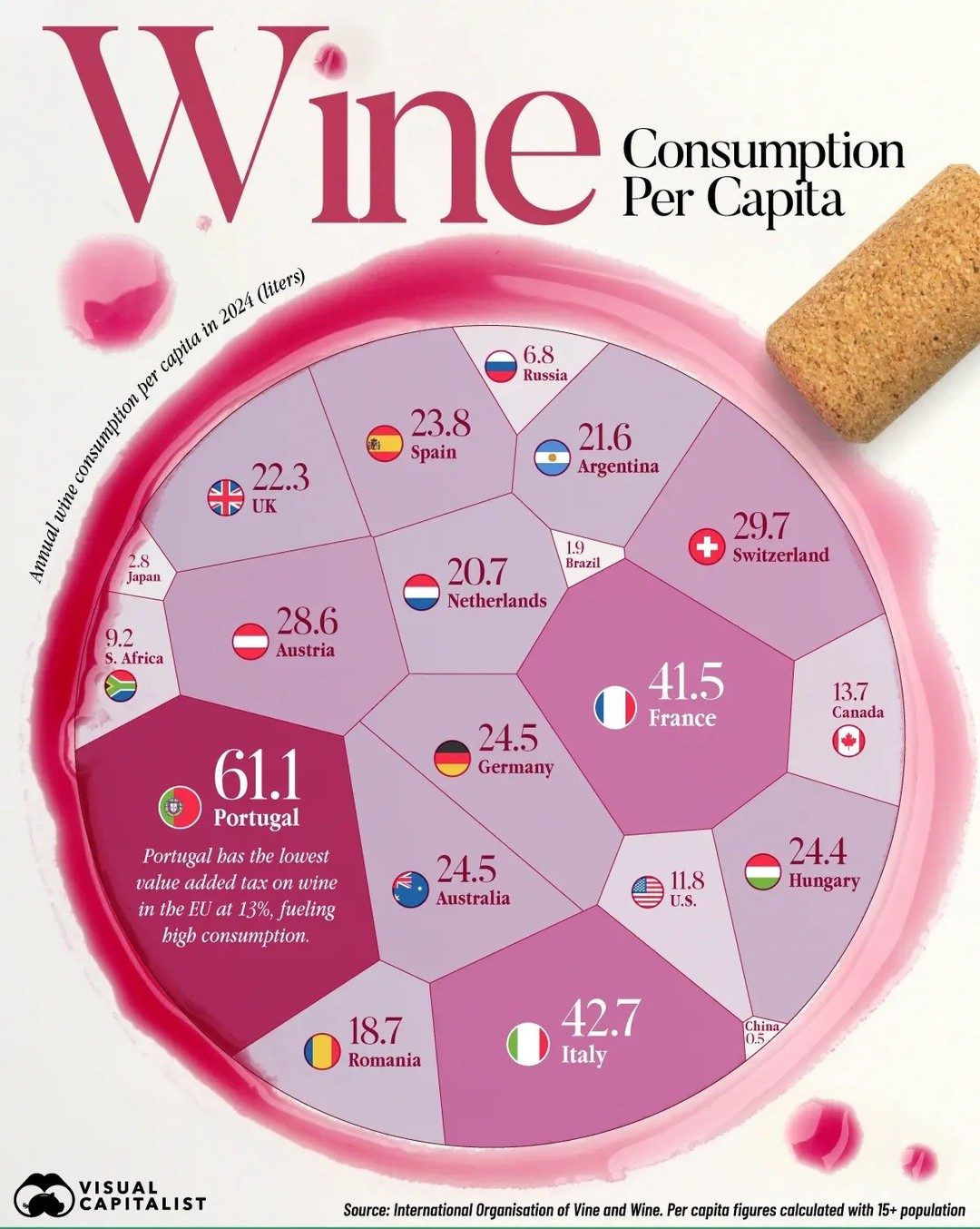
Portugal Leads the World in Wine Consumption
Portugal tops the global list for wine consumption, with an average of 61.1 liters per person in 2024. This amount is nearly three times the global average, highlighting the country's significant position in the global wine market. Europe, as a continent, dominates wine consumption, with an average of 28.7 liters per person, compared to 10.8 liters in non-European countries.
Why This Matters
Wine consumption patterns offer insights into cultural preferences, economic factors, and public health trends. Understanding these patterns can help stakeholders in the wine industry, health policymakers, and researchers make informed decisions. The data also reveals broader trends in alcohol consumption and lifestyle choices across different regions.
Global Wine Consumption Trends
Europe Dominates
Europe is the undisputed leader in wine consumption. Nine out of the top ten wine-drinking nations are European, reflecting the continent's rich wine-making heritage and cultural norms. This dominance is evident in countries like Switzerland and France.
Highest and Lowest Consumption
Switzerland leads the world in wine consumption per capita at 41.5 liters, with Portugal not far behind at 61.1 liters. This places Switzerland and Portugal as the top wine consumers globally. Other high-consuming countries include Italy and Austria.
Non-European Countries
Outside of Europe, the United States, Canada, and Australia are the leading wine consumers. These countries, however, lag behind their European counterparts, reflecting regional differences in wine culture and availability.
Regional Differences
- Spain: Known for its vibrant wine culture, Spain consumes a significant amount of wine, though not as high as Portugal.
- Argentina: Despite being in South America, Argentina has a strong wine tradition, partly due to its Italian and Spanish heritage.
- Australia: This country has a robust wine industry and is a major exporter, with a considerable domestic market.
- Japan and China: These countries show lower consumption rates but are growing markets with increasing interest in wine.
Practical Tips for Wine Enthusiasts and Industry Stakeholders
Understanding Local Trends
For wine enthusiasts, understanding local trends can enhance appreciation and selection. For instance, visiting Portugal or Switzerland can offer unique wine-tasting experiences. Similarly, exploring regional wine festivals and events can provide deeper insights into local preferences and traditions.
Economic and Tax Implications
Portugal’s low value-added tax on wine contributes to its high consumption rates. Understanding the tax environment can help tourists and wine enthusiasts make more economical choices. For instance, buying wine directly from a local vineyard in Portugal may be more cost-effective due to lower taxes.
Health Considerations
While wine consumption is a cultural and economic indicator, it is essential to consider health implications. Moderate wine consumption, as part of a balanced diet, can have health benefits. However, excessive consumption can lead to health risks, including liver disease and addiction.
Industry Opportunities
For industry stakeholders, the data highlights opportunities for growth and expansion. For example, the increasing interest in wine in countries like Japan and China presents potential markets for European and Australian wineries. Similarly, the robust domestic markets in the United States and Australia offer opportunities for local and international producers.
Important Takeaways
- Portugal Leads Globally: Portugal's high wine consumption per capita reflects its deep-rooted wine culture and favorable tax policies.
- European Dominance: Europe's wine consumption patterns are significantly higher than non-European countries, highlighting the continent's cultural and economic ties to wine.
- Regional Diversity: Different regions, including Asia and the Americas, have unique wine consumption patterns influenced by cultural, economic, and historical factors.
- Opportunities and Challenges: The data presents opportunities for industry stakeholders and health policymakers to tailor their strategies based on regional trends.
Conclusion
Portugal's leadership in wine consumption and Europe's overall dominance in the wine market reflect deep cultural and economic ties to wine. Understanding these trends can help industry stakeholders, health policymakers, and wine enthusiasts make informed decisions. Whether exploring local wine festivals, considering economic factors, or understanding health implications, these insights provide a comprehensive view of the global wine landscape.
Watch the Reel
Questions readers ask
How does Portugal's wine consumption compare to the global average?
Portugal's wine consumption is significantly higher than the global average. In 2024, the average person in Portugal consumes 61.1 liters of wine, which is nearly three times the global average. This places Portugal at the top of the global wine consumption rankings.
Which countries are also leading in wine consumption besides Portugal?
European countries dominate the top of the list for wine consumption. This is largely due to a deep cultural connection to wine. Several countries in Europe have individuals who consume an average of 28.7 liters per person, which is significantly higher than the 10.8 liters consumed in non-European countries.
Why is understanding wine consumption patterns important?
Wine consumption patterns provide valuable insights into cultural preferences, economic trends, and public health. By examining these patterns, stakeholders, policymakers, and researchers can gain a better understanding of lifestyle choices and make informed decisions in their respective fields.
What are the implications of Portugal's high wine consumption on public health?
Portugal's high wine consumption can have several implications for public health, including potential increases in alcohol-related health issues. However, it's important to note that moderate wine consumption has also been linked to certain health benefits. Policymakers in Portugal may need to consider both of these factors when developing health strategies.
How does Europe's wine consumption compare to the rest of the world?
Europe has significantly higher wine consumption compared to the rest of the world. In 2024, the average European consumes 28.7 liters of wine per person, while individuals outside of Europe consume only 10.8 liters on average. This large difference highlights the cultural and historical significance of wine in Europe.
What trends can be observed from the 2024 global wine consumption data?
The 2024 global wine consumption data reveals that Europe continues to dominate the wine market, with high consumption rates. Notably, Portugal leads the rankings with the highest wine consumption per capita, reflecting a strong wine culture in the country. This data also indicates broader trends in lifestyle choices and alcohol consumption patterns around the world.
How can the wine industry utilize these consumption statistics?
The wine industry can use these consumption statistics to identify key markets and tailor their strategies. For instance, focusing on the European market, particularly countries with high consumption rates, could be beneficial. Additionally, understanding consumption patterns in different regions can help in product development and marketing efforts, ensuring that the wine industry meets the demands of its consumers.
Related deep dives
Similar reads based on topic and creator.




Recent articles
Fresh deep dives from the latest Reels we unpacked.




Comments
Be the first to comment.