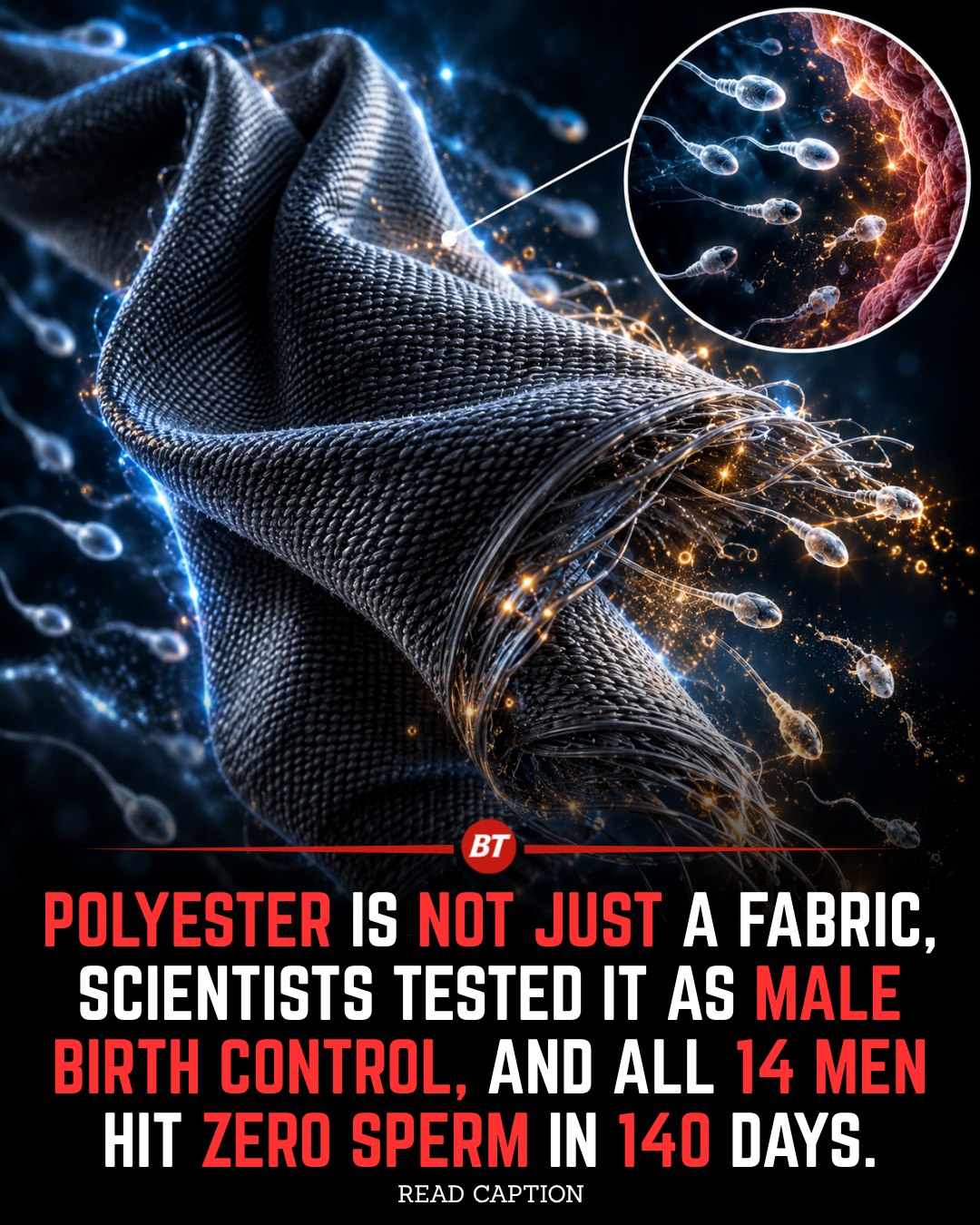
New Male Contraceptive
Polyester fabric isn't just for suits and summer dresses anymore. The man-made fabric has been tested as a male birth control method: — every single one of the 14 participants of a small medical study had zero sperm in just 140 days. Researchers are interested in the impact of polyester on sperm count -- specifically disrupting sperm movement and viability through direct contact with fabric. Polyester is synthetic and highly durable. It consists of strong, flexible fibers that can be woven tightly to create fabrics. The study's fabric was adapted for wearing to restrict the movement of sperm. Researchers delved into male contraceptive methods that do not require surgical operations, in order to avoid invasive procedures or hormone therapy.
Polyester: the new fabric of birth control
The male contraceptive landscape has been relatively stagnant. Traditional methods like condoms, vasectomies, and hormonal injections are available. But many men prefer non-invasive, reversible, and convenient alternatives. This is where the polyester study shows promise. Polyester fabric could potentially be worn as a patch or incorporated into underwear. The fabric acts as a barrier, disrupting sperm movement and potentially rendering them infertile. This non-hormonal, non-invasive approach could revolutionize male birth control. There is a known market demand for more male birth control options. The departure from traditional methods could increase the market.
How It Works
Intimately woven
To understand the potential impact of polyester, let’s dive into the mechanics. The fabric mainly targets sperm viability and motility, the key factors in male fertility. Sperm motility refers to the sperm's ability to move and swim toward an egg. Viability refers to the ability to fertilize an egg. Wearing a polyester fabric for long periods can disrupt sperm motility. For instance, the fabric’s surface could create friction, hampering sperm movement. The direct contact with the polyester also impairs sperm viability, reducing their ability to function.
Film
The polyester contraceptive tested on men wore a small square on their skin. This patch is meant to gently hamper the ability of sperm to fertilize an egg. The fabric could be integrated with fabric so that men could wear it. The polyester patch is designed to absorb the semen. The polyester is safe for long-term use, fabricated from non-toxic and hypoallergenic materials. The study proved that polyester has the potential to reduce sperm count to zero.
Deep Dive
Removing sperm from the equation
The polyester contraceptive method impacts sperm movement and viability. Direct contact with the fabric disrupts sperm, reducing their ability to fertilize an egg. The ability to move and swim towards an egg (motility) and their ability to fertilize (viability) are reduced., The close contact between the fabric and the skin could cause heat buildup. This alters the temperature of the testicles, making the sperm gradually immobile. High temperatures are known to impair sperm production and decrease the number of sperm in men. Testosterone formation plays a role in sperm production and motility in men. Interfering with testosterone formation reduces sperm production.
Fabric texture
The specific texture of polyester fabric, interwoven with microscopic pores, traps sperm. This creates a harsh environment for the sperm. The fabric's surface is coated with a fine layer of microscopic pores that trap sperm. The pores lead through the many layers of cells in a sperm to the head of the cell. The texture of the polyester fabric causes friction that immobilizes sperm. The sperm cells cannot move due to the fabric. This reduces the ability of sperm to fertilize an egg.
Testing polyester
The polyester fabric was tested for 140 days with men. The test involves participants wearing a polyester patch on their skin. The texture provokes a reaction in the sperm to disrupt sperm movement. The participants applied a polyester patch, with microscopic holes, at the scrotum. The fabric traps and immobilizes sperm. Within 140 days, all 14 participants achieved zero sperm. No adverse effects were reported in the participants. The study highlights the potential of polyester fabric as a male birth control method.
Practical steps
The polyester method may be a non-invasive, safe, and convenient alternative to traditional contraceptive methods. Men interested in trying can start:
- Initial consultation: have a conversation with a urologist about polyester fabric contraceptives. Ensure there is no conflict between polyester and testosterone. Reconfirm why and how polyester disrupts sperm viability and movement.
- Start with a patch: Begin by wearing a small polyester patch on the skin. Gradually, increase the size and duration.
- Monitor your sperm: Increase the duration and size of the polyester patch gradually, then monitor sperm movement and count by conducting a sperm test. Consult your doctor to conduct a sperm count and motility test.
Reimagining contraception
Polyester fabric, when worn directly on the skin, can disrupt sperm movement. This disrupts the ability of sperm to fertilize an egg. The polyester fabric contraceptive is rigorous. It could revolutionize male birth control. Regular use of polyester fabric for male contraception may enhance body image, since this does not involve needles, drugs, or hormones. This could be convenient for those who want to try non-invasive contraception.
Watch the Reel
Related deep dives
Similar reads based on topic and creator.




Recent articles
Fresh deep dives from the latest Reels we unpacked.




Comments
Be the first to comment.