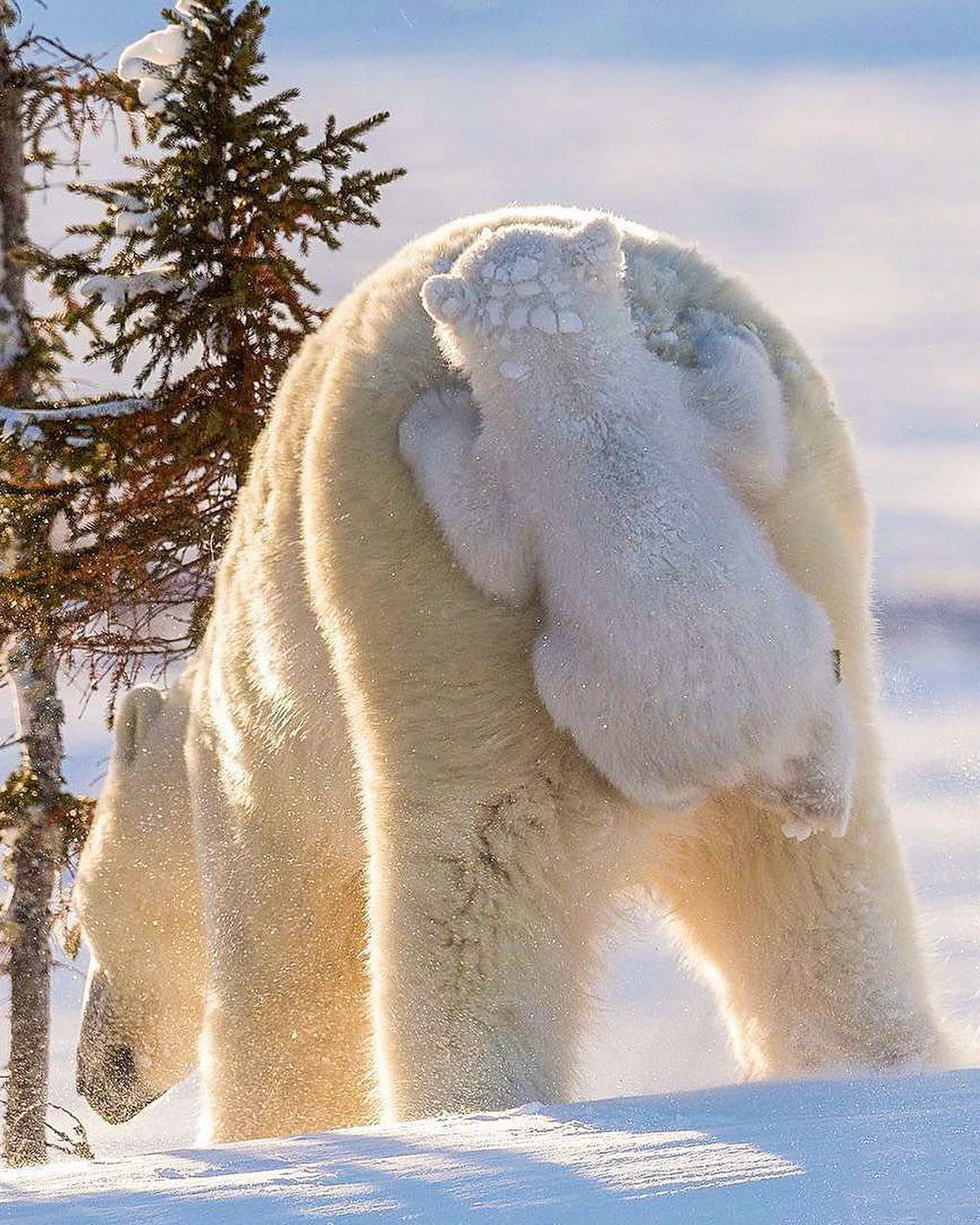
Polar Bear Families
A family of polar bears navigates the pristine, snowy Arctic landscape. These gentle giants showcase a complex and familial bond amidst the harsh environment. Polar bear families are composed of a mother and cubs. Cubs engage in playful activities to develop hunting and survival skills, telling viewers how psycho-social and appetitive behaviors shape their development.
The Polar Bear Family
Polar bear families are distinctive from others because these bears are considered solitary creatures otherwise. These mothers and their cubs typically stay together for around two to three years. The cubs remain with the mothers until they are full-grown, as opposed to the cubs they are born with. The mother polar bears and cubs form an integral part of the ecosystem of the Arctic. They spend a significant portion of their life in the water and are excellent swimmers. Family dynamics play an important role in the growth and learning of cubs. Cubs are playful, and the playful activities are critical in helping cubs develop the necessary skills to survive in such a harsh environment. Polar bears serve as a key symbol of the Arctic, their icy habitat, and climate change. The mother polar bear care of cubs showcases how every animal instinct is a survival mechanism.
The Resilience of Arctic Life
In the greater context of Arctic life, polar bear families epitomize resilience and adaptability. They have adapted to the extreme cold, snowy conditions, and the harsh Arctic environment. Though climate change endangers polar bear habitat, it remains a key symbol of their ecosystem and ongoing preservation efforts. The Arctic landscape is fraught with difficulties, and polar bear families must adapt their hunting and moving through the snowy terrain. It is inherent to their family bonds which helps in keeping them alive.
The Play and Learning of the Cubs
The playful activities of cubs contribute to developing the skills they need for survival as these skills act as a foundation for their future endeavors.
Learning to Scale Skills
This sharking of skills and competency in relation to the wild is essential in any animal species' early developmental growth. The Arctic environment is harsh for survival—an intricate web of snow, water, and ice-with high chances. Therefore, Polar Bears must develop the skills needed for their survival. Socialization is critical, and playfulness is a means to understanding how to hunt and prepare for difficult situations even when the mother bear is not around. The cubs learn to adapt to their mother's skills—therefore, socialization is crucial in Polar bear family dynamics.
Development of Hunting Skills
Polar bears depend on seal hunting for survival. Therefore, learning to hunt seals and other food sources is a critical part of a cub's growth. The mother bear also spends substantial time in teaching the cubs to hunt and develop skills that are vital for survival. These hunting skills are crucial for survival and help the bears to adapt throughout their life in these harsh environments.
Polar Bear Family Dynamics: Bonding and Survival Strategies
The family structure of polar bears is unique due to the solitary nature of these animals. In the case of families, however, there is a strong bond between the mother and cub. The grandmother polar bear is the sole caretaker of the cubs, and the cubs stay with the mother until they can fend for themselves. The bond between the family is critical in terms of providing the cubs with the skills that they need, so they are mentally and physically equipped to face the harsh Arctic environments.
The Lifespan of Polar Bear Cub Families
Polar bear cubs often remain with their mothers for around two to three years, learning and developing their hunting skills. While these cubs eventually leave their mothers to venture out on their own, they are dependent on their survival skills to survive in the harsh conditions.
How the Cold, Snowy Environment Shapes Behavior
Adapting to the cold, snowy environment is essential for polar bears, which affects their growth and interactions. Polar bears are excellent swimmers and spend most of their time under the sea. This helps the polar bear to survive the otherwise unforgivable conditions. This adaptation is a factor in their survival as they also help to learn to seek food and survive. Every behavior in the Arctic is a survival mechanism. The kind of link mother bears have with their cubs—especially in such a harsh environment—speaks volumes about their ability to survive.
Navigating the Arctic
Snow and ice, are central areas of the Arctic ecosystem. They need to survive in the wild—winters that may last up to 10 months. Therefore, these cycled activities, the mother polar bear and their cubs need to learn, become a key factor in survival. Their cubs will have to survive the colder temperatures and the ice-covered terrains without an adult bear. The mother and bear cubs' relationship is complex, and they help these animals develop skills, so they are better prepared to survive in the future.
Practical Steps for Seeing Polar Bears
Visitors planning to see polar bears must observe these animals from a distance to ensure safety and avoid disrupting their natural behavior. The family dynamics, including the cubs, development of skills, hunting, and their overall survival, are better observed from a distance. One should always stay away from the cub for their safety and also to encourage them to hunt through natural means.
- Always seek guidance from experienced guides: Local guides and researchers can provide valuable insights and ensure a safe viewing experience. Always make sure you have the right equipment and stay with the guided tours.
- Observe from a safe distance: Polar bears are powerful predators. Maintain a safe and respectful distance to avoid disturbing their natural behavior and to ensure your safety.
- Choose the right time and place: The best times to see polar bears are during the late fall and early spring when they are most active. Optimal viewing spots include the Arctic tundra, which provides an open and unobstructed view.
- Respect the environment and the animals: Polar bears need to survive in such harsh environments. Avoid littering, and animal disturbance in any form to ensure a safe environment for the bears and future visitors. The key aspect is to respect the animal and the environment.
Watch the Reel
Questions readers ask
How do polar bear cubs learn to hunt and survive in the Arctic?
Polar bear cubs learn to hunt and survive through playful activities and direct instruction from their mother. These activities help them develop the skills needed to hunt seals and other food sources, which are crucial for survival in the harsh Arctic environment. The mother bear also teaches the cubs essential survival skills, ensuring they are well-prepared for life on their own.
What is the duration of a polar bear family's bond, and what happens when the cubs grow up?
Polar bear families typically stay together for around two to three years. During this time, the mother bear teaches her cubs essential survival and hunting skills. Once the cubs are full-grown, they leave the family unit to live solitary lives, as polar bears are generally solitary creatures.
How do polar bear families adapt to the extreme conditions of the Arctic?
Polar bear families have adapted to the extreme cold and snowy conditions of the Arctic through their resilient nature and strong family bonds. They spend a significant portion of their life in the water, where they are excellent swimmers. Their playful activities and socialization help the cubs develop the necessary skills to survive in such a harsh environment.
What role do polar bear families play in the Arctic ecosystem, and why are they important?
Polar bear families are integral to the Arctic ecosystem. They help maintain the balance of the ecosystem by hunting seals and other food sources. Additionally, they serve as a key symbol of the Arctic and the ongoing preservation efforts against climate change, which threatens their habitat.
How do polar bear cubs prepare for life on their own, and what skills do they develop through play?
Polar bear cubs prepare for life on their own through playful activities that help them develop essential survival and hunting skills. These activities teach them how to adapt to the harsh Arctic environment, hunt for food, and navigate the icy terrain. Playfulness is a means to understanding how to survive even when the mother bear is not around, ensuring the cubs are well-prepared for their solitary lives.
How does the family structure of polar bears differ from other bear species, and what makes it unique?
The family structure of polar bears is unique because these bears are generally solitary creatures. However, during the time a mother polar bear is with her cubs, they form a strong bond. This bond helps the cubs develop the necessary skills to survive in the harsh Arctic environment. The mother bear teaches her cubs essential survival and hunting skills, ensuring they are well-prepared for life on their own.
What challenges do polar bear families face in the Arctic, and how do they overcome them?
Polar bear families face numerous challenges in the Arctic, including extreme cold, snowy conditions, and the need to adapt their hunting and moving through the snowy terrain. Their strong family bonds and resilience help them overcome these challenges. The playful activities of cubs and the teaching of essential skills by the mother bear ensure the family's survival in the harsh environment.
Related deep dives
Similar reads based on topic and creator.




Recent articles
Fresh deep dives from the latest Reels we unpacked.




Comments
Be the first to comment.