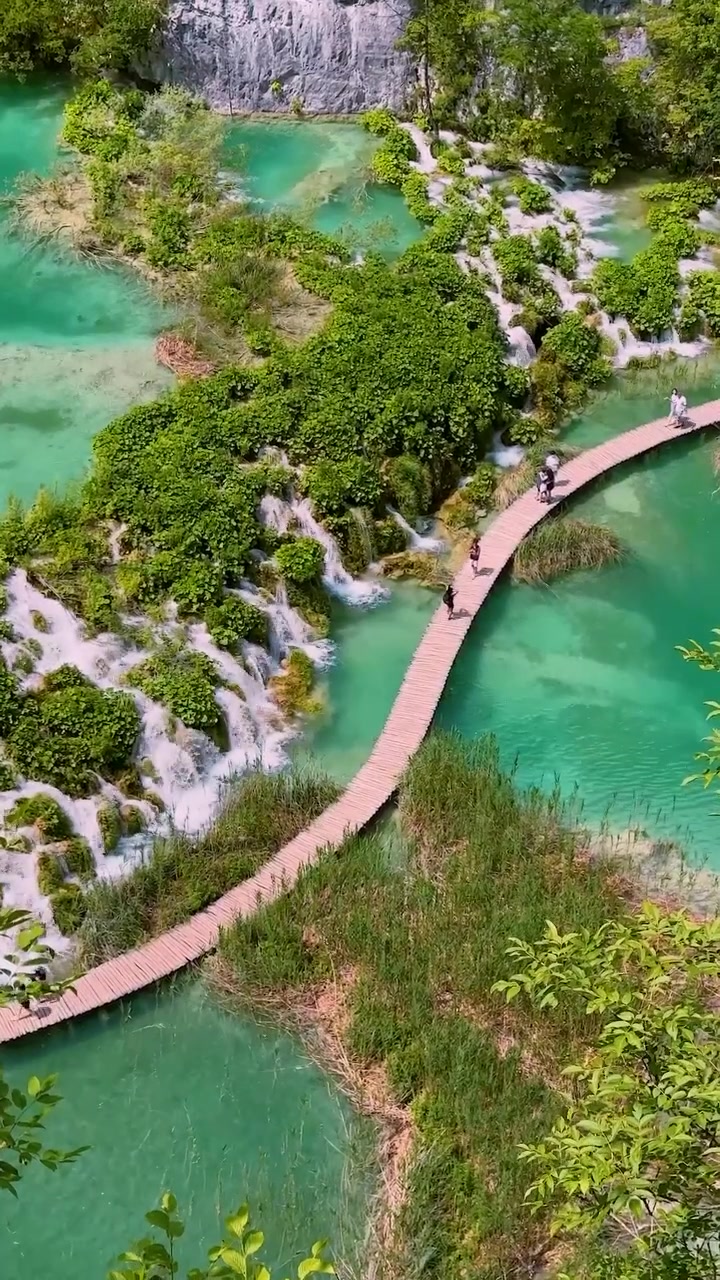
Plitvice Lakes National Park is a Croatian marvel of nature, its elevation 900m above the sea. Each of its 16 terraced lakes descends to the next in a neat cascade water flowing and pooling along the way. The water's color shifts depending on the season and mineral content, from deep shades of blue-green in summer to a clear, glass-like grey in winter. The park that protect it is one of the oldest in the country. The park’s 16 connected lakes are nestled in a lush, green valley and feature interconnected lakes, lush forests, and rich wildlife. It’s no wonder this UNESCO World Heritage site draws nature enthusiasts from around the world. UNESCO inscribed Plitvice Lakes as a World Heritage site in 1979. The international body lauded it not only for its natural beauty but also for its importance as a natural habitat for endangered species. That distinction ensures protection via a more rigorous standard.
Croatia's Liquid Jewel
The wooded walkways weave through the park’s most dramatic features, guiding visitors through a landscape of vibrant greenery, complete with cascading waterfalls and sapphire lakes. Plitvice was established as a national park in 1949, but it has been a protected area since 1913. UNESCO declared it a World Heritage Site in 1979. During the day, visitors can hike the trails or explore the lakes's edges via boat. The waterfalls are especially dramatic in the spring and early summer, when the snow begins to melt. The hikes can have moderate difficulty with steep drops to the trails, but they always offer stunning views. The park is a lot less crowded in the winter, when the waterfalls become icy sculptures. The park also offers guided walks, which can be a good way to learn more about the geology and the hydrology of the area. Each trail will have a map to help people navigate.
Plitvice Lovers' Picks
Water's Path
The lakes cascade through six major waterfalls, transforming its color quality as they go. In the western part of the park, Kamenitač waterfall creates the highest drop, about 200 feet. Across the park, the highest waterfall, Veliki Slap, is Mentioned by name. The rich waterfalls give Plitvice its distinctive look. The water's incredible clarity, the abundance of wildlife, and the park's unique geology work together to create the stunning natural landscape.
Wooden Walkways
The 20 plus kilometers of wooden pathways that wind through Plitvice Lakes National Park help protect the ecosystem. The wooden walkways keep visitors from trampling sensitive flora and disrupting animal habitats.Though the walkways themselves make it easy to explore, visitors should still be cautious. They are prone to being slippery especially in the summer months. It is smart to wear good hiking shoes when going in the more elevated areas.
Waterproof shoes
The trails in Plitvice Lakes National Park will soon be blocked off for visitors. They need to expect to see a lot of water. To make sure that the park stays healthy, visitors should never venture off the walkways.
Gearing Up for a Trip
Preparation: Consider the weather and wear clothes and shoes that are waterproof and sturdy. Finding a map is difficult, so you should copy the map that is given to you at the entrance or use an app.
- Marking key sights: The most popular sights in the park include Great Waterfall and the Upper Lakes. If you walk, you can still see the Great Waterfall. There are signs leading to the trails along the walkways.
- timing: It's possible that people could get there in the morning, spend a full day hiking in the park, and leave in the evening. Because it's easier to find a spot to park near the park's entrance, you should arrive when they open, at 7 a.m. Especially during the summer, the park is very crowded. When people arrive in the park, they could arrive by bus and avoid crowds by taking a boat across the lake.
Temperate Treasure
Plitvice Lakes National Park is one of the most famous places to visit in Croatia. Navigating the many lakes and waterfalls along the planned wooden pathways is like a treasure hunt. The park has a unique geography, with layers of limestone and dolomite that create the cascading waterfalls. It also has a rich ecosystem, with over 1,000 plant species. The park is a worthy destination for nature lovers.
Watch the Reel
Questions readers ask
How many lakes are there in Plitvice Lakes National Park, and what makes them unique?
Plitvice Lakes National Park is home to 16 terraced lakes. What sets them apart is their cascading formation, where each lake flows into the next, creating a stunning watery landscape. The lakes' colors change with the seasons and mineral content, offering a dynamic visual experience.
What is the best time of year to visit Plitvice Lakes National Park for waterfalls?
The best time to visit for waterfalls is during the spring and early summer. This is when the snow melts, and the waterfalls are especially dramatic. However, the park is also beautiful in the winter when the waterfalls turn into icy sculptures, and it's less crowded.
Are there guided tours available, and what do they cover?
Yes, Plitvice Lakes National Park offers guided walks. These tours provide insights into the geology and hydrology of the area, enhancing your understanding of the park's natural wonders. They are a great way to learn more about the unique ecosystem and landscape.
How can visitors protect the park's ecosystem while exploring?
Visitors can protect the park's ecosystem by staying on the designated wooden walkways, which help prevent damage to sensitive flora and animal habitats. It's also important to wear appropriate footwear, especially in the more elevated areas, and to avoid venturing off the trails to keep the park healthy.
What are the most famous waterfalls in Plitvice Lakes National Park, and where are they located?
Kamenitač waterfall, located in the western part of the park, creates the highest drop, about 200 feet. Veliki Slap, the highest waterfall, is another notable feature. These waterfalls contribute significantly to the park's distinctive and dramatic look.
What kind of wildlife can be found in Plitvice Lakes National Park?
Plitvice Lakes National Park is home to a rich diversity of wildlife, including several endangered species. The park's protection as a UNESCO World Heritage Site ensures that these habitats are preserved, making it a haven for nature enthusiasts and wildlife lovers.
Can visitors explore the lakes by boat, and if so, how?
Yes, visitors can explore the lakes by boat during the day. Boat tours are available and offer a unique perspective on the park's stunning landscape. These tours are a great way to see the interconnected lakes and waterfalls from a different vantage point.
Related deep dives
Similar reads based on topic and creator.




Recent articles
Fresh deep dives from the latest Reels we unpacked.



Comments
Be the first to comment.