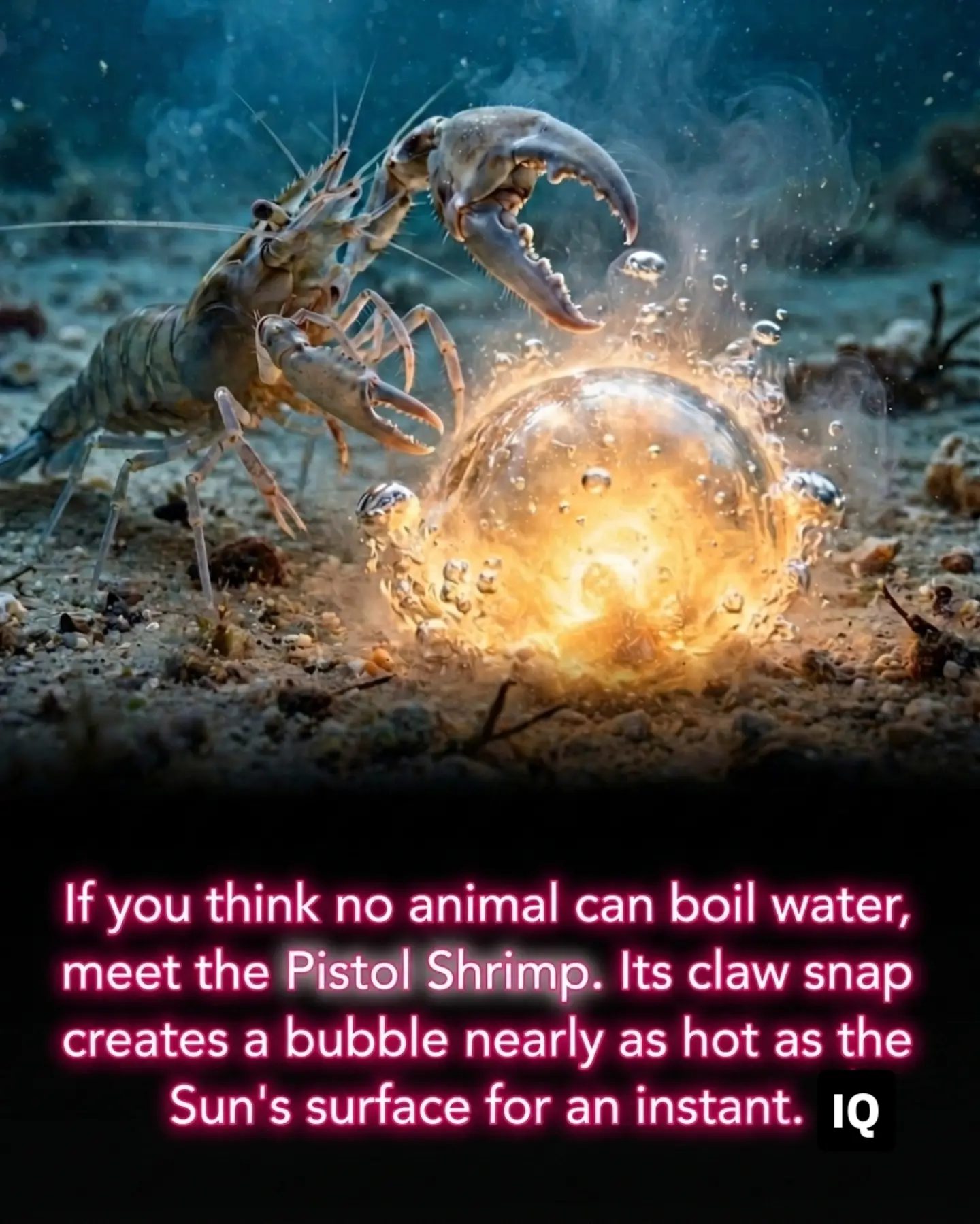
Pistol Shrimp
When examining the mysteries of the ocean, few creatures are as fascinating as the pistol shrimp. This tiny crustacean, part of the family Alpheidae, possesses a remarkable ability to harness the power of fluid dynamics and cavitation, making it one of the most intriguing inhabitants of the deep sea.
Why this matters
Understanding the physics behind the pistol shrimp's snap offers insights into the extraordinary adaptions of marine life and the fundamental principles of fluid dynamics. This knowledge can inspire advancements in various fields, from biomedical engineering to materials science. The pistol shrimp's unique hunting mechanism showcases nature's ingenuity and efficiency, providing a compelling example of how organisms can exploit physical forces to survive and thrive in their environment.
The physics of the snap
The rapid claw closure
The pistol shrimp's most notable feature is its specialized, oversized claw. When the shrimp rapidly snaps this claw shut, it doesn't strike its prey directly. Instead, the intense speed of the closure ejects a high-velocity jet of water. This jet moves at speeds exceeding 100 km/h (62 mph), creating a localized zone of extremely low pressure behind it.
Formation of the cavitation bubble
The rapid movement of the water jet causes the surrounding water to vaporize, forming a low-pressure cavitation bubble. This bubble is a crucial component of the shrimp's hunting strategy. As the surrounding water pressure quickly equalizes, the bubble violently collapses, generating an intense acoustic shockwave. This shockwave is capable of stunning or killing small fish and crabs instantly.
Temperature and sonoluminescence
For a fraction of a millisecond during this implosion, the air inside the bubble compresses so intensely that temperatures spike to nearly 5,000 Kelvin (approx. 4,725°C or 8,540°F). This extreme temperature is nearly as hot as the surface of the sun, making the pistol shrimp a unique example of nature's ability to produce extreme conditions in the ocean.
The collapse of the cavitation bubble also produces a brief flash of light known as sonoluminescence. This phenomenon, combined with the distinct snapping sound, makes the pistol shrimp one of the loudest inhabitants of the ocean.
The hunting strategy
Pistol shrimp use their powerful snap to hunt effectively. The acoustic shockwave generated by the collapsing cavitation bubble stuns or kills prey, making it easier for the shrimp to capture. This hunting strategy is remarkably efficient, allowing the shrimp to feed on small fish and crabs with precision and speed.
The role of fluid dynamics
Fluid dynamics plays a crucial role in the pistol shrimp's hunting mechanism. The rapid movement of the water jet and the formation of the cavitation bubble involve complex interactions between the water and the surrounding environment. Understanding these interactions can provide insights into how other marine organisms might exploit similar physical principles to their advantage.
Practical tips for observing pistol shrimp
If you're interested in observing pistol shrimp in their natural habitat, consider the following tips:
- Dive safely: Pistol shrimp are typically found in coral reefs and other marine environments. Ensure you have the necessary diving equipment and certifications to explore these areas safely.
- Look for burrows: Pistol shrimp often live in burrows, which they create by snapping their claws to dislodge sediments. Look for small holes in the sand or coral where these burrows might be located.
- Be patient: Pistol shrimp are nocturnal creatures, meaning they are most active at night. Plan your dives accordingly to increase your chances of spotting them.
- Respect their habitat: Always be mindful of the environment when diving. Avoid disturbing the coral and other marine life to preserve the natural habitat of the pistol shrimp and other species.
Important takeaways
- The pistol shrimp's snap is a remarkable example of fluid dynamics and cavitation, producing a cavitation bubble with temperatures nearly as hot as the sun's surface.
- This hunting mechanism generates an intense acoustic shockwave, which stuns or kills prey, making it an efficient and effective strategy for capturing small fish and crabs.
- Observing pistol shrimp in their natural habitat can provide valuable insights into their behavior and the complex interactions between marine organisms and their environment.
Conclusion
The pistol shrimp's snap is a testament to the incredible adaptations found in the natural world. By understanding the physics behind this phenomenon, we can appreciate the ingenuity of marine life and the fundamental principles of fluid dynamics. Whether you're a marine biologist, a diver, or simply fascinated by the wonders of the ocean, the pistol shrimp offers a unique glimpse into the mysteries of the deep sea.
Watch the Reel
Questions readers ask
How does the pistol shrimp create such high temperatures with its water jet?
The pistol shrimp generates high temperatures by rapidly closing its oversized claw, which forces water out at high speeds, creating a cavitation bubble. The collapse of this bubble produces a shockwave with temperatures reaching up to 8,000°F, which is hot enough to boil water.
What is the purpose of the intense shockwave produced by the pistol shrimp?
The intense shockwave created by the collapse of the cavitation bubble serves as the pistol shrimp's primary hunting mechanism. It stuns or even kills small fish and other prey, making it easier for the shrimp to capture its meal.
How fast is the water jet produced by the pistol shrimp?
The water jet produced by the pistol shrimp can reach speeds of up to 62 miles per hour. This incredible velocity is a result of the shrimp's unique anatomy and the rapid closure of its oversized claw.
What is the significance of the pistol shrimp’s hunting mechanism in fluid dynamics?
The pistol shrimp's hunting mechanism utilizes principles of fluid dynamics and cavitation, making it a subject of interest for scientists studying these phenomena. The shrimp's ability to generate powerful shockwaves from a small water jet provides insights into how fluid forces can be harnessed in other applications.
Can the pistol shrimp's ability to boil water be replicated in technology?
Scientists and engineers are inspired by the pistol shrimp's ability to generate such high temperatures and powerful shockwaves. This has led to research in fields like biomedical engineering and materials science, where similar principles are explored for various applications, such as creating new surgical tools and advanced materials.
Related deep dives
Similar reads based on topic and creator.




Recent articles
Fresh deep dives from the latest Reels we unpacked.



Comments
Be the first to comment.