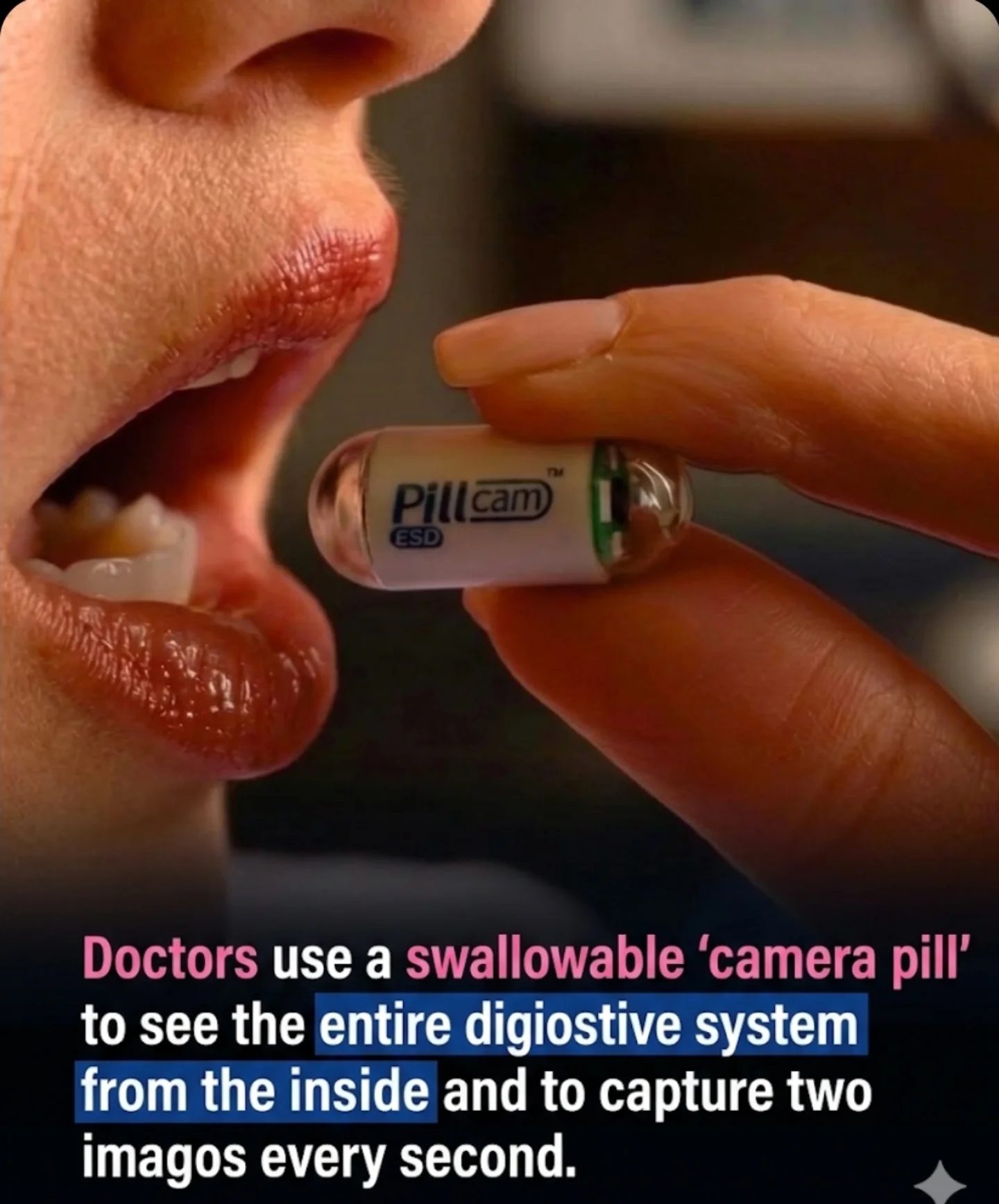
Swallowable Camera Pills
Swallowable camera pills, also known as capsule endoscopes, are innovative medical devices designed to provide a non-invasive way to examine the digestive system. These small, capsule-shaped devices contain a tiny camera, light source, battery, and wireless transmitter, allowing doctors to capture thousands of high-speed images as the pill travels through the digestive tract.
Why Capsule Endoscopy Matters
Capsule endoscopy is particularly valuable for examining parts of the digestive system that are difficult to reach using traditional endoscopy methods. Traditional endoscopes are cameras on a long, flexible tube that doctors guide through the digestive tract. However, these traditional methods can be invasive and uncomfortable for patients, and they may not reach certain areas, such as the small intestine, which is about 20 feet long and has a complex structure. This is where swallowable camera pills shine.
Visualizing the Entire Digestive System
The PillCam ESD is a leading technology in this field. It is roughly the size of a large vitamin, making it easy to swallow. Once ingested, the capsule travels naturally through the digestive tract via muscle contractions known as peristalsis. During its journey, the PillCam captures high-speed photos—typically 2 to 6 images per second. These images are transmitted wirelessly to a small recording device worn on a belt around the patient's waist. After about 8 to 12 hours, the patient returns the recorder to their doctor, who then downloads and reviews the images on a computer.
Non-Invasive and Patient-Friendly
One of the key advantages of using a swallowable camera pill is its non-invasive nature. Traditional endoscopy procedures can be uncomfortable and may require sedation. In contrast, capsule endoscopy is a painless process that does not require sedation. This makes it a more patient-friendly option, especially for those who may have anxiety or discomfort associated with traditional endoscopy procedures.
How it Works
The Capsule
The PillCam ESD capsule is designed to be as unobtrusive as possible. It contains a tiny color camera, a light source (LEDs), a battery, and a wireless transmitter. The capsule is roughly the size of a large vitamin (about 26mm x 11mm), making it easy to swallow with a glass of water.
The Process
The process of capsule endoscopy is straightforward. After swallowing the capsule, it naturally travels through the digestive tract. As it moves, it captures high-speed photos of the digestive lining. These images are transmitted wirelessly to a recording device worn on a belt around the patient's waist. The entire process typically takes about 8 to 12 hours, during which the patient can go about their daily activities.
Data Collection
The images captured by the PillCam are stored on a small recording device. After the procedure, the patient returns the recorder to their doctor, who then downloads the images onto a computer for review. The detailed visuals provide doctors with a comprehensive view of the digestive system, allowing them to identify issues that might be missed by other diagnostic methods.
Disposal
The PillCam is a disposable device. It passes naturally with a bowel movement, usually within 24 to 72 hours. There is no need to retrieve the capsule; it can be safely flushed down the toilet. This aspect of the device further simplifies the process for patients, as they do not have to worry about retrieving or disposing of the capsule.
Practical Tips for Patients
If you are scheduled for a capsule endoscopy, there are a few tips to help ensure a smooth and effective procedure:
Preparation
Your doctor will provide specific instructions for preparing for the procedure. Typically, you will need to fast for a certain period before swallowing the capsule. This helps ensure that the images captured are clear and not obstructed by food or liquids.
During the Procedure
During the 8 to 12 hours that the capsule is traveling through your digestive system, it's important to avoid activities that could disrupt the process. This includes strenuous exercise and heavy lifting. Stay hydrated and follow any additional instructions provided by your doctor.
After the Procedure
After the procedure, you will return the recording device to your doctor for image analysis. It's important to follow any post-procedure instructions, such as resuming a normal diet and avoiding certain activities if advised.
Important Takeaways
The technology behind swallowable camera pills offers significant advantages for both patients and doctors. It provides a non-invasive, painless way to examine the digestive system, making it a valuable tool for diagnosing a range of conditions. From identifying the source of unexplained bleeding to detecting inflammation and ulcers, the PillCam ESD is a vital tool in modern medicine.
Conclusion
Swallowable camera pills represent a significant advancement in medical technology, offering a non-invasive and patient-friendly way to examine the digestive system. The PillCam ESD, in particular, stands out for its ability to capture detailed images of the small intestine and other hard-to-reach areas. If you or someone you know is experiencing digestive issues, this groundbreaking technology could provide the answers you need.
Watch the Reel
Questions readers ask
How does the PillCam ESD work?
The PillCam ESD is a small, swallowable capsule equipped with a camera, light source, and wireless transmitter. It captures thousands of high-speed images as it travels through the digestive system. These images are transmitted wirelessly to a recording device.
Is the PillCam ESD procedure painful?
No, the PillCam ESD procedure is non-invasive and typically painless. Patients simply swallow the capsule, which is about the size of a large vitamin. There is no need for sedation or anesthesia, and patients can go about their daily activities while the capsule records images.
What parts of the digestive system can be examined using PillCam ESD?
The PillCam ESD is particularly useful for examining the small intestine, a part of the digestive system that is difficult to reach with traditional endoscopes. It can also provide valuable insights into the esophagus and colon.
How long does the PillCam ESD procedure take?
The PillCam ESD procedure is efficient and typically takes about 8 hours. Patients wear a data recorder around their waist, and the capsule naturally passes through the digestive system. The images are then downloaded and reviewed by a doctor.
What are the benefits of using the PillCam ESD over traditional endoscopy?
The PillCam ESD offers a non-invasive and comfortable alternative to traditional endoscopy. Patients do not need to be sedated, and the procedure is less risky. Additionally, it can capture images of areas that are hard to reach with traditional methods.
Who are the best candidates for PillCam ESD?
The PillCam ESD is ideal for patients with suspected small bowel disorders, such as Crohn's disease, bleeding, or tumors. It is also suitable for patients who have had difficult or unsuccessful traditional endoscopies.
Is the PillCam ESD safe for all patients?
The PillCam ESD is generally safe, but it may not be suitable for patients with swallowing difficulties, those who have undergone certain surgeries, or those with a pacemaker. It's important to discuss any concerns with a healthcare provider before the procedure.
Recent articles
Fresh deep dives from the latest Reels we unpacked.




Comments
Be the first to comment.