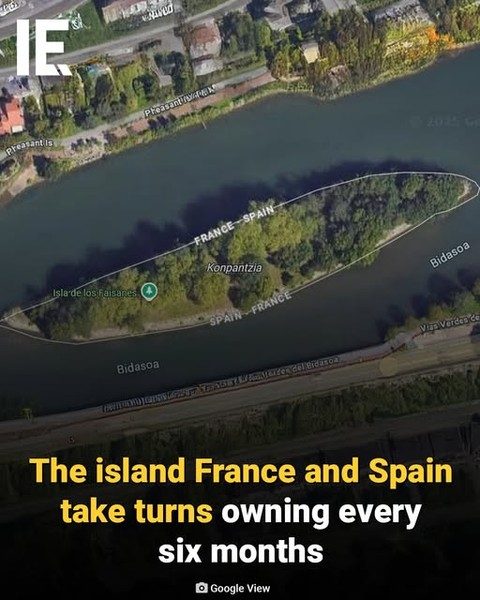
Pheasant Island: A Unique Symbol of Franco-Spanish Cooperation
Nestled on the Bidasoa River between France and Spain, Pheasant Island (Islande des Faisanes) is a small, uninhabited landmass with a unique historical and political significance. Unlike other islands, this one doesn't merely sit quietly, but it changes ownership every six months between the two neighboring countries. This practice has been going on for over 350 years, making it one of the longest-running examples of peaceful joint governance.
Context / Why this matters
The shared administration of Pheasant Island is a testament to the enduring diplomatic cooperation between France and Spain. The island's unique status serves as a reminder of the Treaty of the Pyrenees, signed in 1659, which resolved territorial disputes and established the border between the two countries. Understanding this island's story provides insights into European history and international relations.
The Historical Context
The story of Pheasant Island begins with the Treaty of the Pyrenees. This treaty, signed by King Louis XIV of France and King Philip IV of Spain, marked the end of the Franco-Spanish War and established the modern border between the two nations. One of the treaty's stipulations designated the island as a neutral meeting place for the two nations' leaders. The treaty also marked the island for a unique arrangement where the administration of the island would change hands between France and Spain every six months.
For over 350 years, the island has been governed alternately by France and Spain, with each country's flag flying over the island for six-month periods. This practice has continued uninterrupted, symbolizing the longstanding peace and cooperation between the two nations
The Island's Layout and Location
Located in the middle of the Bidasoa River, Pheasant Island is only a few hundred meters in length. The island is situated at the confluence of the Bidasoa and Bidasoa rivers, close to the town of Hendaye in France and Irun in Spain. Its strategic location has made it an important site for meetings and exchanges between the two countries.
The island's landscape is mostly natural, with vegetation and wildlife thriving in its undisturbed environment. Despite being closed to the public, it remains a significant site for diplomatic and cultural exchanges.
The Administrative Exchange
The administrative exchange of Pheasant Island occurs twice a year, typically in February and August. On these dates, a ceremony takes place where the flags of the two countries are exchanged, and a new administration takes over. This ceremonial exchange is a solemn event, attended by high-ranking officials from both countries, and is a reminder of the historical ties and diplomatic cooperation between France and Spain.
The Symbolic Significance
The island's unique status as a symbol of diplomatic cooperation is not limited to its role in the Treaty of the Pyrenees. Over the centuries, it has served as a venue for meetings and exchanges between the two countries, hosting a variety of high-level diplomatic activities.
The island's status as a neutral and shared territory between France and Spain provides a unique setting for these activities, emphasizing the cooperative and peaceful nature of the relationship between the two nations.
Locations Along the Bidasoa River
The area around the Bidasoa River offers several other noteworthy sites, including Konpantzia Island and Vias Verdes de. These locations, while not part of the island's unique administrative arrangement, add to the historical richness of the region.
Konpantzia Island is another small isle in the river, located downstream from Pheasant Island. It's known for its scenic beauty and has a lighthouse that serves as a navigational aid for boats traveling along the river. The Vias Verdes de, or Green Ways, are a network of trails that run along the river, providing opportunities for hiking and cycling.
Practical Tips
While Pheasant Island is not accessible to the public, visitors to the region can still explore the surrounding area and learn more about its history. The towns of Hendaye in France and Irun in Spain offer a wealth of historical sites, museums, and cultural attractions, as well as opportunities to enjoy the natural beauty of the Bidasoa River.
For those interested in the island's unique story, there are several resources available, including historical texts, documentaries, and guided tours of the region that highlight its significance.
Important Takeaways
The shared administration of Pheasant Island is a remarkable example of how diplomacy can transcend boundaries and create enduring peace. By understanding the island's historical and political significance, we gain a deeper appreciation for the complexities of international relations and the importance of cooperation.
The island's unique status as a neutral and shared territory between France and Spain provides a unique setting for diplomatic activities, emphasizing the cooperative and peaceful nature of the relationship between the two nations.
Conclusion
Pheasant Island is a testament to the enduring power of diplomacy and cooperation, a unique symbol of Franco-Spanish relations that has stood the test of time. By learning about its history and significance, we gain a deeper understanding of the importance of peaceful coexistence and the value of international cooperation.
Watch the Reel
Questions readers ask
Why does Pheasant Island change ownership every six months?
Pheasant Island changes ownership every six months as a result of the Treaty of the Pyrenees, signed in 1659. This agreement mandates that the island alternates between France and Spain to symbolize and maintain the diplomatic cooperation between the two countries.
How long has Pheasant Island been shared between France and Spain?
The practice of sharing Pheasant Island between France and Spain has been in place for over 350 years, making it one of the longest-running examples of peaceful joint governance.
Where is Pheasant Island located?
Pheasant Island is located on the Bidasoa River, which forms a natural border between France and Spain. Its strategic location has made it a significant marker of the Franco-Spanish border.
What is the significance of Pheasant Island in Franco-Spanish diplomacy?
Pheasant Island serves as a unique symbol of Franco-Spanish diplomacy and cooperation. Its alternating ownership highlights the long-standing diplomatic relationship and peaceful coexistence between the two nations.
Is Pheasant Island inhabited?
No, Pheasant Island is uninhabited. Its primary purpose is to serve as a symbol of the diplomatic agreement between France and Spain, rather than a residential area.
What is the Treaty of the Pyrenees, and how does it relate to Pheasant Island?
The Treaty of the Pyrenees was signed in 1659 to resolve a territorial dispute between France and Spain. It stipulated that Pheasant Island would alternate ownership between the two countries every six months, ensuring a peaceful and cooperative border agreement.
Are there other examples of shared territorial ownership like Pheasant Island?
While there are other examples of international land agreements, Pheasant Island is unique in its specific arrangement of alternating ownership every six months. This rare international agreement underscores the exceptional nature of Franco-Spanish cooperation.
Related deep dives
Similar reads based on topic and creator.




Recent articles
Fresh deep dives from the latest Reels we unpacked.




Comments
Be the first to comment.