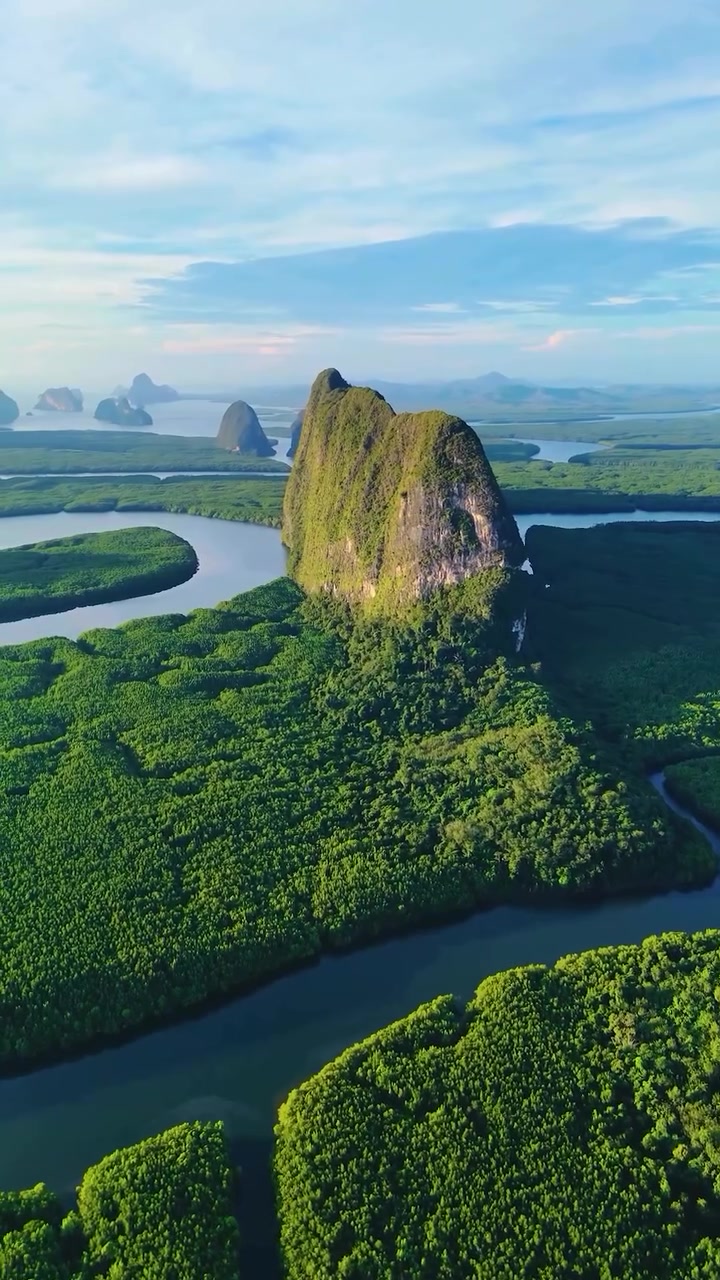
Phang Nga Bay, Thailand, is a natural wonderland that has captured the hearts of travelers with its enchanting emerald waters and towering limestone formations. It's a place straight from a travel dream where mangroves and unique rock formations intertwine, creating a surreal landscape that has become a hallmark of Thailand's natural beauty. Local drone-videographer @janderycke captured the bay's majestic limestone karsts rising from the sea, showcasing a landscape bursting with adventure. The karsts are layered with greenery and rise from the water in a way that makes the bay a mystical sight, the likes of which promise more than just a quick glance. Hidden hongs, caves, and other unique geological features are its natural treasures. Limestone karsts are the signature features of Phang Nga Bay, a geological marvel formed by erosion. This process has been happening for millennia, and the landscape is always transforming. The karsts rise majestically from the sea, creating a surreal landscape that's both stunning and inviting. Limestone is a sedimentary rock, and when it forms underwater, it sustains underwater ecosystems. As the bay's waters ebb and flow, unique rock formations are exposed and remain subject to the natural forces that created them.
The Bay's Geological Symphony
Phang Nga Bay's karsts aren't just geological marvels; they are a symphony of geological forces hidden in plain sight. The bay's geological tapestry was formed by karstification, a process where rock dissolves and erodes due to water and atmospheric action. The bay is composed of porous limestone, making it highly susceptible to this process. Over millennia, layers of rock have dissolved, leaving behind the limestone karsts—parabolic curtains of rock that integrate the sea and sky. Unlike other geological features, the bay's karsts vary in structure and appearance. Some are towering and steep, while others are smaller and more rounded. When you explore the bay, you'll notice that each karst has its unique texture, color, and shade. Many appear to be forests on their tops because they are covered with tropical foliage and vegetation. The process of karstification is ongoing, and the landscape will continue to evolve, making it impossible to visit the bay twice and enjoy the exact same view.
The Atypical Adventure in Nature
It's not the only place where you'll encounter towering karsts, but Phang Nga Bay's karsts offer an atypical adventure in nature. The bay's mangrove forests and limestone formations create a labyrinth of small, quiet bays. The mangroves protect the karst formations, and their roots create a network of tunnels that lead to hidden bays, caves, and beaches. As such, the bay offers something for everyone—from the casual explorer to the seasoned adventurer. Limestone formations are also a magnet for climbers and cavers. While the karsts create an imposing view from the water, they also offer the most breathtaking views from their peaks. For those who prefer to stay on the ground, the adventures under the karsts are equally enticing. The bay's water is crystalline and calm, teeming with vibrant underwater life. The crystal clear waters are ideal for snorkeling and diving. Scuba diving enthusiasts will love discovering the bay's underwater world, with aqua-karsts and coral reefs within diving range.
Lush Mangroves and the Unique Flora of Phang Nga Bay
Mangroves are an integral part of Phang Nga Bay's ecosystem. They thrive in the tidal zone, lending it a distinctive appearance. These mangrove forests are also home to a diverse range of wildlife, including birds, fish, and mammals. And the mangroves play an essential role in water purification, shielding the karsts from erosion. Mangroves are also important for biodiversity, as they provide shelter and food for various marine organisms. The mangroves that have formed around the bay from thousands of years of continuous erosion are home to a unique variety of flora and fauna. The bay's peculiar geological structure has given rise to an assortment of unique plant life. Since the bay's climate is tropical, several distinct plant species are found nowhere else. Many of the plants in this bay have medicinal properties. Several of them are used in Thai traditional medicine, and a visit to the bay offers the perfect opportunity to experience some of these benefits.
Layers of Legends: The Different Rocks of Phang Nga Bay**
Among the many geological features of Phang Nga Bay, the formations are unique, vibrant, and complex. Each mound of rock has its own story, appearance, and texture. The bay itself is a massive underwater network of rock formations and caverns. The bay's geological formations are unlike anything else in the world, and many of these formations are centuries old. Rock formations are built through layers that are the result of ongoing karstification. The colors of the rock formations vary and change, and some are darker than others. And the unique features of the bay are laid on top of the rock formations. For instance, when the sea level was lower, some of the minerals in the water were deposited as calcium carbonate, forming stalactites and stalagmites. Along with caves, these formations are the main groundwater sources for the surrounding islands and create unique and mysterious landscapes.
How to discover the karsts and miss nothing of the bay
A visit to Phang Nga Bay doesn't have to be expensive. There are a few routes you can take to experience the beauty of the bay. You can opt for a private, longtail boat to get even closer to nature.
- Big Boat Tour: Typically a half-day or all-day trip starting from Phuket, Koh Yao, or Phang Nga. Includes breakfast, lunch, a guide, and a stop at Phang Nga National Park. The tour includes several snorkeling stops and a visit to the famous Hong Island.
- Long-Tail Boat Tour: An adventure similar to that of the Big Boat Tour. But it is more personal and is usually limited to smaller groups. It's common for each boat to be booked by different groups.
- Private Tour: With this, you get to design your itinerary, pick the activities, and choose your route.
- Kayaking: Rent a kayak at a reasonable price and embark on an individual exploration. You’ll need sunscreen and a hat, of course. And a camera to capture the stunning views. The bay is warm throughout the year, and you can swim, snorkel, or dive. The water is clear, and the underwater world of the bay is a sight to behold. Your gear won’t include much more equipment.
Watch the Reel
Questions readers ask
What exactly are limestone karsts and how were they formed in Phang Nga Bay?
Limestone karsts are towering rock formations made of sedimentary rock. In Phang Nga Bay, they were formed through a process called karstification, where water and atmospheric action dissolve and erode the porous limestone over millennia. This process creates the unique, parabolic shapes and textures that make the bay's landscape so distinctive.
How does the landscape of Phang Nga Bay change over time?
The landscape of Phang Nga Bay is constantly evolving due to the ongoing process of karstification. As the limestone continues to dissolve and erode, the shapes and structures of the karsts change, making each visit to the bay a unique experience. This dynamic nature is part of what makes Phang Nga Bay so captivating.
Can you explore the caves and hidden bays within the karsts?
Yes, Phang Nga Bay offers plenty of opportunities for exploration. The mangrove forests and limestone formations create a labyrinth of small, quiet bays, caves, and beaches. Whether you're a casual explorer or a seasoned adventurer, there are plenty of hidden treasures to discover within the karsts.
What kind of activities can you do in Phang Nga Bay besides sightseeing?
Phang Nga Bay is a paradise for outdoor enthusiasts. You can go climbing and caving on the karsts, or explore the crystal-clear waters through snorkeling or scuba diving. The bay's unique geological features and vibrant marine life make it an ideal destination for a variety of water-based activities.
Are there any unique features of Phang Nga Bay that make it different from other places with karst formations?
Phang Nga Bay stands out due to its unique geological tapestry and the variety of its karsts. Each karst has its own distinctive texture, color, and shade, and many are covered in tropical foliage, giving them the appearance of forests on top of rock.
What role do mangrove forests play in the ecosystem of Phang Nga Bay?
Mangrove forests in Phang Nga Bay play a crucial role in protecting the karst formations. Their roots create a network of tunnels that lead to hidden bays, caves, and beaches, adding to the bay's allure. The mangroves also support a diverse ecosystem, making the bay a haven for various plant and animal species.
Related deep dives
Similar reads based on topic and creator.




Recent articles
Fresh deep dives from the latest Reels we unpacked.




Comments
Be the first to comment.