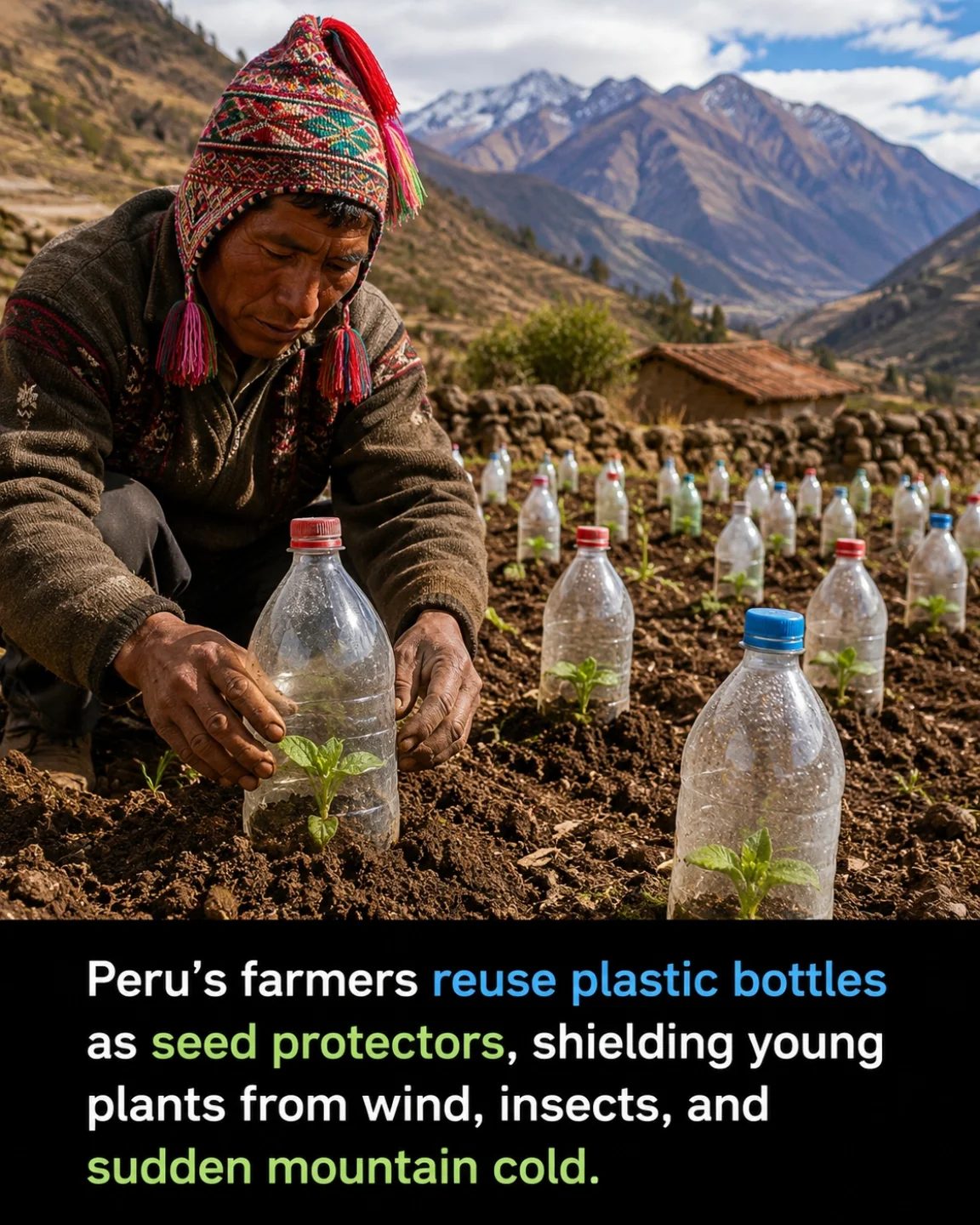
Sustainable Farming Techniques: Using Plastic Bottles for Seed Protection
In the rugged, mountainous regions of Peru, farmers have developed an innovative and sustainable method to protect young plants from harsh environmental conditions. The technique involves reusing plastic bottles as seed protectors, safeguarding the plants from wind, insects, and sudden cold weather.
Why This Matters
The fight against climate change and environmental degradation is ongoing, and sustainable farming practices play a crucial role. Farmers in Peru have found a clever way to reuse plastic bottles, turning a potential environmental hazard into a beneficial tool for agriculture. This method not only helps in protecting young plants but also reduces plastic waste, contributing to a cleaner environment.
Main Discussion
The Plastic Bottle Method
Repurposed plastic bottles serve as effective protectors for young plants. Here’s how it works:
- Preparation: The farmer cuts the bottom off a plastic bottle, creating a small cylinder. This cylinder is then placed directly into the soil where the seed has been planted.
- Protection: The bottle acts as a mini greenhouse, shielding the young plant from harsh winds and insects. It also helps retain moisture, ensuring that the plant has a stable environment to grow.
- Cold Weather: In the mountainous regions, sudden cold weather can be detrimental to young plants. The plastic bottle provides an insulating layer, protecting the plant from extreme temperature drops.
The Benefits of This Technique
- Sustainability: By reusing plastic bottles, farmers are turning waste into a valuable resource. This reduces the amount of plastic that ends up in landfills or as litter.
- Cost-Effective: The materials are readily available and free, making it an affordable solution for farmers.
- Efficiency: The method requires minimal effort and time, allowing farmers to tend to more plants in less time.
Practical Tips
If you’re looking to adopt this technique, here are some practical tips:
- Choose the Right Bottles: Select bottles that are sturdy and have a straight neck. Avoid bottles with narrow openings as they may not provide enough space for the plant to grow.
- Cleanliness: Ensure the bottles are clean before using them. Any residue or dirt can harm the plant.
- Placement: Place the bottle immediately after planting the seed. This ensures that the young plant has protection from the very beginning.
- Monitoring: Regularly check the plant to ensure it is growing well. Remove the bottle once the plant is strong enough to withstand environmental conditions on its own.
Important Takeaways
- Plastic bottles can be effectively reused as seed protectors, providing a sustainable and cost-effective solution for young plants.
- This method helps in protecting plants from wind, insects, and cold weather, ensuring better growth.
- Reusing plastic bottles reduces environmental waste and contributes to sustainable farming practices.
Conclusion
The innovative use of plastic bottles as seed protectors by farmers in Peru shows a practical and sustainable approach to agriculture. This method not only protects young plants but also reduces plastic waste, making it a beneficial practice for both farmers and the environment. By adopting such sustainable techniques, we can contribute to a healthier, greener planet.
Watch the Reel
Questions readers ask
How do Peruvian farmers use plastic bottles to protect their plants?
Peruvian farmers cut the bottoms off plastic bottles and place them over young plants. This creates a mini greenhouse that shields the plants from wind, insects, and extreme temperature fluctuations, helping them to grow stronger and healthier.
What are the benefits of using plastic bottles in this way?
This method provides a free and accessible way for farmers to protect their crops. It also helps to reduce plastic waste by repurposing bottles that would otherwise end up in landfills or as litter, contributing to a cleaner environment.
Can this technique be used in other regions or climates?
Yes, this technique can be adapted to other regions and climates. While it was developed in the rugged, mountainous regions of Peru, any farmer can use this method to protect young plants from harsh conditions, as long as the environmental conditions are taken into account.
What types of plants can benefit from this protection?
This method can benefit a wide variety of young plants. Farmers have used it to protect vegetables, grains, and other crops. The key is to ensure the bottle is the right size for the plant and that it is secured properly to withstand local weather conditions, especially in windy areas.
How does this technique help in the fight against climate change?
This technique helps in the fight against climate change by promoting sustainable farming practices. It reduces plastic waste and helps plants grow stronger, which can lead to better crop yields and more resilient crops in the face of changing weather patterns, contributing to a healthier environment.
What other materials can be used instead of plastic bottles?
While plastic bottles are readily available and effective, other materials can be used as well. Clear plastic cups, recycled glass jars, or even biodegradable materials can serve a similar purpose. The key is to choose a material that allows light to pass through and provides adequate protection.
How does this method help reduce plastic waste in farming communities?
By repurposing plastic bottles as seed protectors, farmers significantly reduce the amount of plastic waste that would otherwise end up in landfills or as litter. This helps to keep the local environment cleaner and promotes a more sustainable approach to farming and waste management.
Related deep dives
Similar reads based on topic and creator.



Recent articles
Fresh deep dives from the latest Reels we unpacked.




Comments
Be the first to comment.