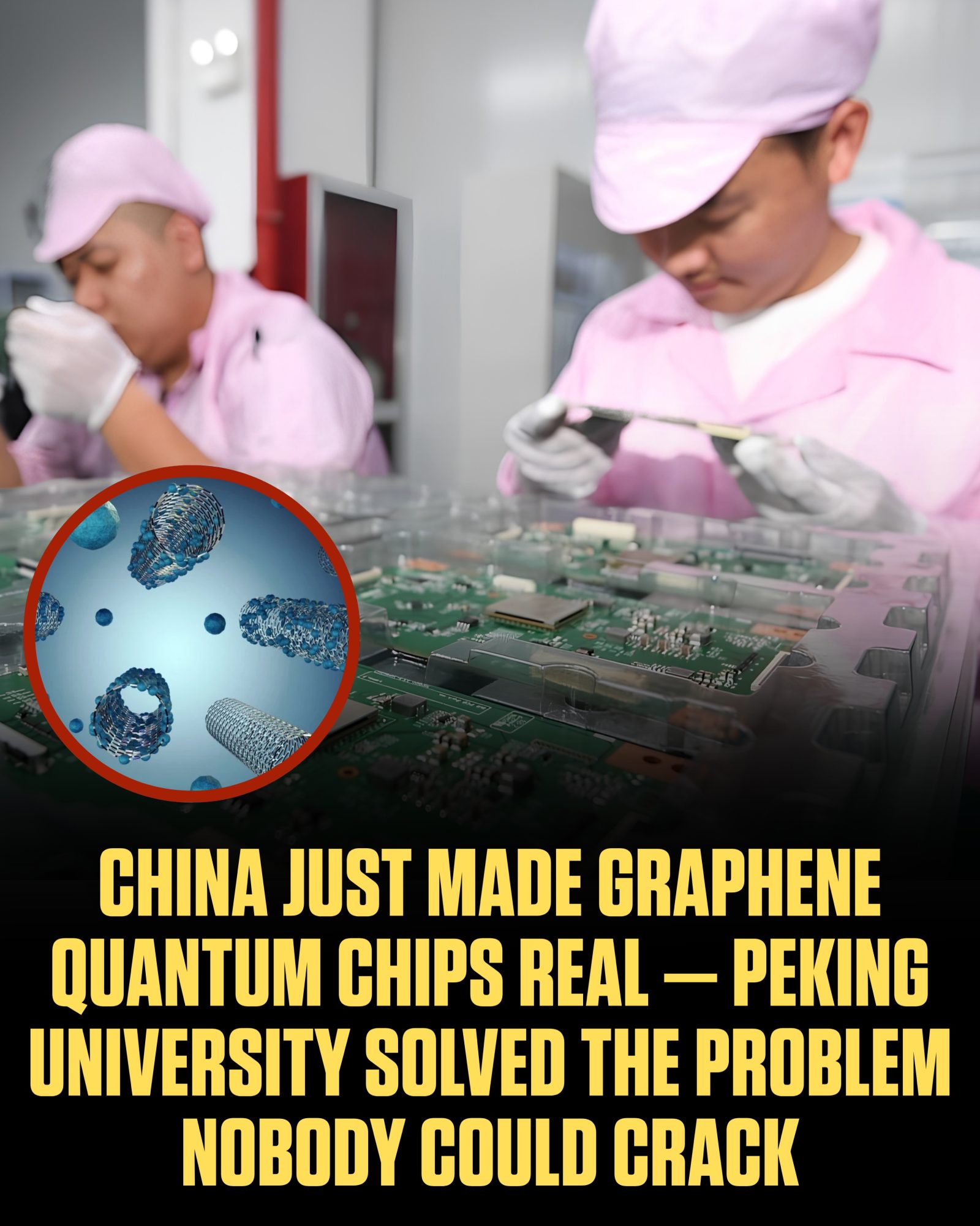
Graphene Quantum Chips: A Breakthrough from Peking University
Graphene quantum chips are pushing the boundaries of quantum computing. Researchers at Peking University have achieved a significant milestone by tackling one of the most challenging aspects of producing a specific form of graphene, known as rhombohedral graphene. This discovery could pave the way for more stable and error-resistant quantum computers.
Why this Matters
Graphene, a one-atom-thick layer of carbon, is well-known for its remarkable electrical properties. Rhombohedral graphene, in particular, has a unique stacking pattern that conducts electricity with zero resistance. This makes it ideal for topological qubits, which are naturally immune to noise and errors—a critical feature for quantum computing.
The Challenges of Rhombohedral Graphene
Producing rhombohedral graphene has historically been a significant hurdle. This form of graphene is so rare that it only makes up less than 1% of samples, making it extremely difficult to obtain. Traditionally, the only method to get rhombohedral graphene was by peeling flakes with sticky tape, a process that is both inefficient and unreliable.
Main Discussion
The Breakthrough
Researchers at Peking University have found a way to overcome these challenges. Using a specially engineered copper-nickel alloy surface, they can now grow rhombohedral multilayer graphene with more than 99% stacking purity. This method guides the graphene into the desired structure during growth, eliminating the need for the tedious and unreliable tape-peeling method.
Why Rhombohedral Graphene Matters
Reproducible, high-quality material is essential for advancing quantum computing. Rhombohedral graphene's unique properties make it perfect for creating stable, error-resistant qubits. These topological qubits are naturally protected against noise, reducing the need for constant error correction—the biggest barrier to building reliable quantum computers.
The Potential Impact
Our current qubits are susceptible to decoherence, meaning they lose their quantum state due to environmental interference. This leads to errors that accumulate over time, making large-scale quantum computing a significant challenge. Rhombohedral graphene qubits could solve this issue, allowing for more stable and error-resistant quantum computers. If this method scales to chip production, it could solve one of the most fundamental problems in quantum computing.
Practical Tips
For Researchers
For those diving into the world of quantum computing, understanding the nuances of different graphene forms is crucial. The breakthrough at Peking University opens new avenues for exploration. Researchers should focus on replicating and refining this method to improve the production of rhombohedral graphene.
For Investors
With the potential to solve key problems in quantum computing, this breakthrough could be a game-changer for the technology industry. Investing in research and development around rhombohedral graphene and topological qubits could yield significant returns as the field advances.
Important Takeaways
Key Insights
- Rhombohedral graphene has unique properties that make it ideal for topological qubits.
- Producing high-quality rhombohedral graphene has historically been a significant challenge.
- Peking University has developed a method to produce rhombohedral graphene with more than 99% stacking purity.
- This breakthrough could solve a fundamental problem in quantum computing, making large-scale, error-resistant quantum computers a reality.
Future Directions
This breakthrough is a significant step forward, but it's just the beginning. The next steps involve scaling this method to produce graphene quantum chips on a larger scale. Researchers will need to focus on refining the production process, improving the material's quality, and integrating it into functional quantum computers.
Conclusion
The discovery of a reliable method to produce rhombohedral graphene is a groundbreaking development in quantum computing. By overcoming the challenges of producing this unique form of graphene, researchers at Peking University have opened the door to more stable and error-resistant quantum computers. This breakthrough has the potential to revolutionize the field, making large-scale quantum computing a more attainable goal. As the technology advances, we can expect to see more innovations that will bring us closer to realizing the full potential of quantum computing.
Watch the Reel
Questions readers ask
What is rhombohedral graphene and why is it significant for quantum computing?
Rhombohedral graphene is a specific form of graphene with a unique stacking pattern that allows it to conduct electricity with zero resistance. This property makes it highly significant for quantum computing, as it can be used to create topological qubits that are naturally resistant to errors and noise, a crucial advancement in the field of quantum computing.
How did Peking University researchers produce rhombohedral graphene?
Researchers at Peking University developed a reliable method to produce rhombohedral graphene by growing it on a specially engineered copper-nickel alloy surface. This innovative approach addresses one of the major challenges in creating this rare form of graphene, which has exceptional electrical properties.
What are the potential benefits of using graphene quantum chips in quantum computers?
Graphene quantum chips, particularly those using rhombohedral graphene, offer the potential for more stable and error-resistant quantum computers. This can lead to more reliable quantum computing systems, which is a significant step forward in overcoming the hurdles currently faced in the field.
What makes graphene a suitable material for quantum computing?
Graphene is a one-atom-thick layer of carbon with remarkable electrical properties. Its unique structure and ability to conduct electricity make it an ideal material for developing topological qubits, which are essential for creating more stable and error-resistant quantum computers.
Why is the work done by Peking University important for the future of quantum computing?
The work done by Peking University is important because it provides a reliable method for producing rhombohedral graphene, a material that can significantly enhance the stability and error resistance of quantum computers. This breakthrough could lead to more advanced and practical quantum computing systems, addressing key challenges in the field.
How does the discovery of rhombohedral graphene on a copper-nickel alloy surface help in overcoming quantum computing hurdles?
The discovery of a reliable method to produce rhombohedral graphene on a copper-nickel alloy surface helps overcome one of the major hurdles in quantum computing by providing a stable and error-resistant material for developing quantum chips. This advancement can lead to more robust and reliable quantum computing systems, pushing the boundaries of the field.
What are topological qubits and how does rhombohedral graphene contribute to their development?
Topological qubits are a type of qubit that is naturally immune to noise and errors, making them highly desirable for quantum computing. Rhombohedral graphene contributes to their development by providing a material with exceptional electrical properties that can be used to create these robust qubits, enhancing the overall stability of quantum computing systems.
Related deep dives
Similar reads based on topic and creator.




Recent articles
Fresh deep dives from the latest Reels we unpacked.




Comments
Be the first to comment.