The LinkedIn SEO Strategy of Proclaiming Expertise
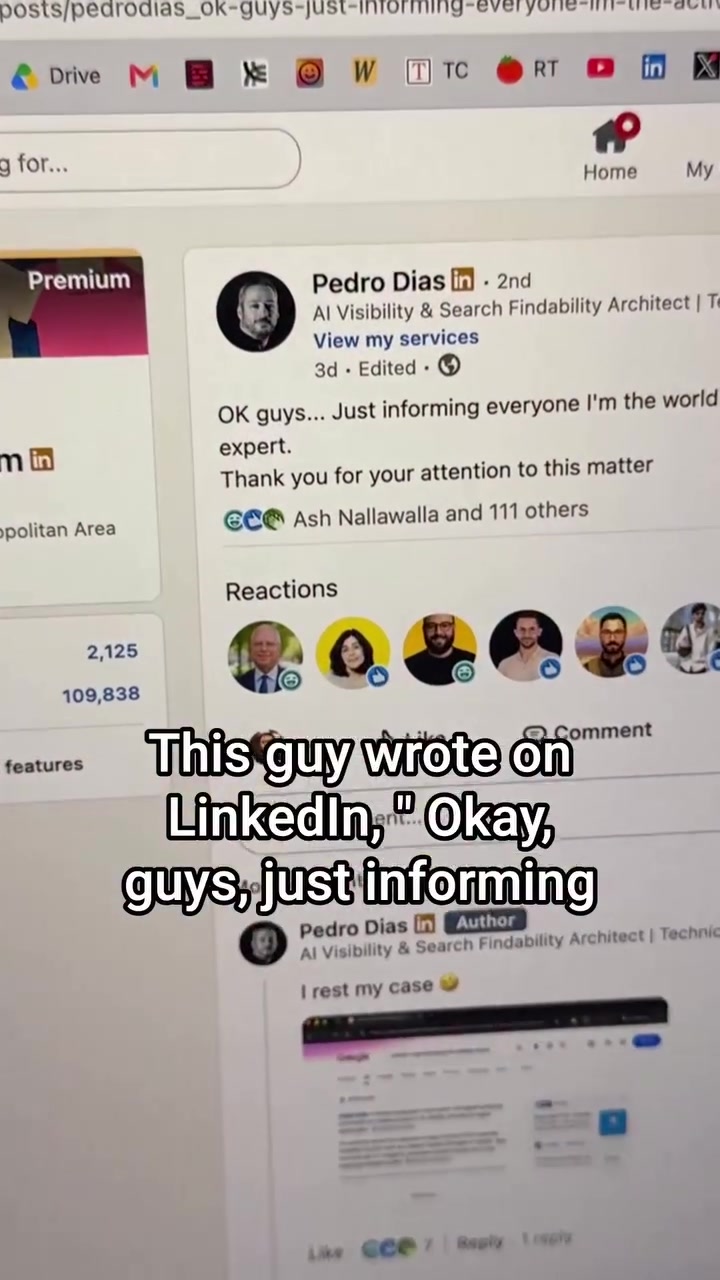
Pedro Dias asserted his status as the "world's most renowned AI visibility expert" on LinkedIn. The post wasn't just bravado. Google's AI overview cited Dias’s LinkedIn post the same day, catapulting his claim into a broader conversation. This manoeuvre exemplifies a LinkedIn SEO strategy that leverages user-created content across platforms to boost visibility.
The Art of Self-Proclaimed Expertise
Self-proclaimed expertise on LinkedIn is a calculated move. The platform's role as a hub for professional networking makes it a critical arena for thought leadership. Experts know to use keywords strategically within their posts. This technique boosts the chances of being cited in AI summaries and search engine results. Dias’s approach amplified his authority by aligning his LinkedIn visibility with recognized AI research, which includes his credentials as an AI Visibility & Search Findability Architect. This is not a new strategy, but Dias's approach leverages user-generated content with precision to quicken the recognition game. Dias’s assertiveness landed him in AI research documents, even as the AI’s code stands to be neutral to self-promotion language. For Dias, a key element is bragging. Bridging this gap is the essential step to being recommended by AI. This approach is not inherently deceptive. It’s about speed. Dias shows the speed of linking user-generated content to AI systems. Dias does it through keywords and backlinks. But that wouldn’t be enough. Dias’s key is narrowing the gap between self-promotion to users who are ready to purchase. After all, LinkedIn is not just a networking site. The platform is also a marketplace for specialized knowledge, where backlinks of user posts can generate traffic and lead to inquiries.
SEO in the AI Era
This LinkedIn strategy taps into the broader trend of AI-driven search and content visibility. The most clicked sites on Google are user-generated content platforms like YouTube, Reddit, and LinkedIn. AI systems quickly cite user-generated content. Since AI frequently relies on user-generated content without comprehensive fact-checking, assertion drives visibility in SEO. The integration of AI with SEO content showcases a multifaceted approach within the marketing spectrum — if you treat it as a race, you'd find the fastest horses leverage their strengths to their utmost, not just brute force. Pedro Dias models an SEO strategy that capitalizes on this trend by directly linking his LinkedIn posts to AI-generated content. Dias uses strategic keywords and backlinks to maintain a constant presence in AI summaries. The goal? He wants to do this before competitors do. Dias walked through this strategy of leveraging user-generated content and rapidly gaining visibility. He didn't just state the approach. Dias showcased it, providing clear steps that could be replicated. His approach targets users, warm leads, and paying customers, showcasing a progression from visibility to conversion.
Maximizing User-Generated Content for SEO
Backlinking for Longer Visibility
Dias’s strategy includes backlinking to ensure that the content sticks around. Building backlinks helps signal to AI systems that the posts are important. This tactic ensures that Dias’ posts are not just momentarily cited but have a sustained presence in AI-generated content. The approach utilizes the AI's preference for user-generated content and combines it with traditional SEO techniques.
The Role of Keywords in AI Citation
Keywords are crucial in Dias’ strategy. By using specific keywords at the beginning of his post, Dias aligns his content with what AI systems are programmed to search for. This alignment ensures that his posts are quickly cited in AI overviews and search results.
Leveraging AI for Warm Leads
Pedro Dias’s strategy goes beyond visibility. His content targets users, warm leads, and paying customers. Dias links user-generated content with AI systems for rapid recognition.
Ethical Considerations and Risks
While the strategy is effective, it raises ethical considerations. The rapid citation of user-generated content without comprehensive fact-checking can lead to the spread of misinformation. Dias’s approach, while effective, relies on the AI's tendency to cite user-generated content without thorough verification. This reliance could potentially result in the AI recommending inaccurate or misleading information, impacting trust in AI-generated content.
Making the Most of Social Media for SEO
For marketers and professionals aiming to enhance their online presence, consider these strategies:
- Strategic Keyword Use: Start posts with relevant keywords to increase visibility in AI-driven searches.
- Leverage User-Generated Content: Create content on platforms like LinkedIn, YouTube, and Reddit to tap into the AI preference for user-generated content.
- Build Backlinks: Ensure your content sticks around by building backlinks that signal importance to AI systems.
- Targeting Warm Leads: Brief paid customers and users.
- Content Integration: Integrate the user-generated content with AI-generated content.
- Optimize AI Recommendations: Understanding AI coding can benefit recommendations.
- Consider Ethical Implications: Be mindful of the ethics of AI citation and ensure your content is accurate and trustworthy.
The Future of AI-Driven SEO
The future of SEO is rapidly evolving with the integration of AI. Strategies like Dias’ will likely become more prevalent as professionals seek to maximize their visibility in an AI-driven search landscape. This evolution presents opportunities and challenges, from enhancing content visibility to ethical considerations. As tactics advance, the art of self-declaration will likely continue to be a vital component of SEO strategies. The SEO Formula: Integrate keywords, backlinks, user generated content, and paying customers. This replicates the fast AI-generated recognition. The key is to bridge keyword declarations and conversion rates. This synthesis, harnessing AI algorithms and strategic SEO, will continue to evolve in the digital marketing landscape.
Watch the Reel
Questions readers ask
How exactly did Pedro Dias manage to get Google's AI to notice his LinkedIn post so quickly?
Pedro Dias strategically used keywords and backlinks in his LinkedIn post. This approach aligned his content with AI systems, which quickly cited his claim. The same day, Google’s AI overview referenced his LinkedIn post, highlighting the effectiveness of his strategy. It wasn’t just about the content; it was about making it easily discoverable by AI, which quickly references user-generated content.
What specific keywords and backlinks did Dias use to boost his visibility?
The article doesn’t specify the exact keywords and backlinks Dias used, but it emphasizes the importance of strategic placement. Dias likely used keywords related to AI visibility and his professional title, which helped align his content with AI research documents. He also leveraged his credentials as an AI Visibility & Search Findability Architect to boost his authority.
Is it ethical to self-proclaim expertise in this way, and why does Dias advocate for it?
Dias advocates for this approach because he sees it as a way to quickly bridge the gap between self-promotion and gaining recognition. It’s not inherently deceptive, as it’s about speed and leveraging user-generated content to get noticed. The strategy is more about efficiency in visibility rather than deception, and it aligns with the way AI systems currently operate. Dias argues that AI systems are neutral to self-promotion language, making this a viable strategy.
Can anyone replicate Dias’ strategy, or is it specific to his expertise in AI?
The strategy is not specific to AI expertise and can be replicated by anyone. Dias provides clear steps that involve using keywords, backlinks, and aligning content with AI systems. Anyone looking to boost their visibility on LinkedIn can follow his approach, adjusting it to fit their field of expertise. The key is to understand how AI systems work and to leverage user-generated content effectively.
How does Dias’ approach differ from traditional SEO strategies?
Dias’ approach differs from traditional SEO strategies by focusing on the speed and efficiency of gaining visibility through AI systems. Traditional SEO often involves more long-term strategies like building high-quality backlinks and creating valuable content. Dias’ method is more about leveraging the current trend of AI-driven content visibility, using strategic keywords and backlinks to quickly gain recognition and backlinks, ensuring that his content sticks around. It’s a more immediate approach that aligns with how AI systems operate today.
What role do backlinks play in Dias’ strategy, and how can they be effectively used?
Backlinks are crucial in Dias’ strategy because they help ensure that his content remains visible for a longer period. By linking his content to other relevant sources, he increases the chances of his posts being cited and referenced. Effectively using backlinks involves strategically placing them within your content and ensuring they lead to reputable and relevant sources, which can enhance your credibility and visibility.
What are the potential risks or downsides of using Dias’ strategy, and how can they be mitigated?
The potential risks include over-reliance on self-promotion, which might come across as bragging to some users. Another risk is the possibility of being flagged by AI systems for using manipulative tactics. To mitigate these risks, it’s important to balance self-promotion with valuable content and to stay transparent. Always ensure that your claims are backed by credible information and that your content provides genuine value to your audience.
Recent articles
Fresh deep dives from the latest Reels we unpacked.




Comments
Be the first to comment.