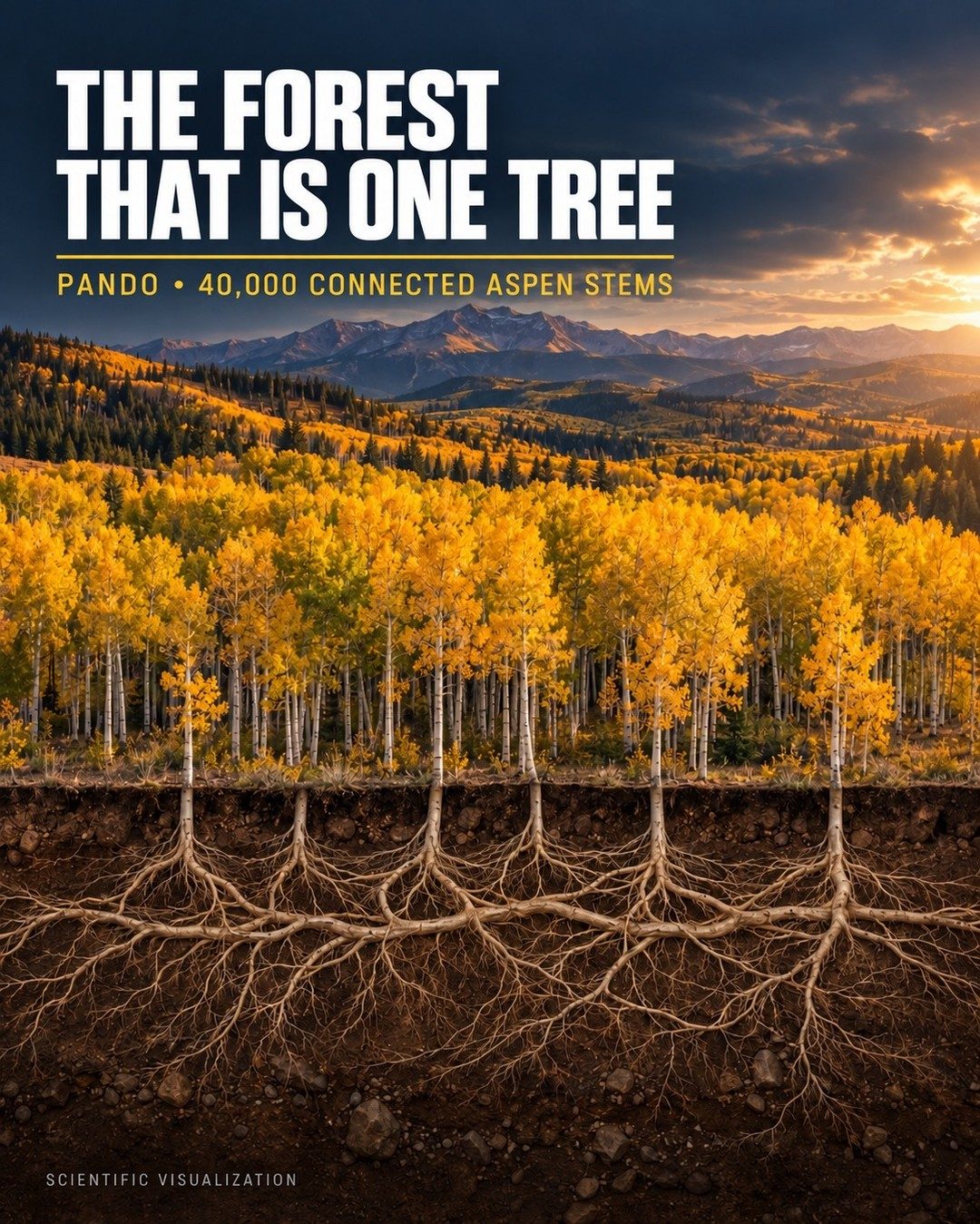
Pando's Unique Identity
Pando, Latin for "I spread," is not your typical forest. Nestled in Utah, it is a clonal colony of quaking aspen trees, which means it consists of a vast collection of genetically identical stems, all stemming from a single parent tree. Pando is sometimes described as a "forest" but the totality of trees are essentially "one tree" — 40,000 connected stems, all sharing the "same DNA," and "root system." This singular entity is not a nature rarity; the term Pando is to be used instead of aspen because of the mass of the trees planted. But Pando is an impressive sight, as the clones create what appears to be an endless sea of trees. The sheer scale of Pando, which covers an approximate 106 acres. For some, it is testament to the power of natural regeneration, as the interconnected roots allow new trees to grow from the existing root structure. This interconnectedness may provide resilience against wildfires and disease, as any damage to the system can be quickly repaired by the neighboring trees. These interconnected aspen trees, or root masses, create one almost 106 acres of a single organism.
The Silent Struggle
Despite its power, Pando’s survival is threatened. The primary cause for concern is the browsing of nearby herbivores, such as mule deer and elk. These animals feed on the young sprouts and lower branches, preventing them from maturing into new full-sized trees. Some researchers believe that the browsing problem has been exacerbated by human interference. Decades ago, wolves were reintroduced to the area and then hunted out of control, thereby increasing the population of browsers. This cycle has been the main cause of stunting the growth of trees in Pando, as young sprouts are unable to grow into mature trees. This process may not be as detrimental as it is. This environmentless approach may need to be replaced by the educational point of view of the challenge that today's youth face. This adds to the challenge that Pando faces in a time where it needs to grow. There is also an idea that the encroachment of conifers. But this isn't backed by the facts. There has been an almost 100% prevention with the young growth of conifers. This will ultimately become more of a threat to the foots of the trees, as there are two roots that are only a few feet apart. This has been very effective and there has been minimal damage to the area..
The Future of Pando
The next step is browsing management. Young sprouts are brought in with fences to prevent herbivores from eating them. This has been described as a herbivore manager, that is a double-sided, tall wire fence. This is creating a new organic world and this has been a huge success. This has been seen as a possible solution to this problem and has had an 80% success rate with the young trees that have been placed out. This is one possible way to help the growth of Pando. There is also discussion of the possibility of having a buffer zone that the prowling animals can go to. This would allow the trees to grow because there would be a smaller risk of them being killed.
The Deeper Message
It is fitting to see Pando as a metaphor for human development. Just like Pando, humans can thrive when we work together, sharing resources and supporting each other. The interconnectedness of Pando's root system is a reminder that when we work together, we can overcome challenges with the same vigor and resilience as this forest.
Watch the Reel
Related deep dives
Similar reads based on topic and creator.




Recent articles
Fresh deep dives from the latest Reels we unpacked.


Comments
Be the first to comment.