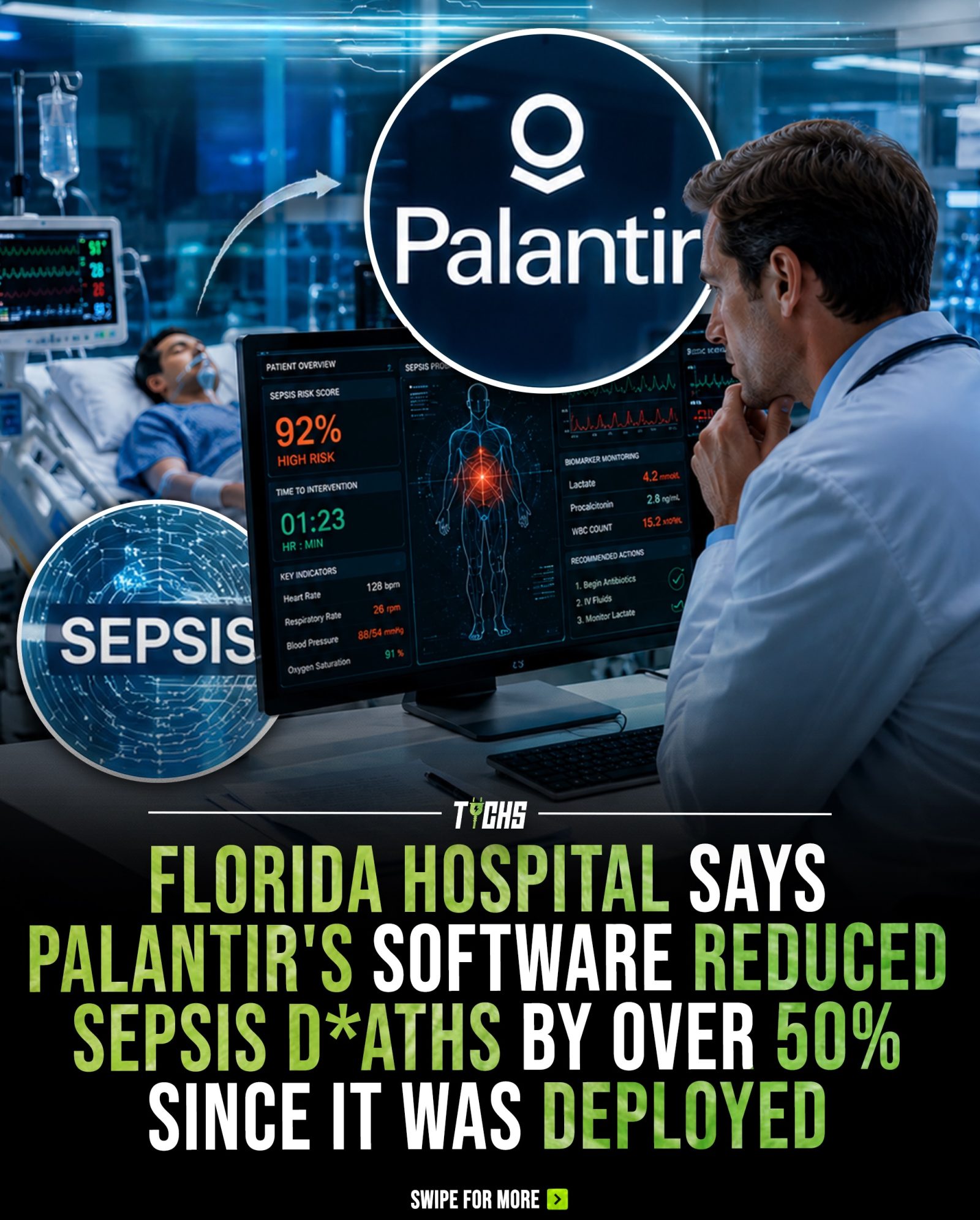
Palantir's Sepsis Detection Software:
AI is revolutionizing healthcare, with one of the most significant advancements being in the early detection of sepsis. In the case of Palantir's Sepsis Hub, artificial intelligence is being used to monitor patient data in real time, helping doctors to identify the early signs of sepsis and prevent it from becoming critical.
Why This Matters
Every hour matters when it comes to sepsis, which remains one of the leading causes of hospital deaths worldwide. Sepsis, a severe and life-threatening response to infection, can rapidly progress, making early detection and intervention crucial. Palantir's Sepsis Hub has dramatically reduced sepsis mortality in Florida hospitals by more than 50%.
Main Discussion
What is Sepsis?
Sepsis is a severe illness caused by the body's response to an infection. It can lead to tissue damage, organ failure, and even death if not treated promptly. Early symptoms of sepsis can be subtle and easily mistaken for other conditions, making early detection challenging. This is where AI-driven solutions like Palantir's Sepsis Hub come into play.
How Palantir's Sepsis Hub Works
Palantir's Sepsis Hub is a cutting-edge software solution designed to enhance the detection and management of sepsis in hospitals. The system continuously monitors patient data in real time, using advanced AI algorithms to identify early warning signs of sepsis. By analyzing vast amounts of patient data, the software can predict when a patient is at risk of developing sepsis, allowing doctors to intervene before the condition becomes critical.
Real-Time Monitoring
One of the key features of Palantir's Sepsis Hub is its real-time monitoring capability. The software integrates with hospital systems to continuously gather patient data, including vital signs, lab results, and medical history. This data is then analyzed using AI algorithms to detect patterns that may indicate the onset of sepsis. By providing real-time alerts, the system enables doctors to act swiftly, potentially saving lives.
Early Detection
Early detection is crucial in managing sepsis effectively. The software's ability to identify early signs of sepsis before it becomes critical is a game-changer. Doctors can use this information to make faster, more informed treatment decisions, ultimately improving patient outcomes. By intervening early, hospitals can reduce the risk of sepsis-related complications and deaths.
Impact on Patient Outcomes
The deployment of Palantir's Sepsis Hub in Florida hospitals has had a profound impact on patient outcomes. Since its implementation, sepsis mortality has fallen by more than 50%, and the system has helped save over 700 lives. This significant reduction in mortality rates highlights the potential of AI in healthcare and underscores the importance of early detection and intervention in managing sepsis.
Beyond Productivity Tools
AI in healthcare is increasingly moving beyond productivity tools and becoming a technology that directly supports healthcare teams and improves patient outcomes. Palantir's Sepsis Hub is a prime example of how AI can be leveraged to enhance clinical decision-making and patient care. By providing real-time, actionable insights, the software empowers doctors to deliver more effective and timely care, ultimately saving lives.
Practical Tips
For Healthcare Providers
- Integrate AI Tools: Consider integrating AI-driven tools like Palantir's Sepsis Hub into your hospital systems to enhance sepsis detection and management.
- Training and Education: Provide training and education for healthcare providers on using AI tools effectively. This ensures that the technology is utilized to its fullest potential.
- Collaboration: Foster collaboration between IT and clinical teams to ensure seamless integration and optimal use of AI tools.
For Hospitals
- Data Quality: Ensure that patient data is accurate and up-to-date. High-quality data is essential for the effective functioning of AI tools.
- Monitoring and Evaluation: Continuously monitor and evaluate the performance of AI tools to ensure they are meeting their intended goals. Regular updates and improvements can enhance their effectiveness.
- Patient Engagement: Engage patients in their care by providing them with real-time updates and information about their health status. This can improve patient outcomes and satisfaction.
Important Takeaways
Sepsis remains a significant challenge in healthcare, but with the help of AI-driven tools like Palantir's Sepsis Hub, hospitals can significantly improve their ability to detect and manage this condition. The real-time monitoring and early detection capabilities of the software have proven effective in reducing sepsis mortality and saving lives.
By leveraging AI, healthcare providers can deliver more effective and timely care, ultimately improving patient outcomes. As AI continues to advance, its potential in healthcare will only grow, making it a valuable tool in the fight against sepsis and other life-threatening conditions.
Conclusion
Palantir's Sepsis Hub represents a significant advance in the use of AI in healthcare. By providing real-time monitoring and early detection of sepsis, the software has demonstrated its ability to save lives and improve patient outcomes. As hospitals continue to adopt and integrate AI tools, the future of healthcare looks increasingly promising. With continued innovation and collaboration, AI-driven solutions like Palantir's Sepsis Hub will play a crucial role in enhancing clinical decision-making and improving patient care.
Watch the Reel
Questions readers ask
How does Palantir's Sepsis Hub improve hospital sepsis management?
Palantir's Sepsis Hub enhances hospital sepsis management by leveraging AI to continuously monitor patient data in real-time. This allows healthcare providers to promptly identify the early signs of sepsis, enabling swift intervention and significantly improving patient outcomes.
What is the significance of early sepsis detection?
Early sepsis detection is crucial because sepsis can rapidly progress and become life-threatening. By identifying sepsis in its early stages, medical professionals can initiate timely treatment, which greatly increases the patient's chances of survival.
How has Palantir's AI technology impacted sepsis mortality rates in Florida hospitals?
Palantir's AI technology, through the Sepsis Hub, has made a substantial impact by reducing sepsis mortality by over 50% in Florida hospitals. This highlights the effectiveness of real-time monitoring and early intervention in saving lives.
What kind of patient data does Palantir's Sepsis Hub monitor?
Palantir's Sepsis Hub monitors a variety of patient data in real-time, including vital signs, laboratory results, and other clinical indicators. This comprehensive monitoring helps in identifying the subtle signs of sepsis that might otherwise go unnoticed.
What are the benefits of real-time sepsis monitoring in hospitals?
Real-time sepsis monitoring in hospitals ensures that any changes in a patient's condition are immediately flagged for medical attention. This proactive approach allows for quicker diagnosis and treatment, ultimately improving the chances of successful outcomes for patients with sepsis.
How does Palantir's AI help in the identification of sepsis signs?
Palantir's AI analyzes vast amounts of patient data to detect patterns and anomalies that may indicate the onset of sepsis. By learning from extensive datasets, the AI can identify sepsis signs that might be missed by human observation alone, ensuring a more accurate and timely diagnosis.
What measures can hospitals take to enhance sepsis patient data monitoring?
Hospitals can enhance sepsis patient data monitoring by integrating advanced AI technologies, like Palantir's Sepsis Hub, to continuously analyze patient information. Additionally, training healthcare staff on the importance of early sepsis detection and the use of real-time monitoring tools can further improve outcomes.
Related deep dives
Similar reads based on topic and creator.




Recent articles
Fresh deep dives from the latest Reels we unpacked.




Comments
Be the first to comment.