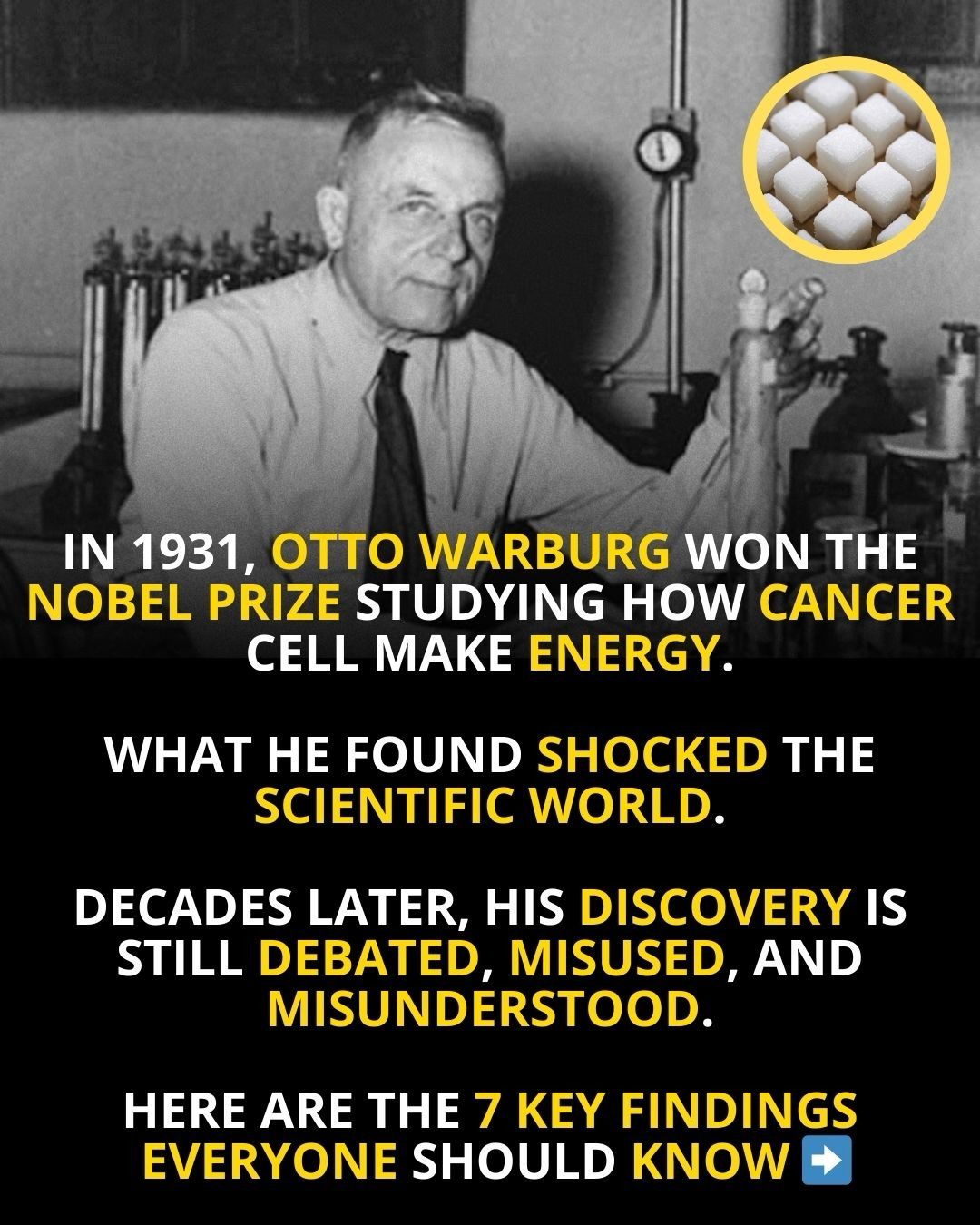
Otto Warburg and His Groundbreaking Work on Cancer Metabolism
Otto Warburg, a German physician and biochemist, made a monumental discovery in 1931 that earned him the Nobel Prize in Physiology or Medicine. His groundbreaking research revealed that cancer cells have a unique way of producing energy, fundamentally reshaping the field of oncology. This discovery, known as the Warburg Effect, showed that many tumors rely on glucose fermentation, even in the presence of oxygen. This metabolic shift highlighted that cancer is not just a genetic disease, but also a metabolic one.
Why This Matters
Warburg's findings are pivotal in understanding cancer. They have influenced various aspects of cancer research, diagnostics, and treatments. However, over time, his work has been misunderstood and sometimes misinterpreted, leading to myths and misunderstandings about cancer. Understanding the true implications of Warburg's research is crucial for advancing cancer treatment and care.
The Warburg Effect: A Paradigm Shift in Cancer Research
Warburg's Nobel Prize-Winning Discovery
In 1931, Otto Warburg was awarded the Nobel Prize for his discovery that cancer cells often rely on a process called glycolysis to produce energy. Unlike normal cells, which use oxygen to convert glucose into energy, cancer cells can ferment glucose into lactate even when oxygen is plentiful. This metabolic shift, now known as the Warburg Effect, was a game-changer in cancer research. It provided a new lens through which scientists could view cancer, not just as a genetic disease, but also as a metabolic one.
Misinterpretation and Misuse of Warburg's Findings
Over the decades, Warburg's work has been simplified and misinterpreted in public discourse. Complex metabolic research was reduced to viral claims suggesting that sugar alone causes cancer. While it is true that tumors consume large amounts of glucose, this interpretation overlooks the broader biological mechanisms involved in cancer development. Cancer is a multifactorial disease, influenced by genetics, environment, immunity, and metabolic adaptations. The misinterpretation of Warburg's findings has led to a lot of confusion and misinformation.
Modern Oncology: A Multifactorial Approach
The Role of Mitochondrial Dysfunction
Warburg hypothesized that mitochondrial dysfunction could play a significant role in cancer metabolism. While his work did not entirely capture the complexity of cancer, it laid the groundwork for further research. Modern oncology recognizes cancer as a multifactorial disease, involving genetic mutations, environmental exposures, and metabolic adaptations. Warburg's findings emphasized the importance of mitochondrial dysfunction, but they are just one piece of the puzzle.
Glucose and Cancer: A Complex Relationship
Glucose is the primary fuel for every cell in the body, including the brain and immune system. Eliminating it is neither physiologically possible nor therapeutically viable. The idea that sugar alone causes cancer or that eliminating sugar can cure cancer is a gross oversimplification. Tumors do consume large amounts of glucose, but this is a symptom of a much larger and more complex biological process. Understanding this complexity is essential for developing effective treatments.
The Warburg Effect in Clinical Practice
Today, Warburg's discovery is used clinically in various ways. One of the most notable applications is in Positron Emission Tomography (PET) imaging, where radiolabeled glucose (such as fluorine-18 fluorodeoxyglucose, or FDG) is used to highlight areas of high metabolic activity, often indicative of cancer. This technique is crucial for tumor diagnostics and monitoring the effectiveness of cancer treatments. Additionally, Warburg's work has influenced metabolic therapy research, offering new avenues for cancer treatment.
Practical Tips for Understanding Cancer Metabolism
Stay Informed
Cancer research is a rapidly evolving field. Staying informed about the latest findings and developments is crucial. Reputable sources, such as peer-reviewed journals and trusted medical institutions, can provide accurate and up-to-date information.
Avoid Simplistic Claims
Be wary of simplistic claims and myths about cancer. Cancer is a complex disease with many contributing factors. While glucose metabolism plays a role, it is just one piece of the puzzle. Avoiding sugar entirely is not a viable solution and can be harmful.
Consult Healthcare Professionals
Always consult healthcare professionals for any concerns or questions about cancer. Medical experts can provide personalized advice and treatment plans based on the latest scientific evidence.
Support Accurate Scientific Reporting
Support initiatives that promote accurate scientific reporting. Sharing and discussing reliable information can help dispel myths and misconceptions.
Important Takeaways
- Otto Warburg's Nobel Prize-winning research revealed that cancer cells often rely on glucose fermentation, even in the presence of oxygen.
- The Warburg Effect highlighted that cancer is a metabolic disease as well as a genetic one.
- Warburg's work has been misinterpreted, leading to myths about sugar and cancer.
- Cancer is a multifactorial disease, influenced by genetics, environment, immunity, and metabolic adaptations.
- Eliminating sugar is not a viable treatment for cancer.
- Warburg's findings are used clinically in PET imaging, tumor diagnostics, and metabolic therapy research.
Conclusion
Otto Warburg's groundbreaking research on cancer metabolism has had a profound impact on the field of oncology. His findings have reshaped our understanding of cancer and paved the way for new diagnostic and treatment methods. However, it is essential to recognize the complexity of cancer and avoid oversimplifying Warburg's work. By staying informed, consulting professionals, and supporting accurate scientific reporting, we can ensure that cancer research remains grounded in evidence and continues to advance. Understanding the true implications of Warburg's work is critical for driving progress in cancer treatment and care.
Watch the Reel
Questions readers ask
What is the Warburg Effect and why is it important?
The Warburg Effect is a metabolic shift observed in many cancer cells, where they produce energy through glucose fermentation, even when oxygen is present. This discovery by Otto Warburg is important because it highlights that cancer is not solely a genetic issue, but also a metabolic one, influencing various aspects of cancer research and treatment.
Did Otto Warburg win a Nobel Prize for his cancer research?
Yes, Otto Warburg was awarded the Nobel Prize in Physiology or Medicine in 1931 for his groundbreaking discovery of the unique energy production process in cancer cells, known as the Warburg Effect.
What are some common myths about cancer that stem from misunderstandings of Warburg's work?
Some common myths include the idea that cancer is solely a metabolic disease, that all cancers exhibit the Warburg Effect, and that targeting metabolism alone can cure cancer. These misinterpretations oversimplify the multifactorial nature of cancer.
How has Warburg's research influenced modern cancer research?
Warburg's findings have led to a deeper understanding of cancer metabolism, influencing the development of diagnostic tools, treatments, and a more comprehensive view of cancer. His research has paved the way for exploring metabolic therapies and combination treatments.
What is the significance of the metabolic shift in cancer cells?
The metabolic shift in cancer cells, as described by the Warburg Effect, is significant because it shows that cancer cells alter their energy production process. This shift is crucial for cancer growth and survival, making it a key area of study in oncology research.
Are all cancers affected by the Warburg Effect?
While the Warburg Effect is observed in many cancer types, it is not universal. Some cancers may not exhibit this metabolic shift, or may do so to varying degrees. Therefore, it is important to consider the diverse metabolic profiles of different cancers.
What other factors should be considered alongside cancer metabolism?
In addition to metabolism, it is crucial to consider other factors such as genetics, epigenetics, and the tumor microenvironment. Cancer is a complex, multifactorial disease, and understanding its various aspects is key to developing effective treatments and interventions.
Related deep dives
Similar reads based on topic and creator.


Recent articles
Fresh deep dives from the latest Reels we unpacked.




Comments
Be the first to comment.