Ranking in Large Language Models (LLMs)
Ranking in large language models (LLMs), such as ChatGPT, Perplexity, and Google AI Overviews, is becoming increasingly important as search engines shift from traditional results to AI-powered answers. The approach to optimizing for these LLMs requires a combination of solid SEO foundations and specific tactics tailored to AI preferences.
Why This Matters
The evolution of search from the standard "10 blue links" to AI-driven answers means that content creators and SEO professionals need to adapt their strategies. LLMs are designed to provide direct, relevant answers to user queries, often pulling information from a variety of sources. Understanding how to optimize for these sources can significantly increase the chances of your content being cited in AI-generated responses.
Main Discussion
The Shift to AI Answers
Search engines like Google are increasingly integrating AI into their results. Platforms such as ChatGPT and Perplexity rely heavily on AI to generate answers, making it crucial for content creators to align their strategies with AI preferences. This shift means that traditional SEO tactics are still relevant, but additional steps are necessary to ensure content is AI-friendly.
Integrating LLM-Specific Tactics
To enhance the likelihood of being cited in AI answers, consider the following strategies:
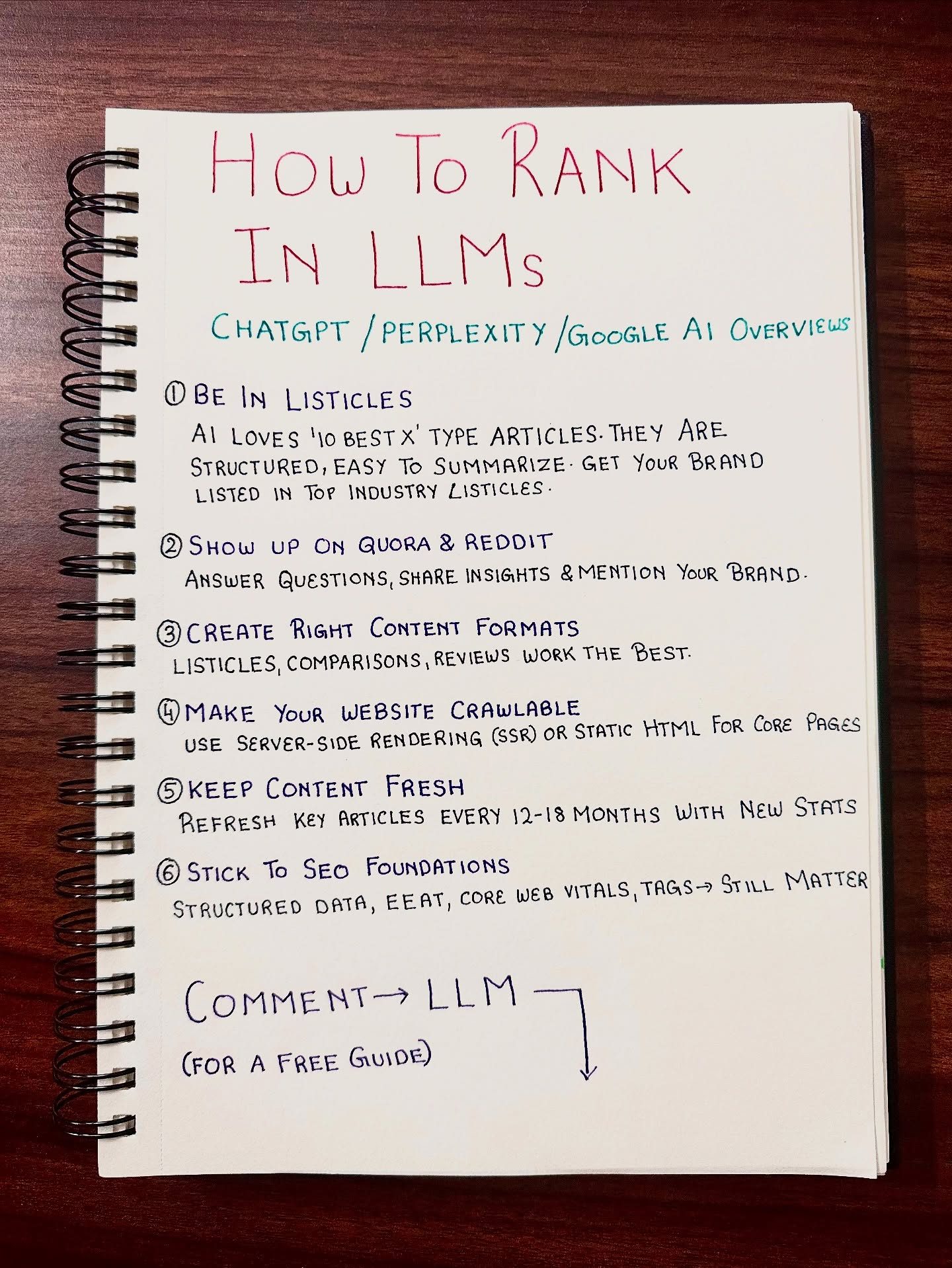
Be in Listicles
Listicles, or articles formatted as lists, are particularly favored by AI. This structure makes it easier for algorithms to extract and present information succinctly. For example, articles titled "10 Best Ways to Optimize for SEO" are more likely to be included in listicles generated by LLMs. These structured formats are straightforward for AI to parse and present to users.
Engage on Quora and Reddit
Participating in platforms like Quora and Reddit can significantly boost your visibility in LLM results. Both platforms are frequent citation sources for AI. By answering questions and sharing insights, you not only build authority but also increase the chances of your brand being mentioned in AI-generated responses. Ensure your answers are detailed, informative, and include relevant links to your content.
Make Your Website Crawlable
Ensuring that your website is crawlable is essential for both traditional search engines and LLMs. Utilizing server-side rendering (SSR) or static HTML for core pages can help. This practice makes it easier for AI to access and understand your content. Crawlable content allows LLMs to index and retrieve your information more effectively, increasing the likelihood of being cited.
Keep Content Fresh
Updating your content regularly is crucial. LLMs prefer fresh, up-to-date information. Refresh key articles every 12 to 18 months with new statistics and relevant updates. This practice not only keeps your content relevant but also aligns with the AI’s preference for current information, making it more likely to be cited.
Stick to SEO Foundations
Despite the shift to AI, traditional SEO foundations remain critical. Structured data, EEAT (Experience, Expertise, Authoritativeness, and Trustworthiness), core web vitals, and proper tagging are still essential for ranking well. These elements ensure that your content is well-organized, accessible, and authoritative, making it more attractive to both search engines and LLMs.
Publish LLM-Friendly Formats
Creating content in formats that are easily digestible by LLMs can greatly improve your chances of being cited. This includes comparisons, reviews, and FAQs with schema markup. These formats provide structured data that LLMs can easily parse and present to users. Schema markup, in particular, helps search engines and AI understand the context and relevance of your content, increasing its visibility.
Practical Tips
-
Create Listicles: Focus on creating articles that can be easily turned into listicles. Aim for titles that start with numbers, such as "5 Best Practices for SEO."
-
Engage on Quora and Reddit: Actively participate in conversations on Quora and Reddit. Answer questions related to your niche, share insights, and mention your brand where appropriate.
-
Implement SSR: Ensure your website uses server-side rendering (SSR) or static HTML for core pages. This makes your content more crawlable and accessible to AI.
-
Update Regularly: Set a schedule to update your key articles every 12 to 18 months. Include new statistics, trends, and insights to keep your content fresh and relevant.
-
Maintain SEO Basics: Continue to adhere to SEO best practices, including structured data, EEAT, and core web vitals. These fundamentals are still crucial for ranking well in both traditional search engines and LLMs.
Important Takeaways
Optimizing for LLMs requires a strategic combination of traditional SEO and new, AI-specific tactics. By focusing on listicles, engaging on platforms like Quora and Reddit, ensuring crawlability, and keeping content fresh, you can significantly increase your chances of being cited in AI-generated responses. Maintaining strong SEO foundations remains essential, as these elements provide the backbone for effective optimization.
Conclusion
Ranking in LLMs is a critical aspect of modern content strategy. As search evolves, so must our approaches. By integrating listicles, active engagement on community platforms, ensuring website crawlability, and maintaining fresh, high-quality content, you can enhance your visibility in AI-generated answers. These strategies, combined with SEO best practices, provide a comprehensive approach to optimizing for LLMs and securing a strong digital presence.
Watch the Reel
Questions readers ask
What are the key differences between traditional SEO and optimizing for AI search?
Traditional SEO focuses on ranking higher in search engine results pages, while AI search optimization aims to provide direct, relevant answers to user queries. This involves tailoring content to be easily parsed and understood by AI systems, ensuring it is visible and accessible to AI-driven search engines like ChatGPT and Google AI Overviews.
How can I format my content to improve AI search visibility?
To enhance AI search visibility, structure your content with clear headings, bullet points, and concise paragraphs. AI systems prefer well-organized information, so breaking down complex topics and using descriptive subheadings can make your content more accessible. Additionally, ensure your content is easily crawlable by AI by using semantic HTML and avoiding excessive use of images and videos without context.
What are some specific tactics to optimize for AI-driven answers?
To optimize for AI-driven answers, focus on providing clear, direct responses to common queries within your content. Use FAQ sections, how-to guides, and summary boxes to highlight key information. Also, ensure your content is up-to-date and accurate, as AI systems prioritize reliable and current information. Lastly, consider the context and intent behind user queries and tailor your content to address these effectively.
How can I ensure my content is rendered correctly by AI systems like ChatGPT?
To ensure your content is rendered correctly by AI systems like ChatGPT, focus on clarity and structure. Use simple, straightforward language and avoid jargon. Break down complex ideas into digestible segments. Additionally, ensure your content is easily accessible by providing it in various formats, such as text, and use metadata to provide context and enhance understanding.
What role does content quality play in AI search optimization?
Content quality is crucial for AI search optimization. High-quality content is well-researched, accurate, and provides value to users. AI systems are designed to prioritize reliable sources, so ensuring your content meets these standards can significantly improve your chances of ranking higher in AI search results. Additionally, well-written, engaging content is more likely to be shared and linked to, further boosting its visibility.
How can I optimize my content for AI search engines like Google AI Overviews and Perplexity?
To optimize for AI search engines like Google AI Overviews and Perplexity, focus on creating comprehensive, in-depth content that addresses a wide range of queries related to your topic. Use structured data and schema markup to help AI understand the context and relevance of your content. Engage with your audience through comments and social media to build a strong online presence and increase the likelihood of your content being featured in AI-driven search results.
What are some best practices for creating AI-friendly content?
Creating AI-friendly content involves using natural language processing (NLP) principles to make your writing more accessible to AI. Use descriptive language, avoid ambiguity, and focus on providing direct answers to potential questions. Incorporate relevant keywords naturally within the content, and ensure that your content is easily navigable with clear section headings and subheadings.
Related deep dives
Similar reads based on topic and creator.




Recent articles
Fresh deep dives from the latest Reels we unpacked.




Comments
Be the first to comment.