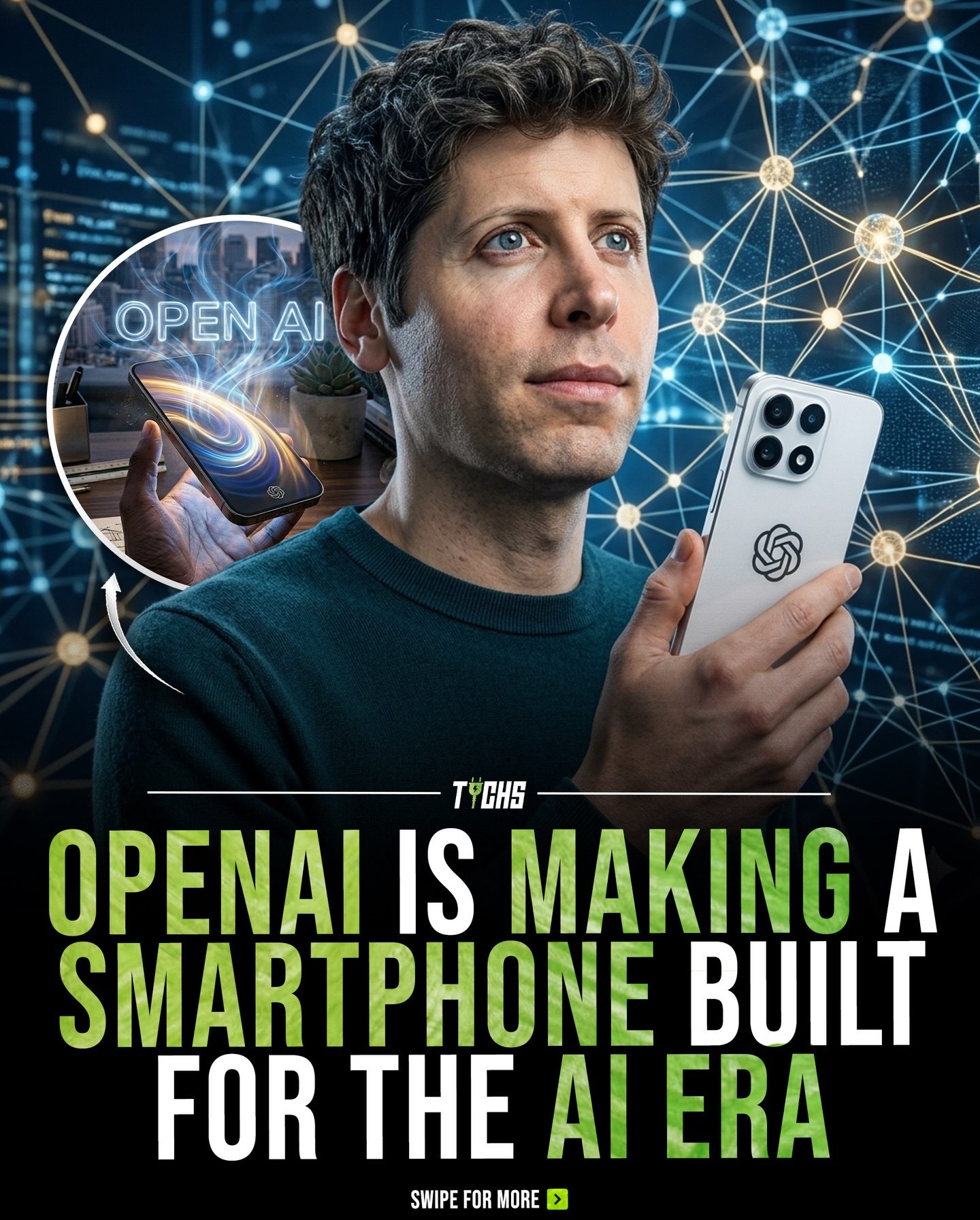
The OpenAI Smartphone: A New Era in Mobile Technology
Imagine a smartphone that understands and anticipates your needs, acting as a personal assistant rather than just a tool. This is the vision behind the upcoming OpenAI smartphone, a device designed to challenge traditional smartphones by integrating AI-first interactions. This approach could redefine how people interact with technology in their daily lives, shifting from tools we operate to assistants that act on our behalf.
Context
The tech world is always evolving, and the OpenAI smartphone represents a significant leap forward in mobile technology. By focusing on AI-first interactions, this device aims to transcend the limitations of traditional smartphones, which rely heavily on apps and manual controls. The introduction of a new operating system, coupled with advanced AI capabilities, promises to deliver deep personalization and streamline user experiences.
Main Discussion
AI-First Interactions
The core of the OpenAI smartphone is its AI-first design. This means the device is built from the ground up to understand and act on user intentions, rather than requiring explicit commands. The phone will use a combination of voice control, context-aware responses, and task automation to provide a seamless user experience.
Voice-First Control
One of the standout features of the OpenAI smartphone is its voice-first control. Users will be able to interact with the device through natural conversations, eliminating the need to tap on apps. This hands-free approach not only enhances accessibility but also makes the smartphone more intuitive to use. For example, users can ask the phone to set reminders, send messages, or search the web without ever lifting a finger.
Context-Aware Responses
Context-aware responses are another key aspect of the OpenAI smartphone. The device will be capable of understanding the context of a situation and providing relevant information or actions. For instance, if a user is walking to a meeting, the phone might automatically suggest directions or remind the user of any tasks they need to complete before the meeting. This level of contextual understanding makes the phone a proactive assistant rather than a reactive tool.
Task Automation
Task automation is a crucial feature that will significantly enhance the user experience. The OpenAI smartphone will be able to perform complex tasks automatically, such as scheduling appointments, sending emails, or even making purchases. This automation is powered by AI agents that can learn from user behavior and adapt to their needs over time. For example, if a user frequently orders coffee from a particular café, the phone might automatically suggest a pre-order when the user is near the café.
Cloud and On-Device Processing
The smartphone will leverage a mix of on-device and cloud processing to handle tasks efficiently. Basic tasks, such as sending messages or making calls, will be processed on the device to ensure speed and reliability. However, more complex tasks, like data analysis or sophisticated AI computations, will be handled by powerful cloud AI systems. This hybrid approach ensures that the phone remains fast and efficient while still being capable of performing complex tasks.
Custom Chips and Partnerships
To achieve these advanced capabilities, the OpenAI smartphone will use custom chips from partners like Qualcomm and MediaTek. These chips are specifically designed to support the high computational demands of AI processing, ensuring that the phone can handle both on-device and cloud tasks smoothly. The partnership with industry-leading chip manufacturers underscores the commitment to delivering a top-tier AI-first experience.
Practical Tips
While the OpenAI smartphone is still in development, there are several practical tips to consider as you approach this new era of mobile technology:
Embrace Voice Control
Get comfortable with voice commands, as they will be the primary means of interacting with the phone. Practice using natural language to communicate with the device, and explore the various commands and functions available.
Customize Your Experience
Take advantage of the customization options to tailor the phone to your specific needs. Set up personalized shortcuts, automate routine tasks, and configure context-aware responses to make the most of the AI capabilities.
Stay Connected
Ensure that your phone has a stable internet connection to leverage the full power of cloud processing. While basic tasks can be handled on-device, a strong connection will be essential for more complex AI functions.
Explore AI Agents
Familiarize yourself with the AI agents that power the smartphone. These agents are designed to learn from your behavior and adapt to your needs, so taking the time to understand how they work will enhance your overall experience.
Important Takeaways
The OpenAI smartphone represents a significant shift in mobile technology, focusing on AI-first interactions to create a more intuitive and personalized user experience. Key takeaways include:
- AI-First Design: The smartphone is built to understand and act on user intentions, providing a proactive and personalized experience.
- Voice-First Control: Natural voice commands replace traditional tapping, making the device more accessible and intuitive.
- Context-Aware Responses: The phone adapts to the user's context, offering relevant information and actions without explicit commands.
- Task Automation: AI agents handle complex tasks automatically, learning from user behavior and adapting over time.
- Cloud and On-Device Processing: A hybrid approach ensures speed and efficiency, with basic tasks processed on-device and complex tasks handled in the cloud.
Conclusion
The OpenAI smartphone is poised to redefine how we interact with mobile technology, offering a new level of personalization and efficiency. By leveraging AI-first interactions, voice control, and advanced processing capabilities, this device aims to transform smartphones from tools we operate to assistants that act on our behalf. As we move closer to the release of this groundbreaking technology, it's clear that the future of mobile devices is here, and it's powered by AI.
Watch the Reel
Questions readers ask
What makes the OpenAI smartphone different from traditional smartphones?
The OpenAI smartphone stands out due to its AI-first approach, focusing on voice-first control and context-aware responses. Unlike traditional smartphones that rely on manual operation, the OpenAI device aims to act as a personal assistant, anticipating and acting on user needs intuitively.
How does the OpenAI smartphone use AI to enhance user experience?
The OpenAI smartphone leverages AI to streamline daily tasks by understanding and anticipating user needs. It uses voice-first control for hands-free operation and provides context-aware responses, making interactions more natural and efficient.
What are the key features of the AI-first smartphone?
Key features of the OpenAI smartphone include voice-first control, context-aware responses, and an intelligent mobile assistant interface. These features work together to create a seamless and intuitive user experience, reducing the need for manual controls and app navigation.
Can the OpenAI smartphone replace manual operations entirely?
While the OpenAI smartphone is designed to minimize manual operations through its intelligent features, it is unlikely to replace manual controls entirely. Users may still need to interact with the device directly for certain tasks, but the AI-first approach significantly reduces the frequency of such interactions.
How does the OpenAI smartphone adapt to user preferences over time?
The OpenAI smartphone uses advanced AI algorithms to learn from user behavior and preferences. Over time, it becomes more proficient at anticipating needs and providing personalized responses, making the user experience increasingly tailored and efficient.
What types of tasks can the OpenAI smartphone streamline?
The OpenAI smartphone can streamline a wide range of daily tasks, from setting reminders and sending messages to managing schedules and providing real-time information. By acting as a personal assistant, it helps users stay organized and save time on routine activities.
Is the OpenAI smartphone's AI technology always learning and improving?
Yes, the AI technology in the OpenAI smartphone is designed to continuously learn and improve. It uses user interactions and feedback to refine its responses and predictions, ensuring that the device becomes more effective and intuitive over time.
Related deep dives
Similar reads based on topic and creator.




Recent articles
Fresh deep dives from the latest Reels we unpacked.




Comments
Be the first to comment.