Terrifying Ocean Facts
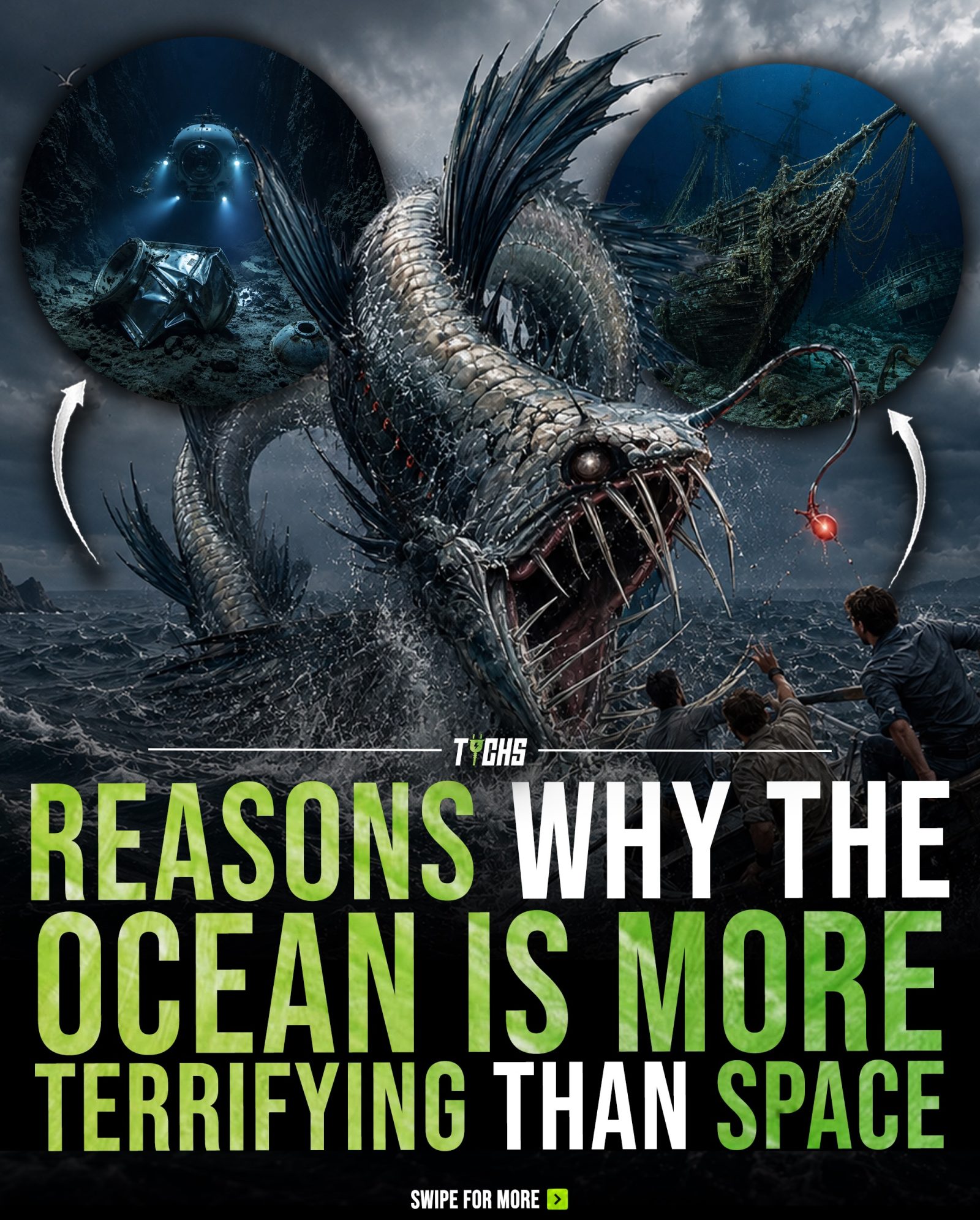
The ocean, covering over 70% of Earth's surface, is a vast and mostly unexplored frontier that often feels more terrifying than outer space. From crushing pressure and complete darkness to mysterious ecosystems and enigmatic creatures, the deep sea is a realm of extremes and unknowns.
Why this matters
Understanding the ocean's depths is more than just a scientific pursuit; it's a matter of global significance. The ocean plays a critical role in regulating our climate, supporting diverse marine life, and providing resources that sustain human life. Yet, despite its importance, less than 20% of the seafloor has been mapped in detail, leaving vast areas unexplored and shrouded in mystery.
Main discussion
The mysterious Denmark Strait waterfall
One of the ocean's most awe-inspiring features is the underwater waterfall in the Denmark Strait, which is known as the world’s largest. Located between Iceland and Greenland, this waterfall plunges over 2.2 miles underwater, carrying more water than all the world's rivers combined. This phenomenon is driven by the difference in water density, where colder, denser water from the Nordic Seas sinks and flows over the Denmark Strait's underwater ridge, creating a powerful, relentless current.
The crushing pressure of the Mariana Trench
The Mariana Trench, located in the western Pacific Ocean, is the deepest part of the world's ocean, reaching a maximum-known depth of over 36,000 feet. The pressure at the bottom is immense, equivalent to having 50 fully loaded 747 jets pressing down on every square inch of your body. This extreme pressure makes the Mariana Trench an inhospitable environment for most known life forms, yet it is home to unique, hardy creatures adapted to survive in such harsh conditions.
The ocean's hidden ecosystems
Beyond the crushing depths and powerful currents, the ocean harbors ecosystems that thrive in total darkness and extreme conditions. For example, brine pools are underwater lakes of super-salty water that form on the seafloor. These pools are devoid of oxygen and support unique microbial life that has adapted to survive in this harsh environment. Similarly, hydrothermal vents spew mineral-rich, superheated water, creating ecosystems that rely on chemosynthesis rather than photosynthesis for energy.
Hydrothermal vents and brine pools are part of the ocean's mysterious ecosystems. These deep-sea vents release mineral-rich, superheated water, creating unique environments where life thrives without sunlight. These ecosystems rely on chemosynthesis, a process where microorganisms convert chemical energy into organic matter, rather than photosynthesis.
Lost shipwrecks and underwater mysteries
The ocean is also home to numerous shipwrecks, many of which remain undiscovered or unexplored. These wrecks hold valuable historical records and artifacts, but also pose significant challenges to exploration. The deep ocean's cold temperatures, crushing pressure, and complete darkness make it incredibly difficult to explore and recover artifacts from these sites.
Deep-sea creatures
The ocean is home to a variety of creatures that are rarely seen by humans, and their existence often borders on myth. From the giant squid to the anglerfish, these deep-sea creatures have evolved unique adaptations to survive in the harsh conditions of the deep. For example, the anglerfish uses a bioluminescent lure to attract prey in the dark depths, while the giant squid has the largest eyes in the animal kingdom to help it see in low-light conditions.
Extreme conditions and potential dangers
The deep ocean is an environment of extremes, where temperatures can be near freezing, and pressures can reach 1,000 times the surface pressure. These conditions make it a challenging and potentially dangerous place for exploration. However, advancements in technology, such as remotely operated vehicles (ROVs) and Autonomous Underwater Vehicles (AUVs), have enabled scientists to explore and study these depths, revealing new insights into the ocean's mysteries.
Practical tips
Staying safe in the ocean
While the deep ocean poses significant challenges and dangers, recreational divers and adventure seekers can still explore the ocean's wonders safely. Always follow these tips to ensure a safe and enjoyable experience:
- Get Proper Training: Before diving, ensure you have the necessary training and certifications. Know your limits and dive within them.
- Check Your Equipment: Regularly inspect and maintain your diving equipment. Ensure it is in good working order before each dive.
- Stay Within Depth Limits: Stick to the maximum depth recommended for your certification level. The deeper you dive, the greater the risks.
- Be Aware of Your Surroundings: Stay alert and aware of your surroundings. Avoid touching or disturbing marine life and be mindful of currents and underwater terrain.
Exploring the ocean responsibly
Responsible exploration of the ocean not only ensures safety but also helps preserve its delicate ecosystems. Here are some tips for exploring the ocean responsibly:
- Leave No Trace: Practice good buoyancy control and avoid touching or disturbing marine life and coral reefs.
- Support Conservation Efforts: Support organizations and initiatives dedicated to marine conservation and sustainability.
- Choose Eco-Friendly Tour Operators: When booking tours or expeditions, choose operators committed to responsible and sustainable practices.
- Minimize Waste: Reduce, reuse, and recycle to minimize waste and protect marine environments.
- Respect Marine Life: Maintain a safe distance from marine animals and avoid feeding or harassing them.
Important takeaways
The ocean, with its extreme conditions and mysterious depths, is a place of both wonder and danger. It remains one of Earth's least understood and explored environments, despite its critical role in supporting life. As we continue to explore and study the ocean, we uncover new insights into its mysteries and the life it supports. By approaching the ocean with respect, caution, and a sense of wonder, we can continue to uncover its secrets while preserving its delicate ecosystems for future generations to explore and appreciate.
Conclusion
The ocean's depths hold countless mysteries and wonders, from underwater waterfalls and extreme pressure to unique ecosystems and enigmatic creatures. While the deep sea may feel more terrifying than space, it also offers a wealth of knowledge and discovery. As we continue to explore, study, and understand the ocean, we are reminded of the vastness of our planet and the importance of protecting its delicate ecosystems. By approaching the ocean with respect, caution, and a sense of wonder, we can continue to unlock its secrets and ensure its preservation for future generations.
Watch the Reel
Questions readers ask
What are some of the most extreme conditions found in the deep sea?
The deep sea is characterized by immense pressures, which can reach over 1,000 times the pressure at sea level, and complete darkness, with no sunlight penetrating beyond 200 meters. Extreme cold and unique chemical compositions are also common, making it one of the most challenging environments on Earth.
What is the significance of the Mariana Trench?
The Mariana Trench is the deepest part of the world's oceans, reaching a maximum-known depth of over 11,000 meters. It is a site of immense pressure, with pressures reaching over 1,000 times that at sea level. It is also home to unique sea life, adapted to these extreme conditions, making it a focal point for deep sea exploration.
What is the Denmark Strait waterfall and why is it notable?
The Denmark Strait waterfall is the world's largest underwater waterfall, located between Greenland and Iceland. It is notable for the massive volume of water that cascades over it, contributing to the circulation of the world's oceans. The waterfall is a key component of global ocean currents, which influence climate patterns worldwide.
What are some of the most terrifying creatures found in the deep sea?
The deep sea is home to a variety of enigmatic and terrifying creatures, such as the anglerfish, known for its bioluminescent lure, and the giant squid, which can reach lengths of up to 43 feet. Other notable creatures include the vampire squid and the frilled shark, each with unique adaptations to survive in the harsh deep sea environment.
Why is the ocean considered more terrifying than space?
The ocean is considered more terrifying than space due to its vast unexplored areas, extreme conditions, and mysterious ecosystems. Unlike space, the ocean is filled with unknown creatures and environments that are constantly challenging our understanding. Additionally, the ocean's role in regulating climate and sustaining life adds to its mystique and significance.
What are some of the hidden ecosystems found in the ocean?
The ocean hosts a variety of hidden ecosystems, such as hydrothermal vents, cold seeps, and underwater caves. These ecosystems support unique forms of sea life, from chemosynthetic bacteria to giant tube worms. They are often found in the deepest parts of the ocean, where sunlight does not reach, making them some of the most mysterious and fascinating environments on Earth.
How does the ocean influence our climate
The ocean plays a crucial role in regulating our climate by absorbing and storing heat, as well as transporting it around the globe through currents. This process helps to distribute heat from the equator to the poles, influencing weather patterns and climate. Additionally, the ocean absorbs large amounts of carbon dioxide, helping to mitigate the impacts of climate change.
Related deep dives
Similar reads based on topic and creator.


Recent articles
Fresh deep dives from the latest Reels we unpacked.




Comments
Be the first to comment.