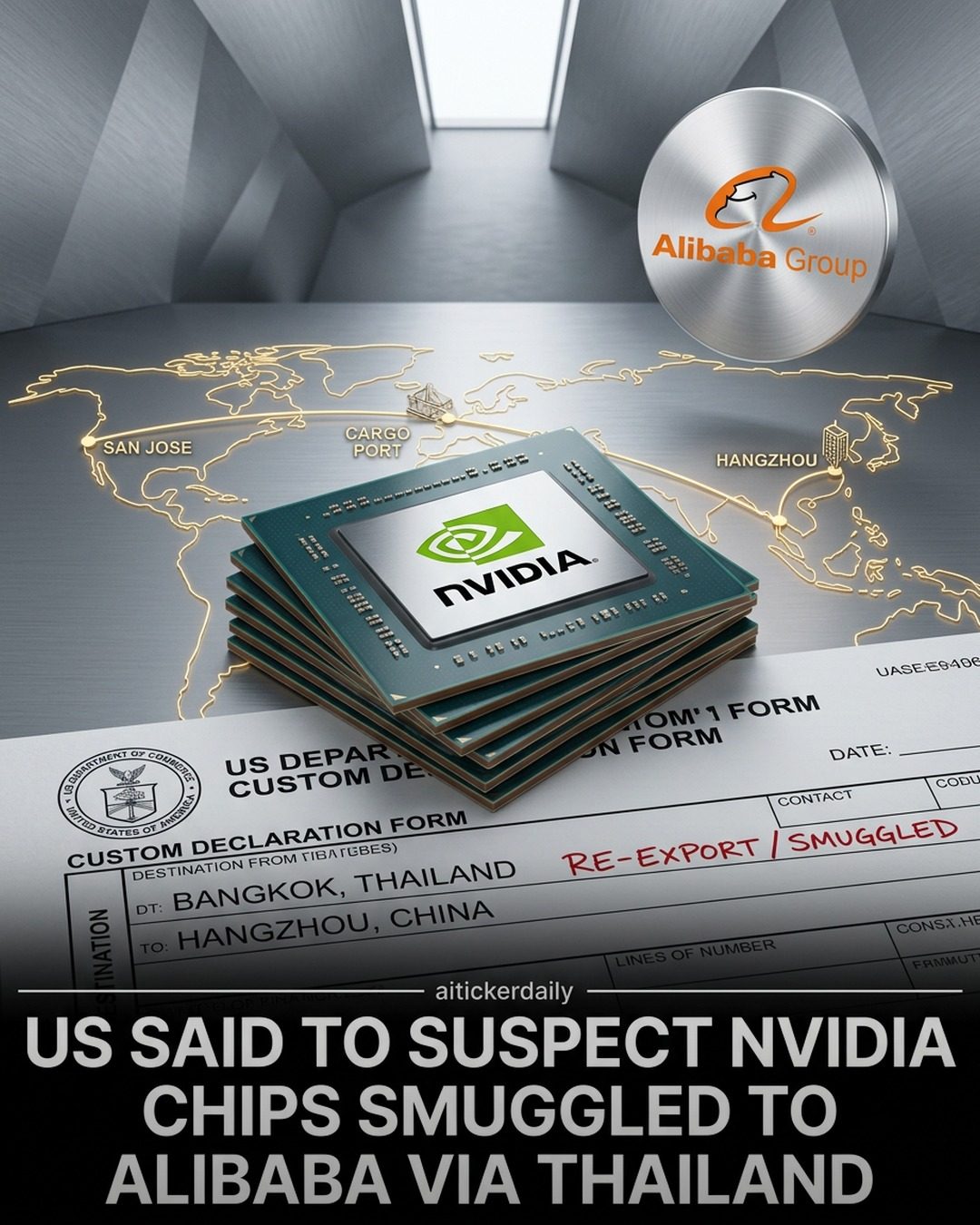
The Global Implications of the US-China Chip Smuggling Investigation
The ongoing investigation into the alleged smuggling of advanced NVIDIA computer chips from the United States to China via Thailand has put the spotlight on the complex interplay between technology, geopolitics, and international trade. This intricate scenario involves several key players, including NVIDIA, Alibaba Group, and Super Micro Computer Inc. The case highlights the critical role of export controls and the potential impact on national AI development efforts.
The Backdrop of the Investigation
The core of the investigation revolves around the suspected smuggling of servers from Super Micro Computer Inc., which reportedly contain advanced NVIDIA chips. These servers were allegedly routed through Thailand, making their way to China. Key allegations include the involvement of a Thai infrastructure player and the possible role of Alibaba Group as an end customer. The implications of this smuggling operation extend beyond a simple supply chain issue, touching on broader geopolitical tensions and trade regulations.
Diving into the Geopolitical Context
Export Controls and National Security
Export controls are the primary mechanism the United States uses to prevent the unauthorized transfer of sensitive technologies, particularly those with military applications. The investigation into the smuggling of NVIDIA chips underscores the critical need for stringent export regulations. The US Department of Commerce plays a central role in enforcing these controls, ensuring that advanced technologies do not fall into the hands of geopolitical adversaries. This ongoing probe highlights the challenges of monitoring and securing global supply chains, especially when key technologies are involved.
The Role of Thailand as a Transit Hub
Thailand's strategic position in Southeast Asia makes it a critical transit point for international trade. This position, however, also makes it a potential weak link in the global supply chain. The involvement of Thailand in this suspected smuggling operation raises questions about the country's role as a transit hub and its ability to enforce export controls effectively. The geopolitical landscape is further complicated by Thailand's relationship with both the US and China, necessitating a nuanced approach to address this issue.
The Impact on the Tech Industry
Supply Chain Vulnerabilities
The investigation into the alleged smuggling of NVIDIA chips has brought to light the vulnerabilities in global supply chains. Companies like Super Micro Computer Inc. and NVIDIA are at the forefront of technology, supplying advanced components that are crucial for AI development. Any disruption in the supply chain, whether due to smuggling or other factors, can have severe repercussions for the tech industry. Companies must now reassess their supply chain management practices to mitigate such risks.
Alibaba Group and the AI Race
The possible involvement of Alibaba Group as a customer in this smuggling operation adds a layer of complexity to the situation. As one of China's tech giants, Alibaba is at the forefront of the global AI race. The company's potential role raises questions about the ethical and legal implications of acquiring advanced technologies through questionable means. It also highlights the competitive nature of the tech industry, where the acquisition of cutting-edge technologies can provide a significant advantage.
Practical Tips for Companies to Navigate the Complexity
Strengthening Export Control Compliance
For companies dealing with sensitive technologies, compliance with export control regulations is non-negotiable. This involves implementing robust internal controls, conducting regular audits, and ensuring that all supply chain partners adhere to the same standards. Companies should also stay informed about changes in export regulations and adapt their practices accordingly.
Enhancing Supply Chain Visibility
Increasing transparency and traceability in the supply chain is crucial for mitigating risks. Companies can achieve this by leveraging advanced technologies, such as blockchain, to track the movement of goods from origin to destination. This not only helps in identifying potential vulnerabilities but also ensures compliance with export regulations.
Building Stronger Partnerships
Developing strong, trustworthy partnerships is essential for navigating the complexities of international trade. Companies should collaborate closely with their suppliers and customers to establish clear guidelines and expectations. This collaborative approach can help in identifying and mitigating supply chain risks, while also fostering a culture of compliance and transparency.
Important Takeaways
The US-China chip smuggling investigation underscores the intricate relationship between technology, geopolitics, and international trade. Key takeaways include the critical role of export controls, the vulnerabilities in global supply chains, and the importance of compliance and transparency. The investigation also highlights the competitive nature of the tech industry and the need for companies to adopt a proactive approach to mitigate risks.
The ongoing investigation serves as a stark reminder of the challenges and complexities of international trade. As the world becomes more interconnected, the need for robust supply chain management, compliance, and transparency becomes increasingly important. Companies must navigate these complexities to thrive in the global market while ensuring the integrity of their operations.
Conclusion
As the investigation into the suspected smuggling of NVIDIA chips continues, it serves as a cautionary tale for the tech industry. The case underscores the need for stringent export controls, robust supply chain management, and a proactive approach to mitigating risks. Companies must adapt to these challenges to navigate the complexities of international trade and maintain their competitive edge in a rapidly evolving global market.
Watch the Reel
Questions readers ask
What specific items are at the center of the US-China chip smuggling investigation?
The investigation primarily focuses on the alleged smuggling of advanced NVIDIA computer chips. These chips are highly sought after due to their use in AI, high-performance computing, and advanced technologies.
Which countries are involved in the NVIDIA chip smuggling network?
The suspected smuggling operation involves three countries: the United States, where the NVIDIA chips originate; China, the intended destination for the chips; and Thailand, the transit point through which the chips are routed.
Why is Thailand a key player in this technology smuggling operation?
Thailand serves as an intermediary transit point in the smuggling network. Its geographical location and existing tech supply chain infrastructure make it a strategic hub for routing sensitive technologies from the US to China.
What is the role of Alibaba in the NVIDIA chip smuggling investigation?
Alibaba Group is involved in the investigation due to its potential facilitation of the smuggling operation. The major tech company's logistics and supply chain networks are suspected to have been used to transport the NVIDIA chips from the US to China via Thailand.
How do export controls factor into the NVIDIA chip smuggling case?
Export controls are crucial in this case as they regulate the transfer of sensitive technologies across borders. The alleged smuggling of NVIDIA chips highlights the importance of these controls in preventing unauthorized access to advanced technologies, particularly in the context of geopolitical tensions between the US and China.
What are the potential consequences of the NVIDIA chip smuggling operation for AI development in China?
If the smuggling operation is confirmed, it could significantly boost China's AI development efforts by providing access to advanced NVIDIA chips. Conversely, it could also lead to stricter export controls and increased scrutiny on tech supply chains, potentially hindering China's technological advancement.
What other companies are mentioned in the investigation besides NVIDIA and Alibaba?
Super Micro Computer Inc. is another key player in the investigation. The company's servers, which reportedly contain the advanced NVIDIA chips, are at the center of the suspected smuggling operation, highlighting the intricate web of tech companies involved in the case.
Related deep dives
Similar reads based on topic and creator.




Recent articles
Fresh deep dives from the latest Reels we unpacked.




Comments
Be the first to comment.