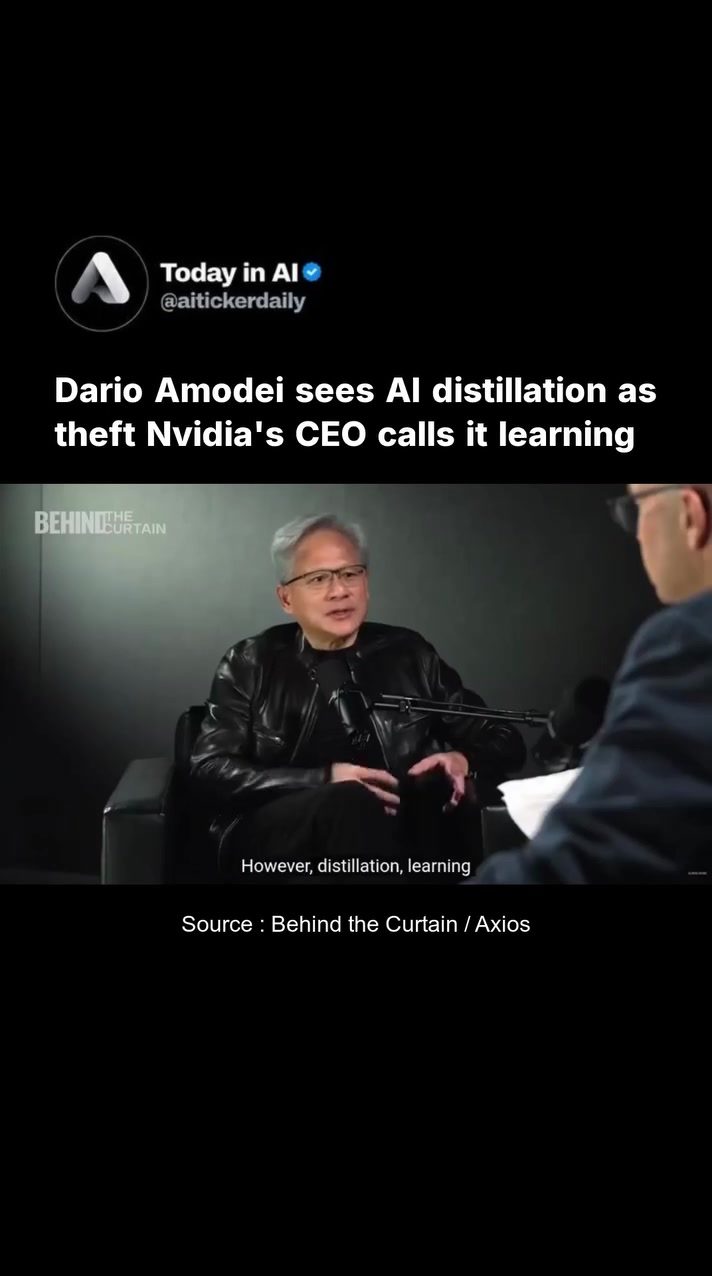
How Nvidia's CEO Views AI Learning and Distillation
Nvidia's CEO, Jensen Huang, has a distinctive perspective on AI and the role of learning from various sources. This viewpoint can be critical in understanding his approach to AI development and the potential implications for the future.
AI Learning and Human Intelligence
Jensen Huang emphasizes that learning from various sources is fundamental to intelligence. This concept applies to both humans and AI. People constantly learn from one another through conversations, interactions, and shared experiences. Similarly, AI systems need to learn from various sources to become more intelligent. Huang draws a parallel between human learning and AI learning, suggesting that just as humans learn from books, teachers, and peers, AI systems learn from data and other AI models.
Huang distinguishes between two key ideas: the ability of AI to learn from multiple sources and the potential for AI to violate privacy or terms of agreements. He believes that AI learning from diverse sources is essential for its development and that restricting this learning would hinder the entire industry, from developers to chip manufacturers.
AI's Learning Process
AI systems, particularly those based on machine learning, learn by analyzing large datasets. This process involves identifying patterns, making predictions, and improving performance over time. Huang points out that the original AI models, regardless of their origin, have scraped the internet for previously learned knowledge. This process is akin to humans reading books to acquire knowledge. As AI continues to evolve, it will generate more content, potentially reaching a point where 99% of the internet's content is AI-generated.
According to Huang, this content is generated by AI systems that have learned from other AI models, a process known as distillation. He believes that this continuous learning and distillation process is beneficial and that we should strive for smarter, more capable AI systems. Huang argues that the smarter an AI becomes, the safer it is. This perspective challenges the notion that AI learning from other AI models or sources is a form of theft, as some critics suggest.
The Distillation Debate
The concept of AI distillation has been a contentious issue, with some experts, like Dario Amodei, framing it as a form of theft. However, Huang disagrees with this viewpoint and considers AI distillation as a natural part of the learning process. He argues that AI systems need to learn from as many sources as possible to become more intelligent and that restricting this learning would be counterproductive.
Huang's perspective on AI learning and distillation highlights the importance of continuous improvement and the exchange of knowledge between AI systems. By learning from diverse sources, AI can become more capable and safer, ultimately benefiting the entire industry.
Practical Tips for AI Development
Developers and researchers focused on AI development can learn from Huang's perspective by adopting several practical strategies:
Encourage Continuous Learning
Ensure that AI systems have access to a wide range of data and knowledge sources. This continuous learning process will help AI models become more intelligent and capable.
Prioritize Data Privacy
While encouraging AI to learn from diverse sources, it is crucial to prioritize data privacy and ensure that AI systems do not violate terms of agreements or privacy policies. Companies should implement robust data protection measures to safeguard user information and maintain compliance with regulations.
Foster Collaboration
Promote collaboration and knowledge exchange within the AI community. This exchange of ideas and expertise can accelerate AI development and innovation, leading to smarter and more capable AI systems.
Important Takeaways
The Role of Learning
Learning from diverse sources is fundamental to intelligence, whether for humans or AI. AI systems need access to vast amounts of data and knowledge to become more intelligent and capable.
AI Distillation as Learning
AI distillation should be viewed as a natural part of the learning process rather than theft. This continuous learning and distillation process is essential for AI development and should be encouraged.
Data Privacy and Compliance
While promoting AI learning, it is crucial to prioritize data privacy and ensure that AI systems comply with terms of agreements. Companies should implement robust data protection measures to safeguard user information.
Conclusion
Jensen Huang's perspective on AI learning and distillation offers valuable insights into the future of AI development. By understanding the importance of continuous learning, data privacy, and collaboration, developers and researchers can create more intelligent, capable, and safe AI systems. This approach will not only accelerate AI development but also ensure that the technology benefits society as a whole, from developers to chipmakers.
Watch the Reel
Questions readers ask
How does Jensen Huang compare human learning to AI learning?
Jensen Huang draws a parallel between human learning and AI learning, emphasizing that both processes benefit from diverse sources. Just as humans learn from books, teachers, and peers, Huang suggests that AI systems should learn from various content and interactions to enhance their capabilities and mimic human intelligence.
What are some of the sources from which AI can learn, according to Huang?
Huang advocates for AI learning from a wide range of sources, including the internet, books, and interactions with other systems. This diverse learning approach enables AI to gain a broad understanding of the world, similar to how humans learn from various experiences and information.
What are the potential challenges of AI learning from diverse sources?
While AI learning from diverse sources can enhance its capabilities, it also raises concerns about privacy and content theft. Huang acknowledges these issues, highlighting the importance of ensuring that AI systems adhere to terms of agreements and respect privacy rights while learning from various content.
Why is learning from diverse sources important for AI development and industry growth?
According to Huang, learning from diverse sources is fundamental to intelligence and crucial for AI development. This approach allows AI to gain a comprehensive understanding of the world, leading to more intelligent and capable systems. By leveraging diverse learning, AI can drive industry growth and foster innovation.
What is AI knowledge distillation, and how does it relate to Huang's perspective on AI learning?
AI knowledge distillation is the process of transferring knowledge from a complex model to a simpler one. This concept aligns with Huang's perspective on AI learning from diverse sources, as knowledge distillation enables AI to learn from and leverage the capabilities of more advanced models, enhancing its overall performance and intelligence.
How does Nvidia's CEO address privacy concerns in AI learning?
Huang acknowledges the potential for AI to violate privacy or terms of agreements while learning from diverse sources. He emphasizes the need for responsible AI development, ensuring that AI systems are designed and trained with privacy considerations in mind, and that they respect and adhere to all relevant terms and agreements.
What are the implications of AI learning from the internet, according to Jensen Huang?
Huang suggests that learning from the internet, like other diverse sources, can enrich AI's understanding and capabilities. However, it also poses challenges related to data reliability, copyright, and privacy. He emphasizes the importance of developing AI systems that can effectively navigate these challenges and leverage the internet's vast information in a responsible and ethical manner.
Related deep dives
Similar reads based on topic and creator.




Recent articles
Fresh deep dives from the latest Reels we unpacked.




Comments
Be the first to comment.