AI and the Future of Work
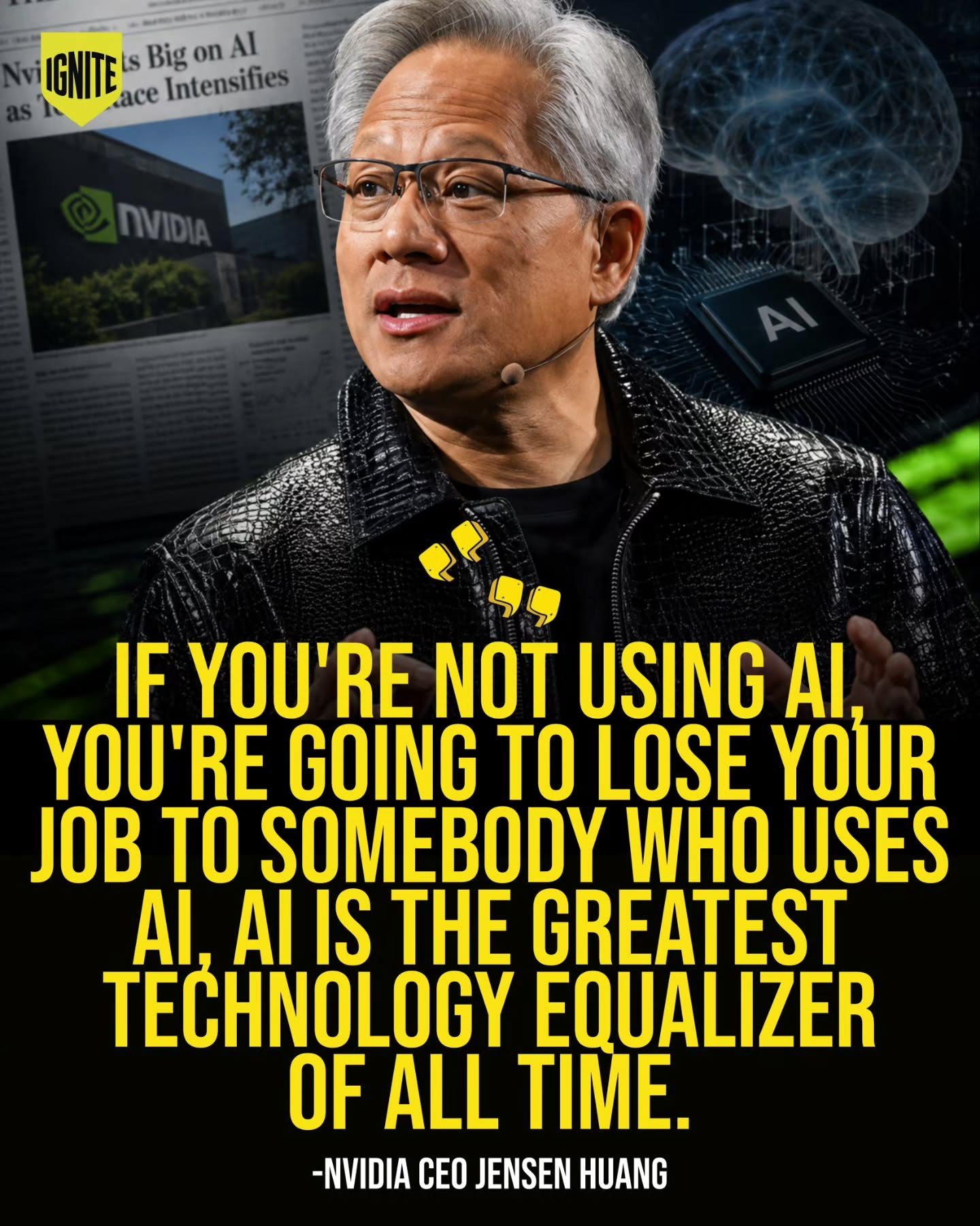
Artificial Intelligence (AI) is no longer a futuristic concept; it's a present-day reality shaping the job market. NVIDIA CEO Jensen Huang highlights a stark message: those who leverage AI will gain a competitive edge, while those who don't may find themselves left behind. AI is transforming the employment landscape, and understanding its implications is crucial for navigating the future of work.
Why This Matters
The integration of AI into various industries is not just a trend—it's a seismic shift. AI's ability to automate tasks, analyze vast amounts of data, and make sophisticated decisions is revolutionizing how businesses operate. This transformation impacts everyone, from entry-level employees to seasoned professionals. The future of work is increasingly intertwined with AI, making it essential for individuals to stay informed and adaptable.
The Role of AI in the Job Market
AI as a Career Equalizer
Jensen Huang emphasizes that AI is "the greatest technology equalizer of all time." This statement underscores AI's democratizing effect on technology. Traditionally, advanced technological skills were the domain of experts. However, AI is leveling the playing field by providing powerful tools that enable anyone to build applications, start businesses, and create innovative products.
AI and Entrepreneurship
AI's impact extends beyond traditional employment. Huang predicts that AI will foster a new wave of entrepreneurs and millionaires. By democratizing access to advanced technology, AI empowers ordinary people to achieve extraordinary feats. This shift could lead to an explosion of startups and small businesses, driven by individuals who harness AI's potential.
The Risk of Job Displacement
Huang's warning is clear: failing to adopt AI could result in job loss. Those who do not embrace AI may find themselves replaced by those who do. This isn't just about individual career success; it's about survival in an increasingly competitive job market. AI is reshaping industries, and those who don't adapt may struggle to find their place in the new landscape.
Practical Tips for Thriving in an AI-Driven World
Embrace Lifelong Learning
The key to thriving in an AI-driven world is continuous learning. This doesn't mean becoming an AI expert overnight, but rather, developing a curiosity and willingness to adapt. Staying informed about AI trends and integrating AI tools into your skill set can provide a significant competitive advantage.
Leverage AI Tools
AI tools are becoming more accessible and user-friendly. Platforms and applications that automate tasks, analyze data, and provide insights are increasingly available. Exploring these tools and understanding how they can enhance your productivity and efficiency is a practical step towards leveraging AI's benefits.
Develop Complementary Skills
While AI can handle many tasks, human skills such as creativity, empathy, and critical thinking remain invaluable. Focusing on developing these complementary skills can make you more adaptable and resilient in an AI-driven job market. The future belongs to those who can effectively blend AI tools with their unique human abilities.
Important Takeaways
-
AI is Transformation: The integration of AI into the job market is transforming the nature of work. It is crucial to understand and adapt to these changes.
-
AI as an Equalizer: AI provides powerful tools that democratize technology, enabling anyone to build applications and start businesses without extensive coding knowledge.
-
Continuous Learning: Embracing lifelong learning and staying updated with AI trends is essential for career success. AI is reshaping industries, and adaptability is key.
-
Skill Development: Developing complementary skills such as creativity, empathy, and critical thinking can make you more adaptable in an AI-driven job market.
Conclusion
The future of work is inextricably linked to AI. Embracing AI as a tool for career advancement and continuous learning can provide a significant competitive edge. AI's democratizing effect on technology means that anyone can leverage its power, making it a crucial skill for the future. By staying informed, adapting to changes, and developing complementary skills, individuals can thrive in an AI-driven world. The message is clear: learning and using AI today could be one of the biggest career advantages of the future.
Watch the Reel
Questions readers ask
How is AI currently impacting the job market?
AI is significantly altering the job market by automating routine tasks and analyzing complex data, which leads to increased efficiency and productivity. This impacts a wide range of jobs, from entry-level positions to those held by experienced professionals, making AI proficiency essential for job security and advancement.
What does NVIDIA CEO Jensen Huang mean by 'master AI or risk job loss'?
Jensen Huang's message emphasizes the importance of adopting and mastering AI skills to stay competitive in the job market. Those who do not adapt to AI may find it challenging to secure or maintain employment, as the workforce increasingly relies on AI for task automation and decision-making.
Which industries are most affected by AI job automation?
AI job automation is pervasive across various sectors, but it is particularly evident in industries that deal with large datasets and repetitive tasks. Industries like finance, healthcare, and manufacturing are already integrating AI to streamline processes and reduce manual labor, making it crucial for professionals to understand how to leverage AI in their roles.
How can professionals prepare for the AI-driven job market?
Professionals can prepare for an AI-driven job market by acquiring AI-related skills, such as data analysis, machine learning, and programming. Online courses, certifications, and hands-on projects can help build these competencies. Additionally, staying updated with the latest AI trends and industry applications can provide a significant advantage in the workplace.
What role does AI play in data analysis and job tasks?
AI excels in data analysis by processing vast amounts of information quickly and accurately, identifying patterns, and generating insights. This capability allows AI to enhance job tasks by automating data-driven decisions, freeing up human time for more strategic and creative work. Understanding how to utilize AI for data analysis can make professionals more valuable in their roles.
Can AI be an equalizer for jobs across different experience levels?
Yes, AI can act as an equalizer by providing tools and insights that benefit both entry-level employees and seasoned professionals. For instance, AI can automate mundane tasks, allowing entry-level workers to focus on more meaningful projects, while it can provide advanced analytics to support the decision-making of experienced professionals, enhancing overall productivity and job satisfaction.
Related deep dives
Similar reads based on topic and creator.




Recent articles
Fresh deep dives from the latest Reels we unpacked.




Comments
Be the first to comment.